Today in History

1853
elevator inventor, Elisha Otis installs his 1st elevator in NYC at 488 Broadway
1923
Frank Silver&Irving Conn publish their hit song' Yes, We Have No Bananas'
1945
U.S. Navy ships bomb Japanese Island, Okinawa in preparation of Allied invasion
1965
NASA launches Gemini3, with 2 astronauts, Gus Grissom&John Young,the 1st U.S. man space flight
1999
singer/ songwriter, Ricky Martin's single' Livin la Vida Loca' is released sells over 8 million copies
2001
Russian Mir space station breaks up in atmosphere before falling into the S. Pacific Ocean near Fiji
2015
British actor/ comedian, James Corden becomes host of CBS'The Late Late Show' until 2023
 
March 24
1945 -
Billboard magazine issued its first album chart, naming Nat King Cole's "A Collection of Favorites" as the number 1 LP. Titled "Best-Selling Popular Record Albums", the list initially featured just ten records and was compiled from sales reports submitted by more than 200 retailers across the United States.

1958 - Elvis Presley is sworn in as Private 53310761 for a two-year stint in the US army.

1989 - Oil Tanker Exxon Valdez ran aground at Bligh Reef, Prince William Sound, Alaska, spilling 115,000 cubic metres of crude oil.
Loss of wildlife estimates were 250,000 seabirds, nearly 3,000 sea otters, 300 harbour seals, 250 bald eagles, up to 22 killer whales and billions of salmon and herring eggs.
 
March 24th
1208King John of England opposes Innocent III on his nomination for archbishop of Canterbury.


1877The Oxford and Cambridge Boat Race on the River Thames ended in a dead heat. Legend in Oxford has it that the judge, 'Honest John' Phelps, was asleep under a bush when the race finished, leading him to announce the result as a 'dead heat to Oxford by four feet'.


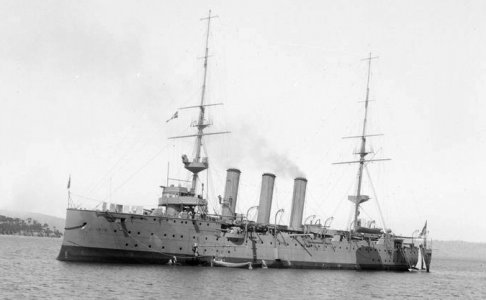
1877: The British frigate HMS Challenger returns to Southampton, England, thus completing the Challenger expedition that laid the foundation for the science of oceanography .
The HMS Challenger expedition, conducted from 1872 to 1876, was a pioneering oceanographic expedition that marked the birth of modern oceanography. The voyage covered nearly 70,000 nautical miles, exploring the deepest parts of the world’s oceans.

Scientists aboard the Challenger collected data on ocean temperature, currents, marine life, and the composition of the sea floor, vastly expanding human knowledge about the oceans. This expedition is particularly notable for the discovery of the Challenger Deep, the deepest known point of the Earth’s seabed.
IMG_1735.jpeg


1878The British frigate HMS Eurydice sank off the Isle of Wight, close to Ventnor, during a heavy snow storm. All but two of the 319 crew and trainees were killed. It was one of Britain's worst peace-time naval disasters. The ship's bell is preserved in St. Paul's Church, Gatten, Shanklin


1906Census of the British Empire shows the United Kingdom rules one-fifth of the world's landmass


1946Broadcaster Alastair Cooke read his first 'Letter from America' on BBC Radio. His weekly broadcasts continued for more than 50 years.


1951The Oxford boat sank during the University boat race. Cambridge won the rematch two days later.


24 Mar 1962
Mick Jagger and Keith Richard performed their first paid gig when they appeared as Little Boy Blue & the Blue Boys at The Ealing Club in Ealing, England. The following month Jagger and Richards saw Brian Jones performing at the same cllub with Alexis Korner as "Elmo Lewis" showing off his slide guitar skills with the Elmore James song 'Dust My Broom'. His stage presence and ability impressed both Richards and Jagger.


24 Mar 1966
Simon and Garfunkel made their UK singles chart debut with 'Homeward Bound.' Paul Simon is said to have written the song at Farnworth railway station, Widnes, England, while stranded overnight waiting for a train. A plaque is displayed in the station to commemorate this, although memorabilia hunters have stolen it many times. The song describes his longing to return home, both to his then girlfriend, Kathy Chitty in Brentwood, Essex, England, and to return to the United States. The song was also a No.5 hit in the US.
 
March 25th


1199King Richard I was wounded by a crossbow bolt while fighting in France, leading to his death on 6th April.
Richard spent very little time in England and lived in his Duchy of Aquitaine in the southwest of France, preferring to use his kingdom as a source of revenue to support his armies.
He produced no legitimate heirs and acknowledged only one illegitimate son, Philip of Cognac. As a result, he was succeeded by his brother John as King of England.


Flat Holm Light House became operational on 25th March 1738. Flat Holm is a limestone island lying in the Bristol Channel and contains Wales' most southerly point.
I've sailed around it on Balmoral and Waverley.
See next post for more about Flatholm.
IMG_1740.jpeg


First passenger railway line begins operations
On this day in 1807, the first fee-paying passenger railway began operating in Wales. It was eventually known as Mumbles Railway, and it became the longest-running locomotive line in the world. Passengers, however, were an afterthought; the train was designed with industry in mind. By 1823 a 16-person horse-drawn carriage made a trip twice a day along the railway line. After electricity arrived in 1928, double-decker trams began running, and millions of passengers were riding the line annually by the 1940s. After World War II, however, plunging passenger demand could no longer justify costs of operating the line. A funeral (featuring an empty coffin) was held for the line on January 4th 1960.
IMG_1739.jpeg


On 25th March 1811 Joseph Bailey took over the ironworks at Nantyglo and was instrumental in making it one of the great iron-works of the world.
Bailey, from Wakefield in Yorkshire, went to work with his uncle Richard Crawshay, the owner of Cyfarthfa ironworks in Merthyr. After Richard Crawshay's death in 1810 Bailey inherited a quarter share of Cyfarthfa, which he sold to purchase the old ironworks at Nantyglo.
Bailey became a very wealthy man and purchased estates in Breconshire, Radnorshire, Herefordshire and Glamorganshire. He also became MP for Worcester City and Breconshire.
IMG_1741.jpeg


1807The Slave Trade Act received the royal assent, eventually bringing an end to the slave trade
. British merchants transported nearly three million black Africans across the Atlantic between 1700 and the early 19th century.
The 1833 Slavery Abolition Act outlawed slavery itself throughout the British Empire but slaves did not gain their final freedom until 1838.


The Proud Valley starring Paul Robeson and filmed on location in South Wales was premiered on 25th March 1940.
The film tells the story of how a Black American gets work as a miner when he comes to live in Wales and shares the hard way of life experienced in the aftermath of the Great Depression.
IMG_1742.jpeg


1957Six European nations signed the Treaty of Rome thus establishing the Common Market. They were Belgium, France, West Germany, Italy, Holland and Luxembourg.


1965 - It was announced that Jeff Beck would take Eric Clapton's place in the Yardbirds.


1969John Lennon and new wife Yoko Ono staged their 'Beds in Peace' at the Amsterdam Hilton. It lasted until 31st March and each day they invited the world's press into their hotel room, between 9 a.m. and 9 p.m. It was Yoko's idea to get over their peace message while on honeymoon. Although the press were expecting them to be having sex, the couple were sitting in bed, in John's words 'like angels', talking about peace, with signs over their bed reading 'Hair Peace' and 'Bed Peace'.……
…..

Flatholm


A timeline history for Flat Holm;
* The island has a long history of occupation from Anglo-Saxon and Viking times.
* It was visited by disciples of Saint Cadog in the 6th century.
* In 1835 it was the site of the foundation of the Bristol Channel Mission, which later became the Mission to Seafarers.
* A sanitorium for cholera patients was built in 1896 as the isolation hospital for the port of Cardiff.
* Marconi used Flat Holm to transmit the first wireless signal over open sea to Lavernock in 1897.
* A series of gun emplacements was built in the 1860s to defend the entrances to Cardiff and Bristol ports.
* On the outbreak of World War II the island was rearmed.
* It is now designated as a Local Nature Reserve, Site of Special Scientific Interest and a Special Protection Area, because of its rare grasslands and plants. It also has significant breeding colonies of the Great Black-backed Gull, Lesser Black-backed Gull and Herring Gull.
 
March 26th


631 Suintila, King of the Visigoths is overthrown after a reign of ten years, by Sisenand, a noble from Septimania


1484William Caxton printed his translation of Aesop's Fables. As far as is known, Caxton was the first English person to work as a printer and the first to introduce a printing press into England. He was also the first English retailer of printed books.


1885'A lady well-known in literary and scientific circles' was the only clue The Times gave to the identity of the woman who was cremated by the Cremation Society in Woking, Surrey. She was the first person to be officially cremated in Britain and was a Mrs. Pickersgill, the first of three cremations that year.


The Pinnacle Club, the UK's only national rock-climbing club for women, was officially inaugurated at a meeting in the Pen y Gwryd Inn, at the foot of Snowdon on 26th March 1921.
The idea for the club was first conceived of by one of its founder members, Emily Kelly (known as Pat), a climbing enthusiast from Manchester. Pat tragically died the following year from head injuries she sustained from climbing Tryfan, in the Ogwen Valley, Snowdonia.
IMG_1743.jpeg
IMG_1743.jpeg


1923BBC Radio started regular weather forecasts.


Fifty years ago today, the Queen sent the first-ever royal email.On March 26, 1976, the Queen visited the Royal Signals and Radar Establishment, a telecommunications research centre in Malvern, England, and using ARPANET — the computer network that eventually morphed into the current internet — making her the first royal to send an email.

Peter Kirstein, who organized the event, including setting up her personal email account of "HME2," said at the time: "All she had to do was press a couple of buttons," he remembers, "and her message was sent."

A photo of the historic moment shows the Queen tapping the keys on a retro-looking computer.
IMG_1744.jpeg
IMG_1744.jpeg


The email itself was to announce the arrival of a new programming language that had been developed and was headed "A Message from Her Majesty the Queen" and signed off with an informal "Elizabeth R" — the same sign off the Queen has used for all her digital communication afterwards.


1964: After being fitted out as a radio ship the ex-Danish ferry Frederica (as Caroline) sails from Greenore in Ireland destined for an anchorage off Felixstow, Essex.
Later it went to off to The Isle of Man and became Caroline North.


1965: An electric shock from a faulty microphone knocks bass player Bill Wyman unconscious for several minutes during a sound-check for a Rolling Stones concert in Odense, Denmark. Mick Jagger and Brian Jones receive less severe shocks.
 
Back
Top