Some information worth a read about implants and bridges, full article here.
http://articles.mercola.com/sites/articles/archive/2014/05/03/root-canal-alternative.aspx
The Dark Side of ImplantsPerhaps you have decided you must extract your root canal treated teeth to maintain or regain health—against the clear position stated by the American Association of Endodontists above. You chose a biological dentist who can help you avoid cavitations, and boosted your immune system. How should you replace the space? Interestingly, the more complex and biologically incompatible the option, the more costly it is. Costs vary widely, as do longevity estimates.
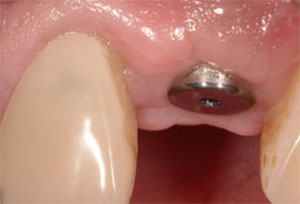
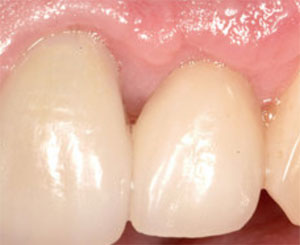
Implants are essentially an artificial root screwed into your jawbone, topped with an artificial tooth or used as an anchor for a bridge or partial denture. Implants are displacing root canals because they look, feel, and function very much like a natural tooth, and do not interfere with normal oral activities.
They help maintain bone that normally dissolves over time after a tooth is extracted. They can last a long time, and do not require grinding down adjacent teeth, as a fixed bridge would require. But you have to remember success is not measured only by tooth function, but function within your body as a whole.
Here are a few important aspects of dental implants you must seriously consider before making the decision to go forward with this major investment. Dead tissues do not conduct energy, implants therefore, whether titanium or zirconium, slow energy flow along meridians. Your body must constantly compensate for this. As with root canals, your associated organs, glands, or anatomical structures may functionally decline.
Most people with a dental implant have other metallic dental repairs present, which only exacerbates energetic chaos. In fact, the implant screw and replacement tooth are usually different metals. These two dissimilar metals within an electrolyte (saliva) effectively turn your mouth into a battery. Additionally, if you still have gold, mercury, copper, tin, silver filings, or nickel-based crowns in your mouth, these will also contribute to the galvanic currents being generated.
Most implants used today are made of titanium. So when your mouth is functioning as a battery due to the dissimilar metals present, there are resulting chaotic galvanic currents that continuously drive ions from the titanium or its alloys, which include small amounts of vanadium or aluminum. These metallic ions are then transported around your body, around the clock, where they bind to proteins and can wreak havoc with your health. Some people are more susceptible to the resulting inflammatory, allergy, and autoimmune problems than others. There is a blood test
7 to help determine this sensitivity.
Though you're exposed to fluoride through many avenues, tap drinking water and dental products remain your most significant sources. If you drink tap water or use fluoridated toothpaste, it is important to know that fluoride accelerates titanium corrosion in the extreme (up to 500 microg/(cm2 x d)). Low pH values (acidity in the mouth or a dry mouth) accelerate this effect profoundly.
8 Of course, corrosion of the other metals also accelerates ion release.
Previous research
9 has documented that:
"The amounts of tin released by the enhanced corrosion of amalgam [in the presence of titanium] might contribute measurably to the daily intake of this element; the corrosion current generated reached values known to cause taste sensations. If the buffer systems of adjacent tissues… are not able to cope with the high pH generated around the titanium, local tissue damage may ensue; this relationship is liable to be overlooked, as it leaves no evidence in the form of corrosion products."
While most people do not notice galvanic currents, others experience unexplained nerve shocks, ulcerations, a salty or metallic taste or a burning sensation in their mouth. Noticeable or not, oral galvanic currents are commonly as high as 100 micro-amps, yet your brain operates on 7 to 9 nano-amps—a current more than 1,000 times weaker. Given your brain's proximity to your mouth, biological dentists are concerned the constant high and chaotic electrical activity may misdirect brain impulses. These currents can contribute to insomnia, brain fog, ear-ringing, epilepsy, and dizziness.
The possibility that titanium implants may act as antennas that direct microwaves from your cell phone and cellular transmission towers into your body also deserves study. As Dr. Douglas Swartzendruber, a professor at the University of Colorado has said:
"Anything implanted in bone will create an autoimmune response. The only difference is the length of time it takes."
Titanium implants are certainly known to suppress important immune cells such as your T-cells, white blood cells critical to immune system function, and create oxidative stress as measured by rH2 values (a measurement of oxidation-reduction potential under a specific pH). Diseases associated with implants are not all that different from those associated with root canals, and include a number of different autoimmune and neurological disorders, such as:
Other complications of implanted titanium include occasional facial eczema as your skin tries to detoxify the titanium ions. Dental implants also have no fibrous "seal" to prevent microbial invasion. If you make the decision to get a dental implant, it's wise to use floss impregnated with ozonated oil around the neck of each implant daily.
Zirconium implants are a newer innovation in dentistry and many biological dentists now use them. These implants bypass some of the problems of titanium mentioned above. They still block energy flow, but at least they are electrically neutral, eliminating the potential to interfere with your brain impulses. The implant itself also does not contribute to electrical galvanic currents being generated in your mouth. But you still need to be careful as the artificial tooth that is ultimately screwed onto the zirconium implant may have a metal base. Zirconium implants also release ions, but at a much slower rate than titanium implants.
These implants seem to last quite a long time. One systematic review showed that over the 10-30 year period studied, there was only a 1.3 percent to five percent loss of implanted teeth in clinically well-maintained mouths. For those with less optimal maintenance, it was more like a 14-20 percent loss of implanted teeth over that time. Don't even think about smoking though! Endodontic literature has a very different slant on the benefits of implants, of course.
Traditional Bridges Can Be Costly and Relatively Impermanent
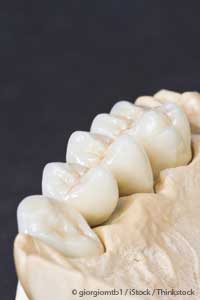
First off, bridges don't last all that long. The average bridge lasts eight years, with a range of five to 15 years. For this reason, "permanent bridges" are no longer considered "permanent." A traditional bridge is comprised of several units – the artificial teeth and the abutments. Abutments are the crowns (caps) made to cover the anchor teeth. The bridge is permanently bonded in place to span a gap that replaces at least one missing tooth. Broken down or completely intact, the abutment teeth to each side of the gap are aggressively cut away to accept the covering crown.
Or should I say smothering crown? In my video above, I used an analogy of a healthy tooth being like a fountain. A crown stifles the natural nutritive, cleansing, hydrating flow of lymph. It can no longer "breathe." Why do this to two good teeth that need no dental work for the sake of one (or two) missing teeth? Some biological doctors think these should be removed periodically so the underlying teeth can be cleaned up.
If one of the supporting crowned teeth breaks or develops decay or nerve damage, the bridge and its three or more crowns must be removed and replaced. As a hygienist, I can tell you that most people are terrible about cleaning around the abutment teeth and under the artificial tooth. Margins are very susceptible to decay. Again, I advise my clients to use ozonated oil around all crown margins as an extra degree of caution. Good personal care is one key to longevity. And once again, avoid smoking!
I am no fan of crowns as I explained in a
previous interview with Dr. Mercola. The more a tooth is destroyed during restoration, the less able it is to withstand chewing forces. Also, forces which once could transfer through the organic, flexible bulk of the tooth to the root now must travel along the outside of a stiff crown to concentrate at the gum margin – hardly a recipe for longevity of either the underlying tooth or the crown itself.