

Cranberries are a must for Thanksgiving; they were selling at $2.50 $3.00 (12 ounce bag) before the holiday. Our 99-cent store has them for 99 cents! Knowing the ease with which cranberries may be converted into a wonderful nectar, I bought 10 bags. $10.00. Today I "processed" them. Here's a few pics:
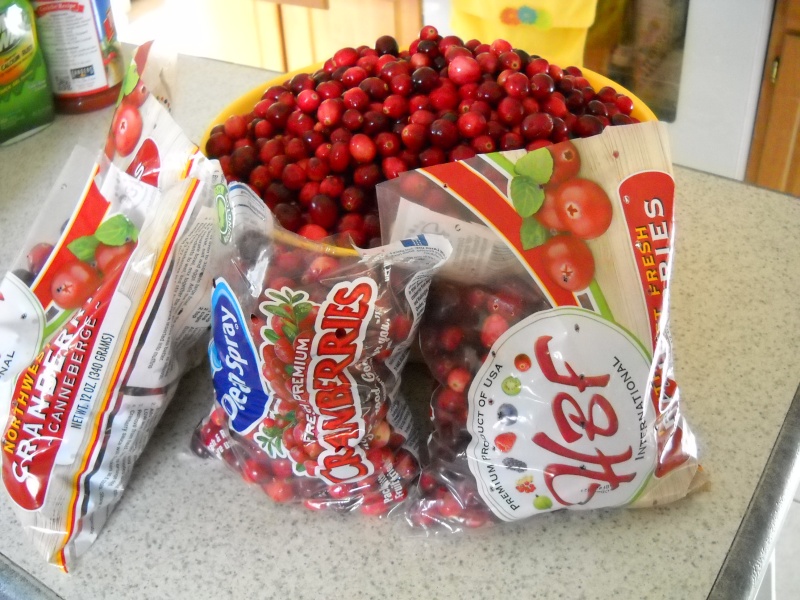
This little mountain of berries will become 4 or 5 gallons of wonderful wine! Shooting for 4, but if it proves too heavy, I'll water it down.
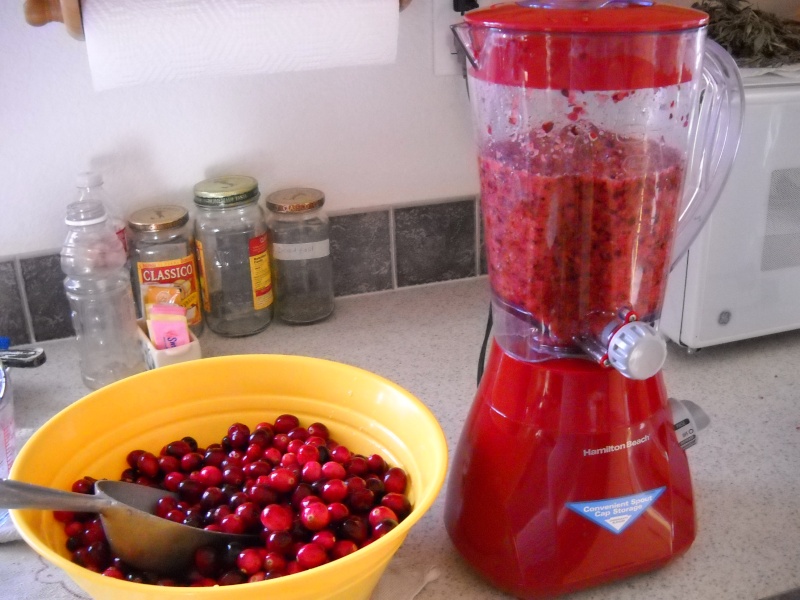
Crushing is the traditional method of winemaking from fruit. I found the above works perfectly, and I believe it releases more of the natural juices, and maybe flavors. It's quick, too!
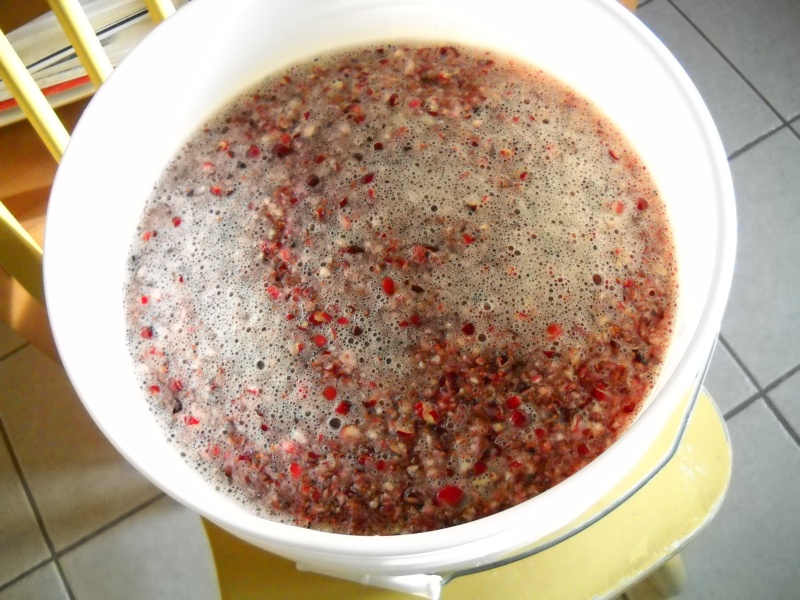
Here is the batch in the primary fermenter, 5-gallon food-grade bucket. Contents: the pulverized cranberries and their juice, 10 lbs. of sugar (OK, simmer down, the sugar will become alcohol, much healthier for you!), 3 tsp. Tannin, 1-1/2 tsp. Pectic Enzyme, 4 tsp. Yeast Nutrient, and 4 Campden tablets (they produce Sulfur Dioxide, which sanitizes the mix by killing bacteria and mold spores, assuring no "wild yeasts" or other spoiling organisms are present. The SO2 disappears into the atmosphere in a few hours time, thus my wine is not "sulfited"), and sufficient fresh water to make a bit more volume than 4 gallons, as the pulp takes up space.
Covered overnight, tomorrow I will add 1 packet of Montrachet Wine Yeast, cover 'er back up, leave the yeasties to consume all that sugar, about a week, after which time the batch will be filtered through a pillow case and placed in a glass carboy to finish fermenting, about a month is sufficient, after which it may be bottled.
Several times, my wife took a portion of the remaining pulp, that was with blueberries and peaches another time, cooked it up on the stove and made a wonderful compote-like jelly which we enjoy mornings on toast. Always seems a shame to discard the fruit pulp. Thank you for looking! imp
This little mountain of berries will become 4 or 5 gallons of wonderful wine! Shooting for 4, but if it proves too heavy, I'll water it down.
Crushing is the traditional method of winemaking from fruit. I found the above works perfectly, and I believe it releases more of the natural juices, and maybe flavors. It's quick, too!
Here is the batch in the primary fermenter, 5-gallon food-grade bucket. Contents: the pulverized cranberries and their juice, 10 lbs. of sugar (OK, simmer down, the sugar will become alcohol, much healthier for you!), 3 tsp. Tannin, 1-1/2 tsp. Pectic Enzyme, 4 tsp. Yeast Nutrient, and 4 Campden tablets (they produce Sulfur Dioxide, which sanitizes the mix by killing bacteria and mold spores, assuring no "wild yeasts" or other spoiling organisms are present. The SO2 disappears into the atmosphere in a few hours time, thus my wine is not "sulfited"), and sufficient fresh water to make a bit more volume than 4 gallons, as the pulp takes up space.
Covered overnight, tomorrow I will add 1 packet of Montrachet Wine Yeast, cover 'er back up, leave the yeasties to consume all that sugar, about a week, after which time the batch will be filtered through a pillow case and placed in a glass carboy to finish fermenting, about a month is sufficient, after which it may be bottled.
Several times, my wife took a portion of the remaining pulp, that was with blueberries and peaches another time, cooked it up on the stove and made a wonderful compote-like jelly which we enjoy mornings on toast. Always seems a shame to discard the fruit pulp. Thank you for looking! imp


