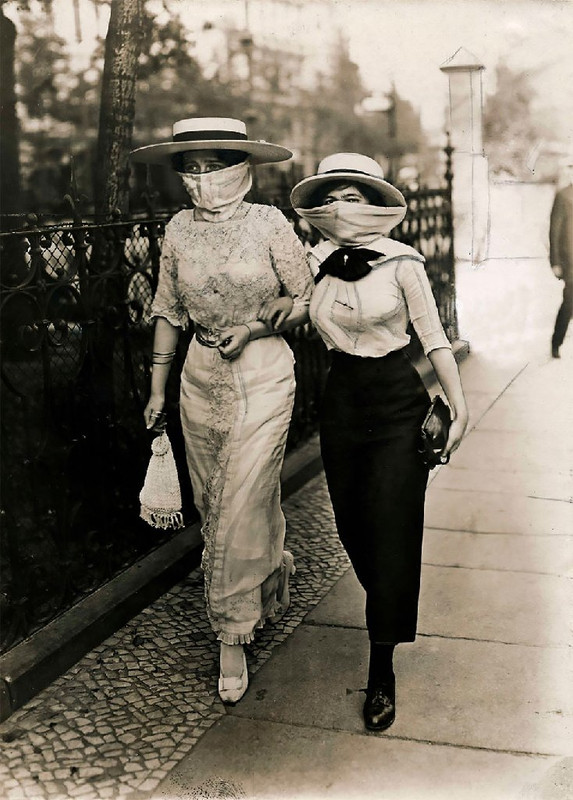
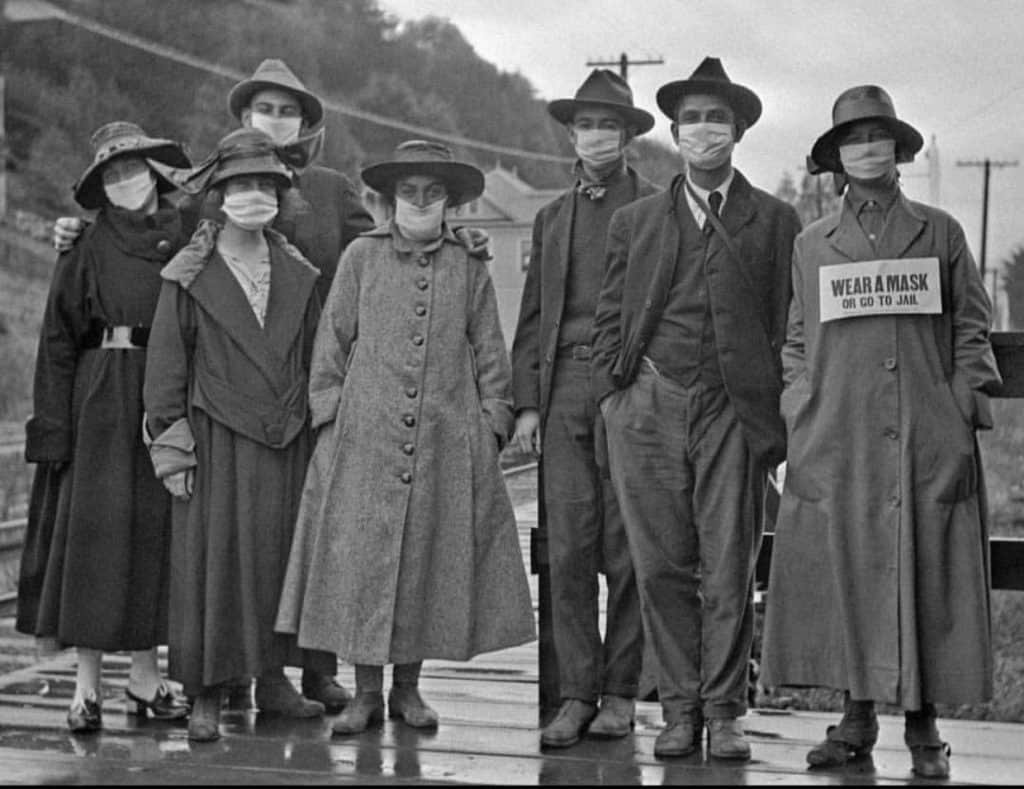
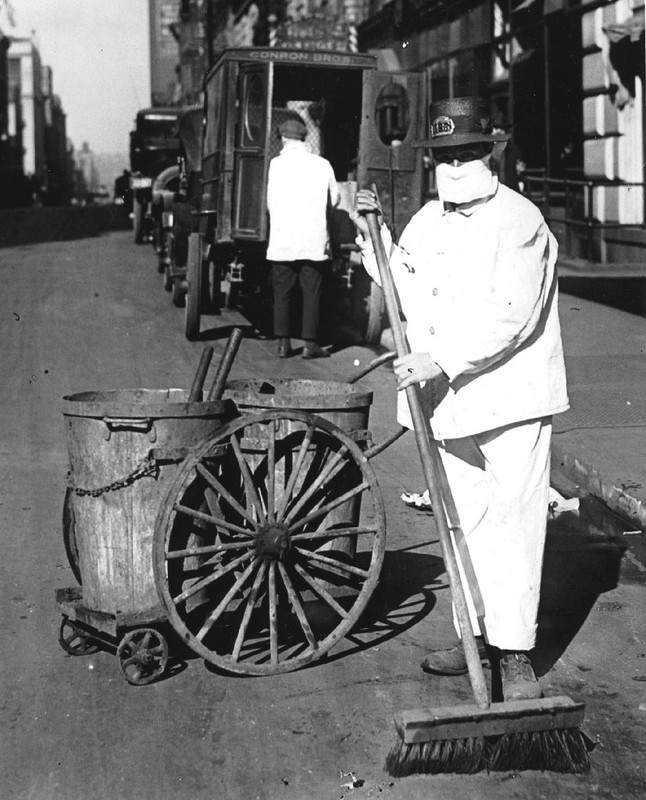
In 1918, advanced masks like the N95s that healthcare workers use today were a long way off. Surgical masks were made of gauze, and many people’s flu masks were made of gauze too. Red Cross volunteers made and distributed many of these, and newspapers carried instructions for those who may want to make a mask for themselves or donate some to the troops. Still, not everyone used the standard surgical design or material.
“To entice people to get them to wear them, [cities] were pretty lax in terms of what people could wear,” says J. Alex Navarro, assistant director of the Center for the History of Medicine at the University of Michigan and one of the editors-in-chief of
The American Influenza Epidemic of 1918-1919: A Digital Encyclopedia.
In October 1918, the
Seattle Daily Times carried the headline “Influenza Veils Set New Fashion: Seattle Women Wearing Fine Mesh With Chiffon Border to Ward Off Malady.” These “fashionable” masks and others made from dubious material probably weren’t helping much. Yet there was also debate within the medical and scientific community about whether multiple-ply gauze masks were effective either.
For instance, Detroit health commissioner J.W. Inches said gauze masks were too porous to prevent the spread of the flu among the public. Also, masks are most effective when worn properly, which wasn’t always what happened. In Phoenix, where most people apparently complied with the city’s mask order, some nonetheless
poked holes in their masks to smoke—which greatly reduced their effectiveness.
'Mask Slackers' Faced Enforcement, Punishment
Still, for the small percentage of people who went without a mask entirely, reports suggest their issue had less to do with the science behind them, and more to do with personal comfort.
“You read routinely about people not wanting to wear them because they’re hot and stuffy,” says
Nancy Bristow, chair of the history department at the University of Puget Sound and author of
American Pandemic: The Lost Worlds of the 1918 Influenza Epidemic. “Some people argue against them because they say that they create fear in the public, and that we want to keep people calm; which I think is really an excuse to critique them because someone doesn’t want to wear them.”
Some businesses worried customers would shop less if they had to wear a mask when they went outside, and some people claimed mask ordinances were an infringement upon civil liberties. Yet “more important in terms of critiques,” Bristow says, “is this idea that we’ve heard today as well that they give people a false sense of security.” As she points out, wearing a mask is less effective when people don’t follow other health guidelines too (and especially if some are poking holes in their masks to smoke).
Cities that passed masking ordinances in the fall of 1918 struggled to enforce them among the small portion of people who rebelled. Common punishments were fines, prison sentences and having your name printed in the paper. In one
horrific incident in San Francisco, a special officer for the board of health shot a man who refused to wear a mask as well as two bystanders.