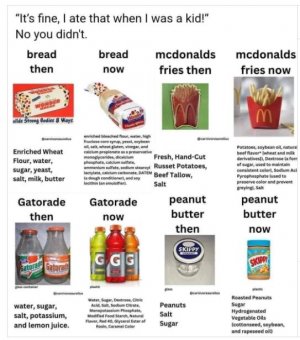
Sharp rise in food allergies

Key Reasons for the Increase:

The Hygiene Hypothesis:
Cleaner, modernized environments mean people are exposed to fewer germs, leading their immune systems to overreact to harmless food proteins instead of fighting infections.

Gut Microbiome Changes: A modern diet high in ultra-processed foods can damage the gut barrier, while early-life antibiotic use can destroy healthy bacteria, leaving the immune system vulnerable.

Delayed Allergen Exposure: Previous guidelines delayed introducing common allergens (like peanuts) to infants. Newer research shows that introducing these foods earlier helps prevent allergies.

Vitamin D Deficiency: Lower levels of vitamin D, potentially from spending more time indoors, may weaken the immune system's ability to tolerate foods.

Environmental Factors: Pollution and increased, unnatural skin exposure to allergens may contribute to sensitization.

Rising Adult Allergies: Although common in children, food allergies are increasingly appearing for the first time in adults.
 
View attachment 498227

Our local Mets baseball farm team now has a peanut controlled area in the stands for people with peanut allergies.

The times they are a changin’.
In the 90s we had 2 Indonesian women in church, a mother and a daughter. We went to visit them. The elderly mother kept asking if we wanted to eat, but my ex kept saying no, which is not very polite, but the reason he did that was: she kept the meat outside of the fridge. He is half Indonesian, born in Holland. He said there they have these food stalls where the meat is out in the open, but their stomachs are used to it.

AI:
Raw meat is often exposed to high temperatures. Although this is considered unsafe in the West (bacterial growth after 2 hours), in Asia meat is sometimes kept outside the refrigerator for as long as 12 hours, which poses risks.
 
Key Reasons for the Increase:

The Hygiene Hypothesis:
Cleaner, modernized environments mean people are exposed to fewer germs, leading their immune systems to overreact to harmless food proteins instead of fighting infections.

Gut Microbiome Changes: A modern diet high in ultra-processed foods can damage the gut barrier, while early-life antibiotic use can destroy healthy bacteria, leaving the immune system vulnerable.

Delayed Allergen Exposure: Previous guidelines delayed introducing common allergens (like peanuts) to infants. Newer research shows that introducing these foods earlier helps prevent allergies.

Vitamin D Deficiency: Lower levels of vitamin D, potentially from spending more time indoors, may weaken the immune system's ability to tolerate foods.

Environmental Factors: Pollution and increased, unnatural skin exposure to allergens may contribute to sensitization.

Rising Adult Allergies: Although common in children, food allergies are increasingly appearing for the first time in adults.
Agreed mostly, but I see the The Hygiene Hypothesis as flawed or incomplete.
 
When my kids were in preschool, a local breadmaker would stop by and give free samples to the kids at the school gate. One day the director saw him doing it and lost her $&@!. Allergies! Food poisoning! Lawsuits! I suppose I don’t blame her. From then on the bread man had to give the bread to the director and she could give it out to kids on the approved “not allergic to wheat” list.
 
I seem to remember that people living in germ free environments were susceptible to all sorts of disease
yes absolutely that's why amazonian jungle tribes and the like are protected so much from the outside world...preventing people like us from just going off to find them on a whim.. because they're absolutely not ptotected from illnesses that we shrug off... which would kill them,..even just the flu would knock them dead...
 
One of the grandkids has a severe peanut allergy. His mother sanitized everything when she was pregnant. It’s possible that a place can be too pristine or maybe the chemicals in the cleaning agent affected him. Or maybe it just happened.
 
I seem to remember that people living in germ free environments were susceptible to all sorts of disease
I knew a woman whose son had a house dust mite allergy. I bet it was because of her. She was so extreme. It amazes me that there even was 1 house dust mite in that house.
 
One of the grandkids has a severe peanut allergy. His mother sanitized everything when she was pregnant. It’s possible that a place can be too pristine or maybe the chemicals in the cleaning agent affected him. Or maybe it just happened.
I asked Google.

Hygiene hypothesis: If children come into less contact with bacteria and dirt (living too cleanly), the immune system can "get bored" and wrongly attack harmless substances, such as food proteins.

Immune reaction: In the case of a nut allergy, the body produces IgE antibodies against nut proteins, resulting in symptoms such as skin rashes, swelling, or, in severe cases, anaphylaxis.

Development of allergy: A food allergy often arises from a derailed immune response, where the balance in the immune system is disrupted.

Important nuance: Keeping the environment too clean is not the only cause. Heredity (predisposition) and the timing of the introduction of nuts into the diet also play an important role.
 
I will say this: Many people who say they have an allergy are wrong. It is not an allergy. More likely it is a sensitivity. For instance, a person says they are allergic to potatoes. I ask, "What happens when you eat potatoes?" I get an upset stomach. That is not an allergy! This person tells their doctor they are allergic to potatoes. How many "allergies" are NOT allergies?

However, I do believe that today's lifestyles are triggering negative consequences.
 
I have always suggested that dishwashers were one
of the reasons that allergies are on the rise, they give
sterilised crockery and cutlery every time.

Mike.
 
I will say this: Many people who say they have an allergy are wrong. It is not an allergy. More likely it is a sensitivity. For instance, a person says they are allergic to potatoes. I ask, "What happens when you eat potatoes?" I get an upset stomach. That is not an allergy! This person tells their doctor they are allergic to potatoes. How many "allergies" are NOT allergies?

However, I do believe that today's lifestyles are triggering negative consequences.
Very true. I learned this decades ago when a new-to-me doctor asked about allergies. I said yes (codeine). He asked how that expresses and I said that it makes me vomit. He said, "You technically have a sensitivity to codeine, not an allergy."

Sounded like a distinction without a difference to me, but he explained that if I were in a situation where a medicine to which I had a sensitivity was the only or best treatment for a severe condition, they'd deal with the sensitivity and give me the meds. They'd have to go a very different route if I it was an allergy.

So my medical records show a sensitivity to codeine and acetaminophen, but not an allergy. (Codeine is easy to avoid these days, acetaminophen, not so much.)
 
Anyone seeing my house could never accuse me of having a "too clean" environment.
Likewise .... As a lifelong vegetarian nuts and particularly peanut products have been a large part of my diet for 80 years now but several of my favorite products are now unavailable due to the manufactures having to remove all such things from their facilities. Even a trace of peanuts in their plants is not allowable!
As most of those responding here have said I believe that the lack of exposure to a little dirt and fastidious cleanliness leads to more allergies.
 
Back
Top