


RadishRose
SF VIP
- Location
- Connecticut, USA
Most of us are too old to even consider bearing children, but our children or grandchildren maybe interested and in need of some answers.
There are many facets to a discussion about this topic.
I saw this article-
A Canadian MP is proposing that the country decriminalise payment for women who choose to become surrogates. As global demand for Canadian surrogates grows, is commercialising the practice the answer?
Leia Swanberg is the only person ever to be prosecuted under a Canadian law that prevents payment for surrogacy and limits the activities of surrogacy agencies.
"My office being raided, my house being raided - you know it was a little unnecessary, it was a little overkill," she says.
The fines received by Ms Swanberg - who pleaded guilty to purchasing eggs, paying surrogates, and taking money to arrange surrogacies - could have been worse.
Breaking the federal law could mean jail time, a fine of up to $500,000, or both.
Surrogacy is legal in Canada but paying a surrogate is not.
Canadian women who offer to carry someone else's child are "altruistic" surrogates and can only be compensated for related out-of-pocket expenses.
Egg and sperm donors also are not compensated, and Canada currently imports 95% of sperm used by fertility clinics. Agencies can't match surrogates with prospective parents but can offer assistance and referrals.
"There is no right in Canada to have a child," the politician told journalists on Tuesday. "But there is a right to liberty."
Critics of the current law say surrogacy should be considered a health - not a criminal - matter.
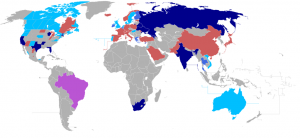
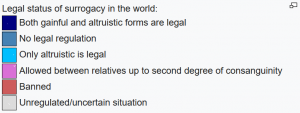
Bulgaria, France, Germany, Italy, Portugal and Spain prohibit surrogacy in all forms.
Thailand, Nepal, Mexico, and India, have recently banned foreign commercial surrogacy.
The UK and Australia prohibit commercial surrogacy, though both countries have seen a push towards changing those rules.
Commercial surrogacy is available in Russia, Georgia, Ukraine and Iran and in the US, though state laws vary widely.
Ms Rhoads-Heinrich would also like to see agencies licensed. "Hairdresser and taxi drivers have licensing and we don't," she says. "And we're creating babies and families."
https://www.bbc.com/news/world-us-canada-44243920
The United States does not have any Federal laws regarding surrogacy therefore you must be up-to-date about all the local laws. Some laws are the same in every state however there are substantial differences between states.
This article will outline some of the key points that apply in most states. Nevertheless, the best way to find all the information that you need regarding surrogacy in USA is to get in contact with a local surrogacy lawyer (as soon as you are seriously considering pursuing a surrogacy process, consult with a qualified family lawyer).
More detailed info on US surrogacy here:
https://mysurrogatemom.com/surrogacy-in-usa/
There are many facets to a discussion about this topic.
I saw this article-
A Canadian MP is proposing that the country decriminalise payment for women who choose to become surrogates. As global demand for Canadian surrogates grows, is commercialising the practice the answer?
Leia Swanberg is the only person ever to be prosecuted under a Canadian law that prevents payment for surrogacy and limits the activities of surrogacy agencies.
"My office being raided, my house being raided - you know it was a little unnecessary, it was a little overkill," she says.
The fines received by Ms Swanberg - who pleaded guilty to purchasing eggs, paying surrogates, and taking money to arrange surrogacies - could have been worse.
Breaking the federal law could mean jail time, a fine of up to $500,000, or both.
Surrogacy is legal in Canada but paying a surrogate is not.
Canadian women who offer to carry someone else's child are "altruistic" surrogates and can only be compensated for related out-of-pocket expenses.
Egg and sperm donors also are not compensated, and Canada currently imports 95% of sperm used by fertility clinics. Agencies can't match surrogates with prospective parents but can offer assistance and referrals.
"There is no right in Canada to have a child," the politician told journalists on Tuesday. "But there is a right to liberty."
Critics of the current law say surrogacy should be considered a health - not a criminal - matter.
Bulgaria, France, Germany, Italy, Portugal and Spain prohibit surrogacy in all forms.
Thailand, Nepal, Mexico, and India, have recently banned foreign commercial surrogacy.
The UK and Australia prohibit commercial surrogacy, though both countries have seen a push towards changing those rules.
Commercial surrogacy is available in Russia, Georgia, Ukraine and Iran and in the US, though state laws vary widely.
Ms Rhoads-Heinrich would also like to see agencies licensed. "Hairdresser and taxi drivers have licensing and we don't," she says. "And we're creating babies and families."
https://www.bbc.com/news/world-us-canada-44243920
The United States does not have any Federal laws regarding surrogacy therefore you must be up-to-date about all the local laws. Some laws are the same in every state however there are substantial differences between states.
This article will outline some of the key points that apply in most states. Nevertheless, the best way to find all the information that you need regarding surrogacy in USA is to get in contact with a local surrogacy lawyer (as soon as you are seriously considering pursuing a surrogacy process, consult with a qualified family lawyer).
More detailed info on US surrogacy here:
https://mysurrogatemom.com/surrogacy-in-usa/

 Consenting adults and all that.
