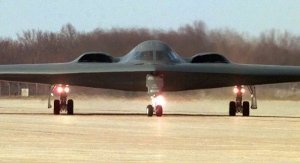
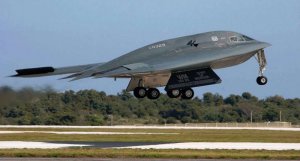
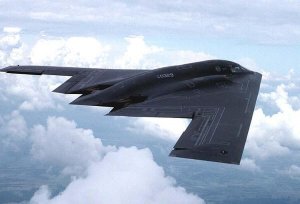
B-2 Spirit

I'll never understand what happened related to the John F. Kennedy Jr, plane crash.
The NTSB ruled the cause of the accident to "Spatial Disorientation." For example in John's case, he was flying out over the water (the Atlantic Ocean) and had no visual references due to the overcast evening and could not see the stars, so he did not know or understand which way was up. Basically, it's like if you went into a closet and closed the door. He lost his sense of where the ground was. Instead of trusting his instruments, which he was not IFR (Instrument Flight Rules) certified (rated), he decided to make flight adjustments based on what his brain was telling him.

From the NTSB:

NTSB NTSB releases final report on investigation of crash of aircraft piloted by John F. Kennedy Jr.
7/6/2000
The National Transportation Safety Board today released its final report on the crash of a Piper Saratoga II aircraft last summer that killed the pilot, John F. Kennedy, Jr.; his wife, Carolyn Bessette Kennedy; and her sister, Lauren Bessette. The airplane crashed about 9:41 p.m., on July 16, 1999, near Martha's Vineyard, Massachusetts.
The probable cause of the accident, as stated in the accident report, is:
"The pilot's failure to maintain control of the airplane during a descent over water at night, which was a result of spatial disorientation. Factors in the accident were haze and the dark night."
The accident report may be accessed through the aviation synopses page on the NTSB website.. The NTSB accident number is NYC99MA178.
 
These planes carry an impressive load and much of it is smart. You are right that the days of old style saturation bombing are largely over,
Except for the fact that when a bomb is dropped it not only destroys what it hit, but also sends out thousands of fragments that can also kill anyone that is within its reach.
 
The NTSB ruled the cause of the accident to "Spatial Disorientation." For example in John's case, he was flying out over the water (the Atlantic Ocean) and had no visual references due to the overcast evening and could not see the stars, so he did not know or understand which way was up. Basically, it's like if you went into a closet and closed the door. He lost his sense of where the ground was. Instead of trusting his instruments, which he was not IFR (Instrument Flight Rules) certified, he decided to make flight adjustments based on what his brain was telling him.

From the NTSB:

NTSB NTSB releases final report on investigation of crash of aircraft piloted by John F. Kennedy Jr.
7/6/2000
The National Transportation Safety Board today released its final report on the crash of a Piper Saratoga II aircraft last summer that killed the pilot, John F. Kennedy, Jr.; his wife, Carolyn Bessette Kennedy; and her sister, Lauren Bessette. The airplane crashed about 9:41 p.m., on July 16, 1999, near Martha's Vineyard, Massachusetts.
The probable cause of the accident, as stated in the accident report, is:
"The pilot's failure to maintain control of the airplane during a descent over water at night, which was a result of spatial disorientation. Factors in the accident were haze and the dark night."
The accident report may be accessed through the aviation synopses page on the NTSB website.. The NTSB accident number is NYC99MA178.
Thank you kindly for weighing-in on this for me, Oldman.

One would think that in order to officially and legally qualify as a pilot, no matter what aircraft one would be looking to fly, being IFR certified and qualified would be absolute.
 
The ironic thing about Kennedy's accident was: 1. His instructor had offered to fly with him because he knew that John may have a problem due to not being IFR certified. 2. Had his wife not been two hours late getting to the airport due to her shopping trip into the city, Kennedy would have been able to fly out to Martha's Vineyard in all daylight and there would probably had not been an accident. Some say it was another event of the "Kennedy Curse."
 
The ironic thing about Kennedy's accident was: 1. His instructor had offered to fly with him because he knew that John may have a problem due to not being IFR certified. 2. Had his wife not been two hours late getting to the airport due to her shopping trip into the city, Kennedy would have had been able to fly out to Martha's Vineyard in all daylight and there would probably had not been an accident. Some say it was another event of the "Kennedy Curse."
So spooky to think about, flying at night, with a pilot that had no idea where he was, where he was going, or what the plane was doing.
 
Thank you kindly for weighing-in on this for me, Oldman.

One would think that in order to officially and legally qualify as a pilot, no matter what aircraft one would be looking to fly, being IFR certified and qualified would be absolute.
Well, yes and no. In Alaska there are many amateur pilots that use a small plane for transportation. They use their plane like most people use their car. I remember reading in a journal not too long ago that there is an average of one airplane crash per day in Alaska. These amateur pilots will mostly only fly in daylight hours. I have no idea what they do when they don't see daylight for several months.
 
Well, yes and no. In Alaska there are many amateur pilots that use a small plane for transportation. They use their plane like most people use their car. I remember reading in a journal not too long ago that there is an average of one airplane crash per day in Alaska. These amateur pilots will mostly only fly in daylight hours. I have no idea what they do when they don't see daylight for several months.
Just sounds so utterly crazy, doesn't it?

Like buckling a young child into the seat of a car and telling him or her that it's okay for them to drive to and from their friends place, so long as it's daylight, oh, and... no driving on the highway.
 
So spooky to think about, flying at night, with a pilot that had no idea where he was, where he was going, or what the plane was doing.
I can't even imagine how he must have felt and those young ladies sitting in the back must have been tragically terrified when they knew that they were about to die.

I don't know what his altitude was at the time when the plane took its dive into the ocean, but he could have been high enough that when the plane went nose down and until it hit the water, everyone onboard may have been suffering from "Hypoxia." If that was the case, then they never knew what was happening to them, which would have removed the fear factor from the accident.
 
I can't even imagine how he must have felt and those young ladies sitting in the back must have been tragically terrified when they knew that they were about to die.

I don't know what his altitude was at the time when the plane took its dive into the ocean, but he could have been high enough that when the plane went nose down and until it hit the water, everyone onboard may have been suffering from "Hypoxia." If that was the case, then they never knew what was happening to them, which would have removed the fear factor from the accident.
In you mentioning hypoxia, it reminded me of the Payne Stewart, 1999 South Dakota Learjet crash.
 
I can't even imagine how he must have felt and those young ladies sitting in the back must have been tragically terrified when they knew that they were about to die.

I don't know what his altitude was at the time when the plane took its dive into the ocean, but he could have been high enough that when the plane went nose down and until it hit the water, everyone onboard may have been suffering from "Hypoxia." If that was the case, then they never knew what was happening to them, which would have removed the fear factor from the accident.
I would think that careening to the earth's surface at a high rate of speed in a plane, one would feel an odd gravitational feeling, unlike when flying straight and horizontally.
 
In you mentioning hypoxia, it reminded me of the Payne Stewart, 1999 South Dakota Learjet crash.
Oh, yes, I also remember this terrible ending to a great golfer's life. He was flying with a few business partners for a new golf course that he was planning. They climbed into a Learjet and shortly after takeoff, the plane experienced a decompression problem. Is that right?

Didn't the plane run out of fuel and crash somewhere near the Badlands in the Dakota's? I also think an F-14 was scrambled and the pilot recognized that the pilot of the Learjet was out of it and so they kind of let it run its course.
 
Oh, yes, I also remember this terrible ending to a great golfer's life. He was flying with a few business partners for a new gold course that he was planning. They climbed into a Learjet and shortly after takeoff, the plane experienced a decompression problem. Is that right?
Yes, that's the incident, though I don't recall what went wrong.

I do remember reports stating that all of the windows inside the aircraft were covered in ice. They must have all frozen to death before they even hit the ground?
 
Oh, yes, I also remember this terrible ending to a great golfer's life. He was flying with a few business partners for a new golf course that he was planning. They climbed into a Learjet and shortly after takeoff, the plane experienced a decompression problem. Is that right?

Didn't the plane run out of fuel and crash somewhere near the Badlands in the Dakota's? I also think an F-14 was scrambled and the pilot recognized that the pilot of the Learjet was out of it and so they kind of let it run its course.
Yes, if I remember correctly, the plane flew on autopilot for several hours before running out of fuel and crashing in a field.
 
I would think that careening to the earth's surface at a high rate of speed in a plane, one would feel an odd gravitational feeling, unlike when flying straight and horizontally.
I only had hypoxia one time, which was when I was actually an untrained scuba diver and did it just for fun. I was not a serious diver and never did any cave diving or anything like that. I had read about hypoxia and not coming to the surface too quickly, but when I was in San Diego and scuba diving off the coast, we were only down about thirty feet when I felt something bump me. When I turned around, I saw it was a Hammerhead and I panicked and wanted to get to the top and back in the boat quickly. I came up too fast and I could feel myself starting to fade, so I immediately just stopped until the feeling passed. But, I kept a lookout for that shark.
 
I only had hypoxia one time, which was when I was actually an untrained scuba diver and did it just for fun. I was not a serious diver and never did any cave diving or anything like that. I had read about hypoxia and not coming to the surface too quickly, but when I was in San Diego and scuba diving off the coast, we were only down about thirty feet when I felt something bump me. When I turned around, I saw it was a Hammerhead and I panicked and wanted to get to the top and back in the boat quickly. I came up too fast and I could feel myself starting to fade, so I immediately just stopped until the feeling passed. But, I kept a lookout for that shark.
OMG!

That would have spelled the end of my diving days right then and there!
 
OMG!

That would have spelled the end of my diving days right then and there!
It actually did for me. I did dive once more, but it was something that I did not enjoy. Too much time in preparation and then on the boat, there is more preparation as the leader of the dive goes over what we will be doing and "Be sure we stay together down there." So, we did our dive and I turn around and I'm the only one there. I was like "where did everyone go?" No one did what we were told.

I remember seeing on TV when an American that just got married went to Australia for their honeymoon and to dive. They didn't stay with the dive club and when everyone, except them were onboard, the boat left. When they got back to shore, the dive leader did a count and saw two pairs of slides sitting on deck with no one around. After doing some checking, he realized that he left a couple in the water, so they went back out, but no luck, they couldn't find them. They didn't know if they drowned or if the sharks got them or what had happened to them. What a feeling that must have been.

You're out in the Pacific Ocean and you are on a dive. You surface and look, NO BOAT!! You're like, "Now what do I do?"

 
It actually did for me. I did dive once more, but it was something that I did not enjoy. Too much time in preparation and then on the boat, there is more preparation as the leader of the dive goes over what we will be doing and "Be sure we stay together down there." So, we did our dive and I turn around and I'm the only one there. I was like "where did everyone go?" No one did what we were told.

I remember seeing on TV when an American that just got married went to Australia for their honeymoon and to dive. They didn't stay with the dive club and when everyone, except them were onboard, the boat left. When they got back to shore, the dive leader did a count and saw two pairs of slides sitting on deck with no one around. After doing some checking, he realized that he left a couple in the water, so they went back out, but no luck, they couldn't find them. They didn't know if they drowned or if the sharks got them or what had happened to them. What a feeling that must have been.

You're out in the Pacific Ocean and you are on a dive. You surface and look, NO BOAT!! You're like, "Now what do I do?"

Yeah, no thanks to that, mind you I have never really enjoyed swimming in open water, even at locations where there was no fear of sharks, etc. Just was never for me. I was never able to get out of my head... the things that lurk below.

Yes, Open Water, I watched it. Talk about creepy. You just know you're doomed. Are you going to be taken my a shark? Are you going to succumb to hypothermia or exhaustion and drown? Are you going to drift for days before finally expiring due to a lack of food and water? I can't imagine the fear the couple went through.
 
These B-2's are all stationed at Whiteman AFB, near Warrensburg, MO,...about 60 miles from our place. A couple of times per month, one of them flies over our area on a training mission. They are Very quiet, compared to most large jet aircraft, and a rather unique sight to see.
 
An impressive machine but is bombing a real option any more with cruise missals? Bombing seems outdated.
I believe one difference is that if the plane is loaded with laser guided bombs, the put the bomb where or what they want to hit. The pilot or if necessary, the navigator or a weapons systems officer (WSO) could guide the bombs. It’s pretty neat to eat h. The WSO watches the bomb as it descends to its target and guides it with a dial he controls by turning it and watches the bomb through a monitor. This almost guarantees a direct hit.
 
Back
Top