Life In A Senior Affordable High-Rise

DailyArtsyCrafter

Crafter Writer Artist
Location
Southeastern US
RPAc.jpg

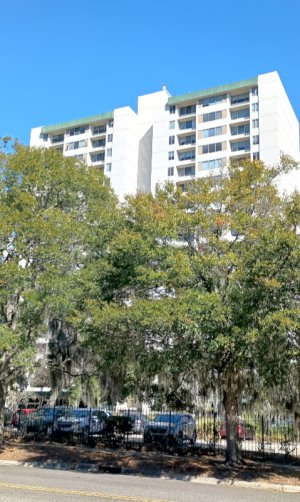
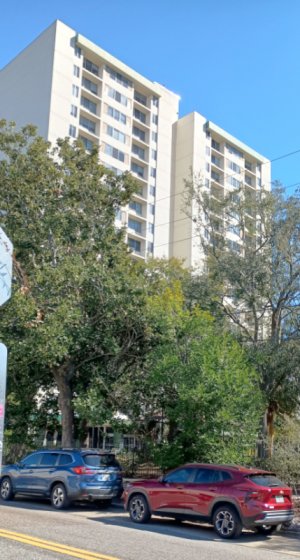
It was finally warmer here and I got a chance to go outside and take a few pics of my apartment building. I could have gotten some off the Internet but I want all pics to be mine. Over time, I'm going to share facts about this living situation, the property and my apartment. I don't want to exhaust what I have to share by posting daily, so I plan to post to this diary once a week, on the weekend. I will be focusing on one aspect per post. I'll make the first post later today.

This diary is for those who are interested in obtaining a senior, income-based apartment and for those who are just curious.

@Kaila @Jules @CaliS @PeppermintPatty @Coco @squatting dog @JustBonee @Pinky @katlupe @IrishEyes @Jazzy1 @Pepper @CinnamonSugar @hollydolly @astralcat @CallMeKate @Medusa @MACKTEXAS
 

Last edited:
RPAa1.jpg

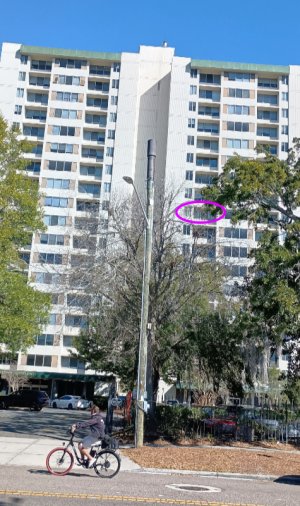
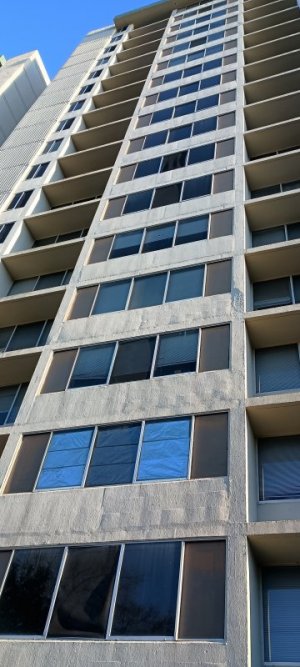
This building was built in 1970 and has 19 floors, about 204 apartments without balconies and is a gated property. It is for tenants 62+ aged and 18+ disabled. Floorplans are studios, 1-br and a few 2-br (for live-in caregivers). The pink circle in the first pic is my unit. These apartments are entirely independent living, with no licensed supportive or nursing services. An on-staff service coordinator assists residents who may need help with making arrangements for services.

There is an administrator, a certified occupancy specialist (leasing), service coordinator, administrative assistant, 5 24/7 front desk staff, a chaplain, maintenance director, 2 maintenance employees and 2 custodians.
RPAf.jpg

The U.S. Department of Housing and Urban Development (HUD) makes tenant assistant payments to the property in the form of Section 8 certificates. These particular certificates are property/project/building-based and remain with the apartments when tenants move out. Programs associated with this type of housing are Section 202 Supportive Housing for the Elderly and Section 504 which prohibits discrimination based on disability.

Rent is 1/3 of income but with government-mandated allowances, the actual rental amount comes out to less than 1/3. For a single person, your income can't be over about $31,000 yearly. Electric and water are included. Tenants have to pay for their own phone and cable but there is free WIFI in common areas. Deposit is 1 month's rent and is repaid with interest when the tenant moves out. The deposit and 1st month's rent has to be paid by separate checks. An online rent payments portal is offered here, which I gladly use. Move in has to be within 30 days and between 9-5p. Initial rent term is 1 yr and month-to-month after that with a 30-day notice to move out.

If I had chosen to wait for another apartment to become available, I don't know if I would have moved down one space on the waitlist or bumped to the end. It varies by property. There is a resident's council that elects officers and holds meetings. It also schedules events for all tenants but no tenants are required to join the council.
RPA.jpg

The apartments are managed by Westminster Communities of FL and there are some nice amenities here that I will share in other posts. I will share the nice outside sitting areas in the spring. These apartments are not the property of a local housing authority, where waitlists can be years long and properties sometimes in disrepair. I applied in April and was called in October of the same year.

 

Last edited:
Wow ...1/3 or less of you income in rent.. and electric and water included ?... ! I wish we had something like that here...:D

I wish you did too. While living like this does have its challenges and stigma, it is a big help. But nothing in this life is perfect anyway. 😊 BTW, electric/water is usually included in the high-rises. If it's a senior affordable cottage, garden or single-level property, tenants usually have to pay their own electric. But the program usually gives the tenant a $50 credit added to their rent amount (which would reduce it by $50) to help with the electric bill. I've lived in both high-rises and cottages. With high-rises, it's hard to have separate utility meters. Easier to install separate meters at single-level properties.
 
Last edited:
I’m curious, do you know if they have any restrictions about breaks in your tenancy or time away from the unit?

Many years ago I had an acquaintance that lived in a federally funded senior apartment in Florida and he could not be away from his unit for more than 30 consecutive days without facing the possibility of eviction.

It was a serious concern for him because he used to travel north to stay with family members each year in an old summer cottage that had been in his family for years and was owned and maintained by one of his siblings.

The issue also came up when people were hospitalized, in rehabilitation facilities, etc…
 
I’m curious, do you know if they have any restrictions about breaks in your tenancy or time away from the unit?

Many years ago I had an acquaintance that lived in a federally funded senior apartment in Florida and he could not be away from his unit for more than 30 consecutive days without facing the possibility of eviction.

It was a serious concern for him because he used to travel north to stay with family members each year in an old summer cottage that had been in his family for years and was owned and maintained by one of his siblings.

The issue also came up when people were hospitalized, in rehabilitation facilities, etc…
Yes, there are requirements. In our House Rules under Abandonment, it says that in accordance with government regulations, the unit must be the tenant's only place of residence. An extended absence from the apartment (over 30 continuous days or more than 60 days during a twelve month period) without prior written permission from the business office will be considered abandonment and grounds for immediate lease termination. Continuous absence of up to 180 days for medical reasons may be considered as an exception. They do leave the door open to consider special requests.

Unfortunately, because your acquaintance travel north to stay with family members each year in an old summer cottage, it could be seen as another residence or living in two places, especially if he stays for an extended length of time.

In another government-backed living situation, my sister bought her townhouse through an FHA loan, a government-backed mortgage. After living there for years, she started living elsewhere and renting it out to one of her co-workers for about 3 years now. Recently, the mortgage holder found out and started questioning her about why she wasn't living there. She had to pacify them during the conversation but she's moving back to the townhouse now. She shared some of the reason with her co-worker and asked her to be out by Oct 31. She said the mortgage holder requires that it be her primary residence and she doesn't want to get into trouble.

Looks and sounds very nice so far. Thank you for including me in your new adventure! Look forward to seeing and reading more.
You're welcome. I knew that many more members liked my original post, Moving Back To Northeast FL. In this new Diary post, I only had time to tag those who actually commented in that post. But everyone and anyone is welcome to read this diary.

:) No, we shouldn't live in fear. I don't, I call it 'taking precautions'. LIving and learning.
Yes, and anything we decide to do has risks, some more than others, of course. It's just a matter of deciding which risks we feel comfortable with taking. I am concerned about the risks mentioned but they don't prey on my mind. In other situations, the associated risks would be too much for me.
 

Last edited:

Back
Top