Today in History

April 23rd


1016: King Aethelred II Dies
King Aethelred II dies in London, England, around the age of 50. The king of England from 978 to 1013 then again from 1014 until he died in 1016, Aethelred was dubbed Aethelred “The Unready” because of his perceived mismanagement of the Danish invasion of England. His nickname roughly means “bad counsel,” a nod to Aethelred’s name meaning “good counsel.”


On April 23, 1215, King John of England signed a crucial document known as the Magna Carta. This document was a charter of rights that limited the power of the king and established certain legal protections for the nobility and, by extension, for English subjects as a whole.


The Battle of Agincourt (1415)

April 23 is also the anniversary of the Battle of Agincourt, one of the most famous victories in English military history. The battle took place during the Hundred Years’ War between England and France, and it is often seen as a triumph of English strategy and discipline over a much larger French force.


On April 23, 1535, Sir Thomas More, the famous English lawyer, scholar, and statesman, was executed. More’s death was a direct consequence of his refusal to acknowledge King Henry VIII as the Supreme Head of the Church of England. This event occurred during a turbulent period in English history, marked by the English Reformation and Henry VIII’s break with the Catholic Church.


The Morriston Orpheus Choir was formed this day 1935.
Formed by Ivor E Sims, it is one of the best-known male voice choirs in the world, receiving standing ovations in the Sydney Opera House and five standing ovations at the Carnegie Hall in New York. The choir has also performed in Germany, France, Canada, Spain, Poland, Taiwan, Abu Dhabi, Oman and Ireland.


1968 The first decimal coins appeared in Britain - the 5p and 10p pieces which replaced the 1 shilling and 2 shilling coins.


1982 The launch of the Sinclair ZX Spectrum computer. The entry level model had 16 kB RAM and an external tape recorder was needed to load the majority of software. It was 'a computer for the masses' and much cheaper than its rivals - the Commodore 64 and the BBC Microcomputer.


1960Paul McCartney and John Lennon perform as "the Nerk Twins" at the Fox and Hounds pub in Reading, England. The pub is owned by McCartney's cousin and her husband. The duo play another set the next day.
The message has been edited.
 
1635
The oldest U. S. public school, Boston Latin School forms. Its still open has students from grades 7-12, became co -ed in 1972
1851
Canada issues its 1st postage stamp,a Three-Pence Beaver
1932
Shakespeare Memorial Theatre opens at Stratford-On- Avon in England
1954
Atlanta Brave baseball player, Hank Aaron hits his 1st or 755 home runs again St. Louis pitcher, Vic Rasohi
1965
4 Tops hit single'I Cant Help Myself{Sugar Pie Honey Bunch} hits # 1 on Billboard Top 100 chart, stays there for 2 weeks. It hit #1 on Billboard's R&B chart stays there for 9 weeks
2005
You tube co founder, Jawed Karum uploads 1st You Tube video' Me At The Zoo' showing him in front of 2 elephants at the San Diego,Calif Zoo.It had 311 million views
 
April 24th
On This Day - 24th April1558Mary Queen of Scots, also known as Mary Stuart or Mary I of Scotland, married the French Dauphin at the Cathedral of Notre Dame in Paris.


1953Winston Churchill was knighted by Queen Elizabeth II.


1957English astronomer Patrick Moore presented the first broadcast of The Sky at Night, on BBC television.


1990: The Hubble Space Telescope is launched from the Space Shuttle Discovery. Its orbit outside the distortion of Earth's atmosphere allows it to take extremely high-resolution images with negligible background light. However its first images would indicate a serious problem with its optical system leading to a mission by Shuttle Endeavour in December 1993 to install corrective optics.


1982 27th Eurovision Song Contest: Nicole for Germany wins singing "Ein bißchen Frieden" in Harrogate.


Pepys

Monday 24 April 1665
Up and with Creed in Sir W. Batten’s coach to White Hall. Sir W. Batten and I to the Duke of Albemarle, where very busy. Then I to Creed’s chamber, where I received with much ado my two orders about receiving Povy’s monies and answering his credits, and it is strange how he will preserve his constant humour of delaying all business that comes before him.

Thence he and I to London to my office, and back again to my Lady Sandwich’s to dinner, where my wife by agreement.
 
1888
Eastman Kodak Company is formed in Rochester, NY by George Eastman,been operating for 145 yrs. It now focuses on printing, commerical film
1913
Woolworth Building in NYC opens at a cost of $13.5 million, at the time was the tallest building in the world
1953
British Prime Minister, Winston Churchill is knighted by Queen Elizabeth II
1979
Georgia designates Ray Charles version of song' Georgia On My Mind' written by Hoagy Carmichael&Stuart Gorrell as state song
2005
Cardinal Joseph Ratzinger become Pope Benedict XVI, he served for 8 yrs, resigns in 2013 due to health issues. He died on Dec 31,2022 age 95
2018
Suffragist, Millicent Fawcett is 1st woman to have a statue erected in Parliament Square in London
 
April 25th

On 25th April 1284 King Edward II of England was born to King Edward I of England (age 44) and Eleanor of Castile Queen Consort England (age 43) at Caernarfon Castle


The Enclosure Movement was a series of legal processes in the 18th and 19th centuries that led to the consolidation of small farms into larger, more efficient units. April 25, 1785, saw one of the final stages of the Enclosure Acts, which dramatically altered the British countryside.

Before the Enclosure Movement, much of the land was common property. Farmers had shared access to common land for grazing animals and growing crops. However, the Enclosure Acts divided up the land into privately owned plots, leading to a more organized and profitable system of agriculture. While this increased productivity, it also displaced many poor farmers who had relied on the common land.


1792 Guillotine first used in France, executes highwayman Nicolas Pelletier.


On April 25, 1829, the first public transport system in London, using horse-drawn omnibuses, was introduced. This service was a precursor to the London bus network that we are familiar with today. The omnibuses were introduced to alleviate the congestion on the roads and provide an efficient form of transport for the growing population in the capital.


1846 Thornton Affair: Open conflict begins over the disputed border of Texas, triggering the Mexican–American War


1915 The Battle of Gallipoli begins during World War I, marking a significant campaign for Allied forces.


1859 Construction of the Suez Canal begins, creating a vital waterway connecting the Mediterranean and Red Seas.


1953 Francis Crick and James
Watson publish their groundbreaking discovery of the double-helix structure of DNA in Nature.


1945 U.S. and Russian armies meet at Torgau, Germany, signaling the imminent defeat of Nazi Germany.


1955

April 25
John Walker, the British delegate on the United Nations Commission on Narcotic Drugs announces that there is a "definite connection between increased marijuana smoking and that form of entertainment known as Bebop and Rebop."


1968 April 25
A survey by the Confederation of British Industry showed that listening on the job to Radio 1, the major Pop and Rock station of the BBC, made workers less productive.
 
April 26th

On this day in 1717 the pirate ship Whydah was shipwrecked, with Welshman Thomas Davis one of only two survivors.

Originally a slave ship, the Whydah was captured by the pirate 'Black Sam' Bellamy for use as his flagship. Equipped with 28 cannons and a crew of 146, Bellamy raided from coast to coast until a violent storm off Cape Cod blew the ship onto a sandbar, where it broke apart and sank with nearly four and a half tons of gold, gold dust, silver and jewellery on board. Only two men survived, carpenter Thomas Davis, a Welshman, and a Miskito Indian called John Julian.
The wreck was discovered in 1984 and more than 200,000 individual pieces have since been retrieved, including the ship's bell.


On April 26, 1785, the first edition of the The Times, one of the most influential newspapers in British history, was released. Founded by John Walter, The Times began as The Daily Universal Register in 1785 and soon became one of the leading newspapers in the United Kingdom.


April 26, 1837, was a notable day in British history as it marks the beginning of Queen Victoria's reign. Victoria ascended the throne following the death of her uncle, King William IV. She was only 18 years old at the time and became one of the longest-reigning monarchs in British history, ruling for over 63 years.


Brexit 1
On April 26, 1975, the British government introduced the European Union Referendum Bill to Parliament. The bill proposed a national referendum to decide whether the United Kingdom should remain a member of the European Economic Community (EEC), later known as the European Union (EU). The referendum was held on June 5, 1975.


1986 An explosion and fire at a Soviet nuclear power station near Chornobyl, Ukraine, released large amounts of radioactive material, which was carried by the wind as far west as France and Italy. Millions of acres of forest and farmland were contaminated, and hundreds of thousands of people were relocated as a result of the disaster.


In 1994, Pink Floyd announced their plans to tour for the first time in more than a decade, following the release of their album "The Division Bell."
The best Pink Floyd Album in my opinion.
 
1879
Royal National Park is established,south of Sydney, Australia, its the 2nd oldest world national park. The 1st is Yellowstone National Park located in N. Wyoming,extends into parts of Montana&Idaho
1920
Ice Hockey makes its debut at the Anterp Winter Olympic games. Canada routs Sweden 12-1 in the gold medal game
1956
the 1st modern container ship,the Ideal X leaves Port Newark, New Jersey for Houston,Texas
1976
Pan Am begins non stop flights between NYC-Tokyo,took 13 hrs, 40 min,price of ticket $1,000
1986
world's worse nuclear disaster happen when 4th reactor at Chernobyl nuclear station in Russia explodes.It killed 31 people, spread nuclear contamination thru most of Western Europe
2011
U.S. singing competition' The Voice' debuts on NBC with judges, Blake Shelton, Adam Levine, Christina Aguilera& Cee Lo Green. Its still going strong
 
April 27th

1521

Portuguese navigator Ferdinand Magellan was killed during a fight with inhabitants of Mactan Island in the Philippines.


1296 King Edward I of England invaded Scotland, which led to the removal the coronation stone of Scone to Westminster Abbey in England. His actions inaugurated 250 years of bitter hatred, savage warfare, and bloody border forays.


1828 The London Zoo opened in Regent's Park.


The Victoria and Albert Museum in London, one of the most important museums of art and design in the world, officially opened its doors on April 27, 1857. Established in response to the Great Exhibition of 1851, the museum was intended to promote and encourage the arts of the United Kingdom.


On this day in 1930 Dylan Thomas made the first entry into his poetry notebooks while he was still a pupil at Swansea Grammar School. The first poem, dated 27 April, is entitled 'Osiris, come to Isis.'


1966: Radio Caroline South returns to the air from the re-fitted Mi Amigo boasting a new 50kW transmitter operating on 1187 kHz, announced as “259 metres”.
 
April 28th


1772 The death, in London, of the world's most travelled goat. She had circumnavigated the world twice, first on Dolphin under Captain Wallis, then on Cook's Endeavour. The Lord of the Admiralty even signed a document acknowledging her age and adventures.


1789 The crew of the Bounty, led by Fletcher Christian, mutinied against the harsh life at sea under Captain Bligh. They were on the return journey from Tahiti where they had spent six months gathering breadfruit trees. Bligh and 17 others were cast adrift in a small boat without a chart. While the mutineers eventually colonized Pitcairn Island, Bligh managed to sail the small craft 3,618 miles to Timor, near Java, arriving there on 14th June.


On April 28, 1890, the Forth Railway Bridge was officially opened. This iconic bridge, which spans the Firth of Forth in Scotland, was an engineering marvel of its time. Designed by the Scottish engineer Sir John Fowler and Sir Benjamin Baker, the bridge was one of the earliest examples of large-scale use of steel in construction, and its design was considered groundbreaking in terms of both functionality and aesthetics.


Benito Mussolini, Italian dictator during World War II, was captured ( and executed the next day) on this day in 1945. The fascist leader became hugely unpopular with his own supporters as well as those who found his regime atrocious. He was trying to escape the country when he was caught.


The general election held on April 28, 1929, was an important political event in British history, leading to significant shifts in the nation’s political landscape. The election resulted in a hung Parliament, with the Labour Party under the leadership of Ramsay MacDonald becoming the largest party. However, no single party had an overall majority, which led to the formation of a minority Labour government.


1968 Featuring the hippie anthem "Aquarius/Let the Sunshine In," the musical Hair opens on Broadway at the Biltmore Theatre. The show is made into a movie in 1979.
 
April 29th


1696 Therewere many attempts on the life of William III, King of England, who attracted opposition, in part because he was a foreigner. On This Day, three would-be assassins, Rookwood, Lowick and Cranbourne, were executed for an attempt that failed.


The “Elektromote,” created by German inventor Ernst Werner von Siemens, was the world’s first trolleybus tested on April 29, 1882. This experimental vehicle was connected to overhead electrical wires and ran along a 540-meter track in Berlin.


1884 Oxford University agreed to admit female students to examinations. However, woman were not to be awarded degrees


On 29th April 1941 the village of Cwmparc in the Rhondda Valley was subjected to a bombing raid from the Luftwaffe which killed 28 people.
It is believed that anti-aircraft fire had forced the German pilots to divert from their planned target at Swansea and had dropped their bombs randomly. Among the fatalities were three evacuees from London, the Jameson family, two boys and two girls, who had been staying at 14 Treharne Street which was one of the houses hit.
 
Last edited:
1852
Its edition of Peter Roget's Thesaurus is published in England, has never been out of print
1927
construction of monoplane, 'Spirit of St. Louis' which Charles Lindberg was to fly across the Atlantic Ocean. It took 60 days to build
1945
Desmond Dross, a conscientious objector saved 75 wounded soldiers in Battle of Okinawa at Hacksaw Ridge without using a weapon,was there for 12 hrs. He was awarded by Pres Harry Truman the Medal of Honor.The movie version was released in 2016
1990
wrecking cranes begin to tear down the Berlin Wall at Brandenberg Gate
2004
Oldsmobile builds its final car'Alero' at the Lansing, Michigan assembly plant. It ended 107 yrs of production
2020
According to World Meteorlogical Org, a world record single lighting flash of 477 miles{768km} across Texas, Louisana& Mississippi
 
April 30th


The Treaty of Woodstock;
On 30th April 1247, Llywelyn ap Gruffydd and his brother Owain Goch ap Gruffydd came to terms with King Henry III of England at his royal residence of Woodstock Pace in Oxfordshire. Gwynedd was divided, with Llywelyn and Owain gaining joint control of Gwynedd Uwch Conwy, the part of Gwynedd west of the River Conwy and Henry himself taking control of Gwynedd Is Conwy, east of the river.

….
On 30th April 1417, Owain Glyndŵr's son, Maredudd, declined the offer of a pardon from King Henry V for both himself and his father. In the later stages of the uprising, Maredudd had increasingly been seen as its leader by the English and in 1416 he appears to have been in North Wales, attempting to rally support with a force of Scots.
In 1416 Maredudd had refused a pardon for himself suggesting that Owain was still alive, however, he did accept a Royal Pardon in 1421 and subsequently served with Henry in France.


Llanidloes' 'Five Days of Freedom'
On 30th April 1839, three Chartist members were arrested by constables drafted in from London and imprisoned at the Trewythen Arms in Llanidloes prior to a meeting at the Long Bridge. This prompted the crowd to head to the hotel to release the imprisoned men only to find it protected by special constables of tenants of a local landowner, TE Marsh, armed with wooden staves. The Chartists then stormed the hotel and released the imprisoned men, during which time, the interior of the hotel was wrecked and a policeman severely beaten. For the following five days, Llanidloes remained under the control of the Chartists.

The authorities put up "wanted" posters offering rewards for the capture of the Chartist ringleaders and called upon the Lord Lieutenant at Powis Castle for assistance to control the situation, resulting in a force of 200 Yeoman Cavalry and Infantrymen from Brecon arriving in the town on 4th May. The military encountered no resistance and the town was sealed off with over thirty Chartists arrested and sent to Montgomery jail.
Following their trial, three Llanidloes men, Abraham Owen, Lewis Humphreys, and James Morris, a nineteen year old weaver, were transported to Australia and others were imprisoned at Montgomery for up to one year. A military garrison was maintained in the town until the summer of 1840.


1513Edmund de la Pole, Yorkist pretender to the English throne, was executed on the orders of Henry VIII.
….


1821The first iron steamship, Aaron Manby, named after the proprietor of the Staffordshire ironworks at which she had been made, was completed. She weighed 116 tons and after trials on the River Thames made her maiden voyage across the Channel.


…. 2008: Two skeletal remains found near Yekaterinburg, Russia, are confirmed by Russian scientists to be the remains of Alexei Nikolaevich, Tsarevich of Russia and Grand Duchess Anastasia Nikolaevna, one of his sisters.
….


1965 The Kinks began their first headlining tour of the British Isles, with The Yardbirds serving as their opening act. Neither band had enjoyed a hit record yet, but would reach the UK chart later in the year.
 
1880
Metropolitan Museum of Arts opens in NYC
1939
NY Yankee, ball player, Lou Gehrig sets a MLB record playing in his 2,130th consecutive& final game. His record was broken in 1995, by Baltimore Oriole player, Cal Ripkin,Jr who extended the record to 2,632 games. He ended it on Sept 20,1998 when he voluntarily took the day off
1952
Mr 'Potato Head' becomes the 1st toy to advertised on TV, main audience was young kids cost was 98 cents. The kit included all the facial features except for the potato
1974
Pres. Richard Nixon hands over partial transcripts of Watergate tapes. In August he officially resigns as U.S. President, the only one to do so
1997
Big Ben in London stops working at 12:11pm for 54 min. The cause was a failure in the mechanism that controls the clocks hands
2007
German Chancellor, Angela Merkel officially gives the Waldseemuller Map,the oldest document to name America to U.S. Library of Congress
 
I was at the game in Baltimore when Ripken broke the most consecutive games played record. The highlight was that there was a 22 minute standing ovation for Cal. Cal was probably the most popular Oriole player, but Brooks Robinson may have been tied with Cal for popularity.

Cal did a lot for the city of Baltimore and the youth programs, including building a miniature Camden Yards with his brother, Billy in Aberdeen, Maryland, the Ripkens’ hometown. Cal and Billy played together while on the Orioles. They were managed by their dad, Cal, Sr.
It was always a good day at the ballpark when the Orioles were home and Cal was in the lineup, which was just about always.

Gehrig most likely would have played longer, except he became ill with ALS. (Lou Gehrig’s Disease)
No, I am not an Orioles fan, but my dad was.
 
On This Day - 1st May

May Day - originally a Roman festival which began on 28th April and lasted several days to mark the commencement of summer. In England, middle and lower classes would gather flowers - ‘go a maying’ - and the prettiest village maid was crowned Queen of the May, celebrated with dancing around the maypole.


On 1st May 1308 Albert Habsburg I Duke Austria (age 52) was murdered by his nephew John "Parricide" Habsburg (age 18) who he had deprived of his inheritance when Albert Habsburg I Duke Austria forced John's eleven year old father Rudolf Habsburg II Duke Austria to waive his rights to the Habsburg duchies of Austria and Styria as part of the Treaty of Rheinfelden.


One of the most significant events in English history that took place on May 1 was the dramatic fall of Anne Boleyn, the second wife of King Henry VIII. On this day, Anne’s arrest on charges of adultery, incest, and high treason was officially recognized by the king. Her execution would come only days later, on May 19, 1536.


Another key event on May 1 was the arrest of several prominent Royalist figures during the English Civil War. After King Charles I was executed in 1649, his supporters still sought to maintain the monarchy, resulting in continuing tensions across the kingdom. On May 1, the Parliamentarians executed a series of raids to capture these Royalists, resulting in further divisions in British society during this turbulent period.


The first ever edition of the Western Mail was printed on May 1 1869.
The Western Mail was founded in Cardiff by John Crichton-Stuart, 3rd Marquess of Bute. It describes itself as 'the national newspaper of Wales' although it has a very limited circulation in North Wales.


On May 1, 1924, the British Empire Exhibition opened at Wembley Stadium in London. This event was designed to celebrate the achievements of the British Empire and promote its economic and cultural power. The exhibition was held during a time of political and economic change, following the First World War, and it sought to reinforce Britain’s place as the central power within the Empire.


1966: The Beatles perform what would be their last British concert appearance at the New Music Express Annual Poll-Winners All-Star Concert.


Radio

1942: World War II: The Dutch resistance station Radio Orange calls on Jewish citizens to defy Nazi orders to wear a yellow star of David badge.


1970: The radio-ship King David, the home of the ill-fated Capital Radio, makes its first test transmission. It uses an experimental 'hoop' aerial suspended from its main mast.
 
The 2nd of May marks the anniversary of one of the last major battles in Italy during WW2. The Yugoslav Partisan Army and the New Zealand 2nd Division pushed the Nazis out of Trieste.

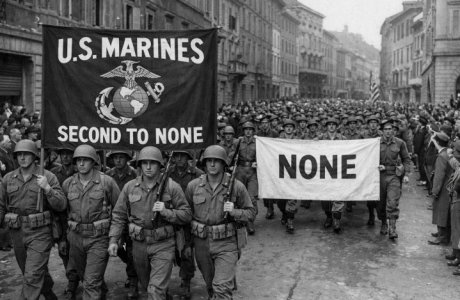
Oorah …I am reminded of an old army story. In 1945 the New Zealand Division fought a costly street-by-street battle against the retreating German army to take the city of Trieste in northern Italy. Once the city was secured, the Americans decided a victory parade was in order, to be headed by the elite US Marines. It was pointed out that the Americans had arrived after the battle had finished and that the fighting had been done by the New Zealanders. The Italian campaign was nevertheless being run by US Army command and the parade went ahead as planned. In front came the US Marines, with a large banner bearing their emblem and the words ‘US Marines. Second to None’. Behind them marched the New Zealanders carrying a large sheet upon which was written the word ‘None’.
 

Attachments

  • US Marines Trieste 1945.jpg
    US Marines Trieste 1945.jpg
    86 KB · Views: 3
May 2nd


1194 King Richard I gave Portsmouth its first Royal Charter. The date that such a charter was granted is considered to be when a city was

On 2nd May 1230 William de Braose was publicly hanged on the orders of Llywelyn ap Iorwerth, after it was suspected that he had committed adultery with Llywelyn's wife Joan (Princess of Wales and Lady of Snowdon).

William de Braose (c. 1197 – 2 May 1230) was born in Brecon, the son of Reginald de Braose who he succeeded in various lordships in 1227, including Abergavenny and Builth. The Welsh detested him and called him Gwilym Ddu (Black William). He was captured in 1228 by the forces of Llywelyn in the commote of Ceri near Montgomery and ransomed for £2,000. de Braose later made an alliance with Llywelyn, and his daughter Isabella married Llywelyn's only legitimate son Dafydd ap Llywelyn.

At Easter 1230 William was discovered in Llywelyn's bedchamber with Joan, resulting in Joan being placed under house arrest for twelve months and de Braose being hanged on 2 May 1230.


1497 John Cabot's expedition departs Bristol searching for new lands across the Atlantic.


1869 The Folies Trévise (later cabaret hall Folies Bergère) opens as an opera house in Paris, France


On May 2nd, 1863, General Stonewall Jackson was accidentally shot by his own Confederate troops during the Battle of Chancellorsville in Virginia. He lost his left arm to amputation but died from pneumonia eight days later.


1933www.beautifulbritain.co.ukThe modern legend of the Loch Ness Monster was born when a sighting made local news. Several London newspapers sent correspondents to Scotland, and a circus offered a £20,000 reward for capture of the beast.


1997 – Tony Blair becomes British Prime Minister, finally ending 18 years of Conservative Party reign.
Furry was very pleased about this.


1980 - ClassicBands.com

May 2
Pink Floyd's hit single "Another Brick in the Wall (Part II)", with its chorus of kids chanting "We Don't Need No Education", is banned by the South African government. Black children, upset about inferior education, adopt the song as their anthem. The government says the song is "prejudicial to the safety of the state."

1991 - ClassicBands.com

May 2
The Rolling Stones are cited for Outstanding Contribution to British Music at the 36th Ivor Novello Awards in London. The honor is named after the Cardiff, Wales born entertainer Ivor Novello and has been presented annually by the British Academy of Songwriters, Composers and Authors since 1955.

2005 - ClassicBands.com

May 2
Eric Clapton joined former Cream members, drummer Ginger Baker and bass player Jack Bruce, for the first of four nights at London's Royal Albert Hall, thirty-six years after the band had split up
 
On This Day - 3rd May


On 3rd May 1471 Richard Beauchamp 2nd Baron Beauchamp Powick [aged 36] barred the gates of Gloucester against Margaret of Anjou's Lancastrian army preventing them from crossing the River Severn.


1497 A rising broke out in Cornwall, provoked by taxation. James Tutchet led an army of 15,000 from Taunton through the southern counties to attack London.


1830 The Canterbury and Whitstable Railway (Kent) was opened. Sometimes referred to colloquially as the Crab and Winkle Line, it was the first steam hauled passenger railway to issue season tickets. It used cable haulage by stationary steam engines over much of its length, with steam locomotives restricted to the level stretch.


1926: The first successful flight over the North Pole was made by American explorer Richard E. Byrd.


On May 3, 1956, the first formal proposal to build a tunnel under the English Channel was put forward. The idea of a Channel Tunnel (often referred to as the “Chunnel”) had been discussed for centuries, but in 1956, a British-French group presented plans for a tunnel that would link the United Kingdom and France.


1956 Granada TV broadcast for the first time at 7.30 p.m. With the ending of the BBC's monopoly on broadcasting, viewers saw their first television advertising and four days later Granada did the first sports outside broadcast.


1965 - ClassicBands.com

May 3
The Beatles were kept busy filming scenes for their forthcoming film Help! on Salisbury Plain with the British Army's Third Tank Division.

1968 -

May 3
The Beach Boys begin a seventeen date tour of the US with a show in New York. The second half of the concert featured the Maharishi Mahesh Yogi, who lectured the audience on "spiritual regeneration." The reaction was so negative, more than half of the remaining tour dates were canceled.


1972 -

May 3
Guitarist Les Harvey of the Scottish / English soul band Stone the Crows, was electrocuted by a shorted microphone wire during a concert attended by 12-thousand people in Swansea, Wales. He died in a local hospital three hours later.
 
May the fourth


On May 4, 1662, Sir Henry Vane the Younger was executed in London.
Vane had been a prominent figure during the English Civil War, where he supported the Parliamentary cause against King Charles I.
After the execution of the King, Vane became involved in the administration of the Commonwealth under Oliver Cromwell. However, after Cromwell’s death, Vane was opposed to the restoration of the monarchy under Charles II, and he was eventually arrested for his role in the resistance to the monarchy.


1675 King Charles II ordered the construction of the Royal Greenwich Observatory. It played a major role in the history of astronomy and navigation and is best known as the location of 0 degrees longitude, which has determined mapping co-ordinates since that time. The meridian is also marked on the outskirts of the village of Patrington in East Yorkshire.


1896 The first British halfpenny newspaper, the Daily Mail, was published. It was the first paper to sell more than one million copies and was heralded as the birth date of modern journalism.


2014 Science students at the University of Leicester concluded that the wooden puppet Pinocchio (who was prone to telling tales and whose nose would double in length for each lie) could only have told a maximum of 13 lies. After 13 lies it was concluded that the nose would be 140 metres long and the force exerted downwards would cause his neck to snap.


May 4 1964
The Moody Blues are formed in Birmingham, England. The group was the brainchild of vocalist Denny Laine, who recruited Mike Pinder, Ray Thomas, Graham Edge and Clint Warwick. The band would enjoy ten Top 40 hits in the UK and thirteen in the US.


4 May 1968
Mary Hopkin
🏴󠁧󠁢󠁷󠁬󠁳󠁿
won her heat on the ITV talent show 'Opportunity Knocks'. She later signed with The Beatles owned Apple Records, Paul McCartney produced her UK No.1 single 'Those Were The Days', which also made No. 2 in the US. Hopkin later married record producer Tony Visconti.
 
On This Day - 5th May

1215 Rebel barons renounced their allegiance to King John; part of a chain of events that led to the signing of the Magna Carta.


1260 Kublai Khan, the grandson of Genghis Khan, became the ruler of the Mongol Empire.


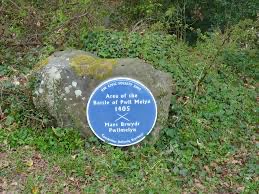
On 5th May 1405 Owain Glyndŵr suffered his first major defeat at the Battle of Pwll Melyn on land immediately to the north of Usk Castle. This was a serious setback was to his uprising in South East Wales.
The battle had begun with an attack on Usk Castle led by Glyndwr's son, Gruffydd. The castle repelled the assault and counter-attacked, driving the Welsh across the Usk and into the forest of Monkswood towards Mynydd Pwll Melyn - the 'Hill of the Yellow Pool'.
According to the report from Adam of Usk the Welsh lost 1,500 men, with three hundred beheaded in front of Usk Castle. Among those killed were Glyndwr's brother Tudor and John ap Hywel, Abbot of the Llantarnam Cistercian monastery. Gruffydd was captured as he was ministering to the dying and wounded; he was imprisoned in the Tower of London.

IMG_1814_2026-05-05.jpeg


On May 5, 1552, in the midst of the reign of Edward VI, the Duke of Somerset, Edward Seymour, was executed. Seymour, who had previously served as the Lord Protector during Edward VI’s minority, had fallen from power after political rivalries came to a head. He was arrested, tried, and ultimately executed for treason


1760 The first public hanging took place at Tyburn in London. Earl Ferrers was executed after being convicted of murdering his valet. He was the first to be hanged by the new 'drop' which had just been introduced in the place of the barbarous cart, ladder and medieval three-cornered gibbet.


1762
Prussia and Russia signed the Treaty of Saint Petersburg, which ended seven years of war between the two.


In 1880, British Standard Time (BST) was officially adopted. This was a significant development in the realm of timekeeping and would go on to shape daily life in Britain for decades. Before the implementation of BST, each region of Britain kept its own local time based on the position of the sun. However, the rapid expansion of railways and telecommunication systems in the 19th century led to confusion and inefficiency.

The decision to introduce a standardized time for all of Britain aimed to streamline operations, particularly for the railway system, and it had far-reaching effects on trade, communication, and social life in the country. The adoption of BST was a key moment in the industrialization of Britain and its integration into a more globally connected world.


On May 5, 1918, the British government passed the Representation of the People Act, which represented a significant milestone in the history of British democracy. The Act granted the vote to all men over the age of 21 and women over the age of 30 who met certain property qualifications.


1921: Perfume Chanel No.5 was released.
Gabrielle "Coco" Chanel released her first fragrance ever, which ended up also being the first modern perfume. Coco was also the first face of the advertisement for the perfume.


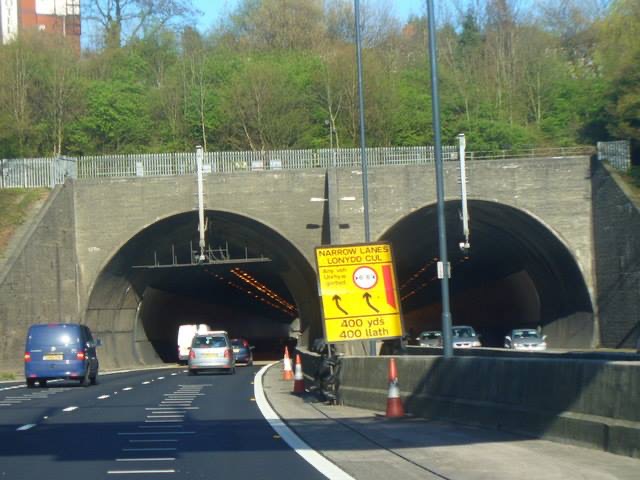
On 5th May 1967 the Brynglas Tunnels bypassing Newport on the M4 motorway were opened.
The Brynglas Tunnels carry the M4 motorway under Brynglas Hill in Newport. The 1,200-foot-long twin-bored tunnels were the first tunnels in the British motorway network and are still the only bored tunnels.
IMG_1813.jpeg


1965: Jazz organist Jimmy Smith performs live on the deck of Radio Caroline South's Mi Amigo.


5 May 1969
The Beatles single 'Get Back' was released in the US. John Lennon claimed in 1980 that "there's some underlying thing about Yoko in there", claiming that Paul McCartney looked at Yoko Ono in the studio every time he sang "Get back to where you once belonged."
The single reached No.1 in the United Kingdom, the United States, Ireland, Canada, New Zealand, the Netherlands, Australia, France, West Germany, Mexico, Norway, Switzerland, Austria, and Belgium.
 
7th May
1429 English siege of Orleans broken by Joan of Arc and the French army
..

Rice Powell (native of south Pembrokeshire), colonel in the English Civil War was pardoned from execution on this day 1649.

Rice Powell (fl. 1641-1665) - A Welshman's story in the English Civil War;

1641 - Powell served as an officer in the army sent to Ireland to suppress the Irish Rebellion.

1642 - He returned to Pembrokeshire at the outbreak of the Civil War and became a colonel in the Parliamentary army. He took part in the defence of Pembroke and the offensive actions in the county and beyond.

1644 - Powell was appointed governor of Cardigan castle by Major General Rowland Laugharne (Parliament's commander in south Wales) after its capture, and successfully defended it in the following month against a Royalist assault directed by Sir Charles Gerard.

646 (April) - Powell was appointed governor of Tenby.

1648 (Early) - During Laugharne's absence in London, Powell was in command of the forces in west Wales when Parliament gave the order for the disbanding of some of the non-regular members of its army. John Poyer at Pembroke disapproved and encouraged others to refuse. Powell decided to support Poyer.

1648 (10 April) - Powell and Poyer left the Parliamentary army and issued a declaration in favour of the king and the Royalists.

1648 (last week of April) - At Carmarthen, Powell clashed with the parliamentary army led by colonels Fleming and Thomas Horton, forcing them to retreat. Flemming was caught and shot at Llangathen church, while Horton made it to Brecon. Powell then took Swansea and Neath and had entered the Vale of Glamorgan, heading for Cardiff where the Royalists were waiting to rise up to support him. To prevent this, Horton, now with fresh supplies and ammunition made a forced march down the Taff valley to intercept him.

1648 (8 May) - In the subsequent Battle of St. Fagans Laugharne, who had also switched to the Royalist side, arrived to take over the command from Powell, but they were defeated and Horton won a decisive victory.

1648 (31 May) - Powell, who had escaped to Tenby, surrendered to Horton. He was tried by court-martial and condemned to death.

1649 (7 May) - Powell was pardoned.
….

1867 Swedish chemist Alfred Nobel patents dynamite in England, the first of three patents he receives for the explosive material


1895 – Alexander Popov demonstrates the world's first radio receiver
The Russian physicist had initially built the device as a lightning detector. He achieved the first radio transmission between two buildings the following year.


1945 - Germany signed unconditional surrender ending World War II. It went into effect the next day.


2000 – Vladimir Putin becomes President of Russia.


7 May 1971
'Moonage Daydream' was released as a single by Arnold Corns, a band, formed by David Bowie the name of which was inspired by the Pink Floyd song 'Arnold Layne'. This was one of Bowie’s side projects and something of a dry run for Ziggy Stardust. The song later reappeared on Ziggy Stardust in a new version with updated lyrics.


7 May 1968
Flying back to the UK after a US tour after his last gig with the band Bluesology, keyboard player Reginald Dwight gave some thought for a stage name he could use for his burgeoning solo career. In the cabin, he came across the band's horn player Elton Dean and lead singer Long John Baldry, and asked them if he can appropriate their names to concoct a new one for himself. They agree, and Elton John is born.


7 May 1967
Pink Floyd appeared at The Mojo Club, Tollbar, Sheffield, England, opened and owned by Peter Stringfellow
 
Last edited:
1847
American Medical Assn is formed in Philadelphia
1867
Swedish chemist, Alfred Nobel patents dynamite in England, the 1st of 3 patents he would receive for the explosive material
1914
U. S. Congress established Mothers Day
1945
Tokyo Telecommunications Engineering{ later renamed Sony} is founded by 20 employees
1966
Mamas&Papas single 'Monday, Monday' hits #1 on music charts, stays there 3 weeks. It was the only #1 hit for the group
1998
Mercedes- Benz buys Chrysler for $40 billion{US} forms DamlierChrysler. At the time it was the largest industrial merger in history
2019
hackers seized control of city of Baltimore, Maryland computer system demanding ransom of Bitcoins
The city refused to pay with help from the FBI, Microsoft,forensic experts,the city took the systems off line,rebuilt the servers by operated thru manual processes. The system was restored in a month
 
  • Like
Reactions: Pam
May 8th


1348 Ship from Bordeaux carrying the plague, lands in Melcombe Regis (now Weymouth), Dorset. The beginning of the Terrible Pestilence (Black Death) in England.


1450Jack Cade's rebellion occurred 'On This Day' when Kentishmen, led by Jack Cade, revolted against King Henry VI with his 'Complaint of the Poor Commons of Kent' manifesto. His army of as many as 5,000 marched on London, causing the King to flee to Warwickshire.
After taking and looting London, the rebels were defeated in a battle at London Bridge and scattered.

They were promised pardons and reforms, but many of the rebels were instead declared traitors, and Cade was killed in a small skirmish on 12th July 1450.


On 8th May 1839 the popular chartist leader Henry Vincent was arrested after addressing a Chartist meeting and taken to prison at Monmouth. It was Vincent's subsequent imprisonment, combined with the government's rejection of the first Chartist petition, the 'People's Charter of 1838' that led to the Newport Rising of 4th November 1839.


1939 Archaeologist Basil Brown begins excavating at Sutton Hoo in Suffolk, goes on to find a royal 7th century Anglo-Saxon burial ship - the greatest archeological discovery on British soil.

1984: The Thames Barrier is officially opened by HM The Queen. Built across a 520-metre (570 yd) wide stretch of the river, the barrier divides the river into four 61-metre (200 ft) and two, approximately 30 metre (100 ft) navigable spans.


Music

1965: Bob Dylan starts filming of the promotional film for Subterranean Homesick Blues at the side of the Savoy Hotel in London by holding up cue cards for the camera with selected words and phrases from the lyrics.

2006: The Rolling Stones are forced to cancel their forthcoming European tour after guitarist Keith Richards undergoes emergency brain surgery after reportedly falling out of a coconut tree whilst on holiday in Fiji.
 
Back
Top