

Air India flight 171 crash: Pilot deliberately cut fuel switch, report reveals

Paco Dennis

SF VIP
Location
Mid-Missouri

Incident happened on June 12, 2025, shortly after takeoff from Ahmedabad airport. The plane crashed into a student hostel, killing 260 people, including 241 of the 242 on board and 19 on the ground
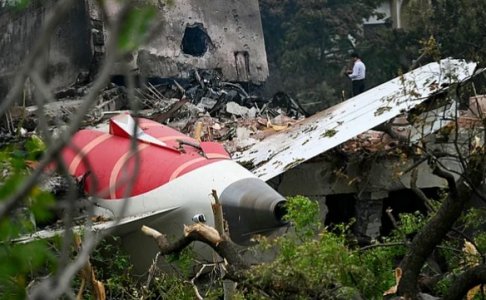

IMG_20260217_080238.jpg
The report, published on Thursday in the Italian daily Corriere della Sera, said Capt Sumeet Sabharwal, the pilot-in-command, allegedly turned off the fuel switches – that is “almost certainly” an intentional act. The paper cited Western aviation agency sources.

https://www.khaleejtimes.com/world/...ilot-deliberately-cut-fuel-switch-report-says


That is too many people to take if this is a suicide.
 
I read this a few days ago... They are saying that the Captain was the one who switched everything off......one voice is heard saying..'why did you turn them off'''.. and another voice is saying ''I didn;t''....

...it's all very strange !
 
Intentional, or a total lapse into a state of confusion. I'm thinking of that, because one voice said "I didn't." (turn off the fuel) A suicidal pilot could have just crashed into the nearest building, without further discussion, explanation, or denial.
 
Intentional, or a total lapse into a state of confusion. I'm thinking of that, because one voice said "I didn't." (turn off the fuel) A suicidal pilot could have just crashed into the nearest building, without further discussion, explanation, or denial.
According to an initial report, no one switched off the fuel.

To move the fuel switch, you have to first lift the toggle-lever, then move it left or right and then up or down. That takes some effort, and the main pilot would surely have seen it being done. Even if he missed it for some reason, a red light located directly in front of him comes on the moment the fuel switch is lifted. ATC gets an indication as well, but reported they didn't.

A final report isn't expected for at least several more months. Final reports following plane crash investigations can take as long as 1 to 3 years.

But at this point, it's suspected that a catastrophic electrical failure occurred due to preventable condensation of moisture, and that India Airline failed to install metal shielding under the bathroom floor, which Boeing recommended (if not ordered) about a year earlier. There's clear evidence that the pilots did manage to restart the engines, but hadn't gained nearly enough altitude before they spooled up to full power for flight.
 
Frank: I never heard of ATC being notified if a fuel switch has been messed with in any which way. ACARS notes it and sends it back to the United Airlines chief mechanic. In turn, he verifies with the Captain of the plane that his fuel switch has been shut off. Other upper level management is also notified. They will take immediate action by meeting and monitoring the situation. This is all done in a matter of moments.

This is an emergency situation, so the Captain has a responsibility to report the incident to the ATC. According to the NTSB preliminary report both switches were cut off. I remember the crash, but so much has happened since this event, I didn’t follow up on it. I spent time following the accident that Greg Biffle was involved with.

What puzzles me is the fact that both switches were moved to the “cut-off” position. The NTSB has been checking the switches thinking maybe they were defective. My opinion is that it’s doubtful, but possible, I guess.

ACARS=Aircraft Communications Addressing and Reporting System. This system automatically monitors all gauges and switches for any defects while the plane is in the air. If a defect or incident occurs, the pilots receive an automatic alarm and notification via a printout and the chief mechanic is also notified. In the cockpit, we receive codes that need to be addressed by using our cockpit manual. Any system failures are immediately addressed and if the Captain ascertains an emergency has been detected, they will alert ATC and take immediate action by requesting a deviation to land at the closest airport if necessary. There are instances where the pilot can make the repair or correction.
 
Frank: I never heard of ATC being notified if a fuel switch has been messed with in any which way. ACARS notes it and sends it back to the United Airlines chief mechanic. In turn, he verifies with the Captain of the plane that his fuel switch has been shut off. Other upper level management is also notified. They will take immediate action by meeting and monitoring the situation. This is all done in a matter of moments.
Thank you, oldman. A report I saw said ATC gets an indication, I assumed by radar.
This is an emergency situation, so the Captain has a responsibility to report the incident to the ATC.
So ATC is notified via radio? Maybe that's what was said, and I didn't recall correctly...it's been quite a while.
I remember the crash, but so much has happened since this event, I didn’t follow up on it. I spent time following the accident that Greg Biffle was involved with.
I followed an excellent YouTube channel called Airline News with Geoffrey Thomas to get daily updates while there was a lot of activity and a lot to report. I just checked and saw there's new information from him about the Air India flight. I'm going to watch it in a bit.

Most of the info in my earlier post came from that channel. Thomas's co-host, Richard Godfrey, is an airline mechanic and engineer with 30+yrs experience. He sent a full analysis letter to Boeing and at least one of the investigative agencies (I forget which) about the bathroom condensation issue, which was very well-received.

The bathroom on those planes sits directly above crucial wiring bundles and circuit systems.
What puzzles me is the fact that both switches were moved to the “cut-off” position. The NTSB has been checking the switches thinking maybe they were defective. My opinion is that it’s doubtful, but possible, I guess.

ACARS=Aircraft Communications Addressing and Reporting System. This system automatically monitors all gauges and switches for any defects while the plane is in the air. If a defect or incident occurs, the pilots receive an automatic alarm and notification via a printout and the chief mechanic is also notified. In the cockpit, we receive codes that need to be addressed by using our cockpit manual. Any system failures are immediately addressed and if the Captain ascertains an emergency has been detected, they will alert ATC and take immediate action by requesting a deviation to land at the closest airport if necessary. There are instances where the pilot can make the repair or correction.
(y)

I liked the analysis Richard Godfrey sent out. It was very professional, thorough, and it made sense. It also highlighted India airline's poor maintenance and maintenance record-keeping, its track-record of penny-pinching, and its habit of threatening and firing whistle-blowers.
 
Last edited:
It also highlighted India airline's poor maintenance and maintenance record-keeping, its track-record of penny-pinching, and its habit of threatening and firing whistle-blowers.

My husband was interested in plane crashes. He once took a special interest in India's airlines. When he finished, he told me never, ever get on a plane from an Indian airline, for the same reasons you mentioned. Lucky for me, I have never been interested in going to India.
 
My husband was interested in plane crashes. He once took a special interest in India's airlines. When he finished, he told me never, ever get on a plane from an Indian airline, for the same reasons you mentioned. Lucky for me, I have never been interested in going to India.
My wife thought already after reading of it, that it was poor maintenance by Air India, that caused the crash.
 
Last edited:
Thank you, oldman. A report I saw said ATC gets an indication, I assumed by radar.

So ATC is notified via radio? Maybe that's what was said, and I didn't recall correctly...it's been quite a while.

I followed an excellent YouTube channel called Airline News with Geoffrey Thomas to get daily updates while there was a lot of activity and a lot to report. I just checked and saw there's new information from him about the Air India flight. I'm going to watch it in a bit.

Most of the info in my earlier post came from that channel. Thomas's co-host, Richard Godfrey, is an airline mechanic and engineer with 30+yrs experience. He sent a full analysis letter to Boeing and at least one of the investigative agencies (I forget which) about the bathroom condensation issue, which was very well-received.

The bathroom on those planes sits directly above crucial wiring bundles and circuit systems.

(y)

I liked the analysis Richard Godfrey sent out. It was very professional, thorough, and it made sense. It also highlighted India airline's poor maintenance and maintenance record-keeping, its track-record of penny-pinching, and its habit of threatening and firing whistle-blowers.
There are at least two and in some cases three backup systems for all of the important instruments, mechanical items and radios, such as the flaps. If the hydraulics quit working, there are motors to take its place. I used this device once in my 33 year career. It was because of the many accidents during the 1980’s that it was decided every important system should have a backup, making it a fault-tolerant system.
I have flown planes with three “radios” onboard. The radio is a must when flying.

Thanks to NASA engineers/engineering, they developed some of the backup systems for commercial aviation. As for the fuel system switches being moved to the “OFF” or “CUT-OFF” position, as I said before, the ATC gets the information from the pilot. The pilot gets an alarm and a printout from ACARS. ACARS runs constantly while the plane is in operation. As a pilot flying the aircraft, you may think everything is fine until you get a call from the United lead mechanic telling you that the circuit breaker for the yaw dampers just cut off. You will have to get up out of your comfortable seat and reset the breaker. If it continues to shut off, it will need replaced.

It’s almost impossible for the fuel shutoff valve to be closed. To close, the pilot has to lift it up, turn it maybe a quarter of a turn and then place back in the holder. It’s not real easy to lift it. The finger switch is grooved so the hand doesn’t slip off and when placed back into the holder the spring is strong and goes back in with force from the spring. There is a video of the switch operation on YouTube.

This is the crash where the RAM dropped down right after takeoff. Is this right?
 
Latest news I could find...

Recent investigative leaks and preliminary reports regarding Air India Flight 171 (which crashed in Ahmedabad in June 2025) have indeed introduced the possibility of a deliberate act, including the theory of pilot suicide.


While the final official report has not been released, here is a breakdown of why this possibility is being discussed and the evidence supporting or challenging it.

1. The Fuel Switch Mechanism​

The primary reason investigators are looking at "deliberate action" is the nature of the Boeing 787 Dreamliner's fuel control switches.
  • Intentionality: Aviation experts, including Captain Mohan Ranganathan, have noted that these switches are not "push-button" or "sliding" types that can be bumped accidentally. They are lever-locked, meaning a pilot must physically lift the switch over a guard before moving it to the "cutoff" position.
    +1

  • Sequence: Data shows the switches for the left and right engines were moved to "cutoff" almost simultaneously (within one second of each other) shortly after takeoff.


  • Lack of Failure Mode: US investigators and simulator tests have reportedly failed to find any technical glitch or software error that could cause both fuel switches to move to "cutoff" on their own.

2. Cockpit Voice Recorder (CVR) Evidence​

The preliminary report published in July 2025 revealed a "startling" exchange between the two pilots:
  • The Question: One pilot is heard asking, "Why did you cut off the fuel?" (or "Why did he cut off?").


  • The Denial: The other pilot responds, "I did not do so."


  • Analysis: Recent reports from February 2026 suggest that "cleaned-up" audio has allowed investigators to identify which pilot was speaking. Italian media (citing sources in the NTSB and AAIB) claims the Pilot-in-Command (Captain Sumeet Sabharwal) is the "main suspect" because the left engine (near the captain) was shut down first, and his control yoke remained stationary while the First Officer was frantically trying to regain altitude.
    +1

3. Arguments for and against the "Suicide" Theory​

Factors Pointing to Suicide/Intentional Act:
  • Mental Health Rumors: Unconfirmed reports have circulated that Captain Sabharwal was dealing with personal issues, including a divorce, and had previously suffered from depression or was on extended medical leave.


  • No Alternative Explanation: Because the aircraft was new and no mechanical defects were found, investigators have narrowed the cause down to human intervention.

Factors Challenging the Theory:
  • Family Denial: Captain Sabharwal’s family has strongly rejected claims of mental illness or depression, calling the rumors "speculative" and "baseless."


  • Inconsistent Dynamics: Some aviation experts argue that cutting engines just after takeoff is an "unreliable" method of suicide, as it doesn't guarantee a fatal crash and leaves time for the other pilot to attempt a restart (which actually happened—the switches were moved back to "RUN" seconds before impact, but there wasn't enough time for the engines to relight).
  • The "Accident" Theory: A competing theory suggests that a minor engine issue occurred and a pilot, under high stress, accidentally grabbed the wrong switches in a "muscle memory" error, though the locking mechanism makes this highly debated.

4. Official Status​

As of February 12, 2026, the Aircraft Accident Investigation Bureau (AAIB) has officially dismissed the Italian media reports as "incorrect and speculative," stating that the investigation is still ongoing. They have urged the public to wait for the final report before concluding that the act was a deliberate suicide.


This is the crash where the RAM dropped down right after takeoff. Is this right?
Yes, it did deploy. They said RAT, but I'm sure we're talking about the same thing; a power back-up system that deploys a small prop from the belly of the plane.

It was Air India Flight 171, Ahmedabad, India, to London Gatwick Airport, June 12, 2025, and I'm very sure it was a Boeing 787 Dreamliner.

I watched Geoffrey Thomas's update video that I mentioned yesterday. He announced the release of the interim report. There's probably a link to it in the description box of the video, but I didn't read it yet. I might do that later today... probably just basic info, but I'm curious to see if anything specific was ruled out.

I don't know much about planes at all, but there was such a massive response to that crash, it peaked my interest. And there was so much guessing and arguing and garbage information being published about it, I challenged myself to a fact-finding mission, and to learn about planes and how airlines operate along the way.
 
Generally, I lean towards Heaven and Hell being real places though somewhat different than per religious dogma. For example, the Christian dogma that is not clearly in scripture, that everyone goes to one or the other is logically nonsense, and instead I expect most humans just die into non-existence, returning to dust with only those that follow the path presented in narrow scripture going to a Heaven.

However if an Ultimate Intelligent Entity can save a human for a Heaven, they would also be able to selectively save others for a Hell. Those that choose suicide while taking other's with them as in that case, deserve, if such exists, to bake in Hell.
 
Yes, it did deploy. They said RAT, but I'm sure we're talking about the same thing; a power back-up system that deploys a small prop from the belly of the plane.

It was Air India Flight 171, Ahmedabad, India, to London Gatwick Airport, June 12, 2025, and I'm very sure it was a Boeing 787 Dreamliner.

I watched Geoffrey Thomas's update video that I mentioned yesterday. He announced the release of the interim report. There's probably a link to it in the description box of the video, but I didn't read it yet. I might do that later today... probably just basic info, but I'm curious to see if anything specific was ruled out.

I don't know much about planes at all, but there was such a massive response to that crash, it peaked my interest. And there was so much guessing and arguing and garbage information being published about it, I challenged myself to a fact-finding mission, and to learn about planes and how airlines operate along the way.
I am just mystified how both fuel switches were turned to the cut-off position. As I said previously, on this plane, the switch needs to be lifted, turned and placed back into the older. They are spring loaded and snap back in place. It’s hard to tell when the NTSB will release the final report, but it will likely be at least a year from the accident. I almost think it had to be turned by one of the pilots, but who knows?
 
I am just mystified how both fuel switches were turned to the cut-off position. As I said previously, on this plane, the switch needs to be lifted, turned and placed back. They are spring loaded and snap back in place.
This is why Richard Godfrey (from Airline News with Geoffrey Thomas) feels reasonably comfortable with his theory about water leakage, or at least heavy moisture condensation. He talked about the same things you explained to me earlier in this thread ...the electrical system and all its back-ups and safety measures, and he showed how moisture could have gotten to specific crucial points from the plane's bathroom.

But, as knowledgeable and experienced as he is, it is just a theory.

It’s hard to tell when the NTSB will release the final report, but it will likely be at least a year from the accident. I almost think it had to be turned by one of the pilots, but who knows?
Yeah, Airline News said they didn't expect to see a final report for year, possibly even close to two, and Mentour Pilot said the same.

I'm going to be watching for it.
 
This is why Richard Godfrey (from Airline News with Geoffrey Thomas) feels reasonably comfortable with his theory about water leakage, or at least heavy moisture condensation. He talked about the same things you explained to me earlier in this thread ...the electrical system and all its back-ups and safety measures, and he showed how moisture could have gotten to specific crucial points from the plane's bathroom.

But, as knowledgeable and experienced as he is, it is just a theory.


Yeah, Airline News said they didn't expect to see a final report for year, possibly even close to two, and Mentour Pilot said the same.

I'm going to be watching for it.
The NTSB explores every possibility known to mankind and believe me, they have come up with some real doozies of possibilities. I remember when the NTSB was investigating the incident with the United Express plane that was preparing to land in Colorado Springs and suddenly crashed killing everyone onboard. A few years later another plane with a similar issue went down and then two more followed. The NTSB thought the cause was a rudder hard over, or in layman’s terms, the rudder was stuck.

It took the NTSB around 10 years, (I forget), to release the final report. It was a Parker Hannifin valve unit. It took that long to write a final report as to the cause of the accidents. This happened only on Boeing 737’s. I had been a 737 pilot previously and an agent from the NTSB had called me and asked if I had any experiences with a rudder hard over while in flight. I told them no.
 
My husband was interested in plane crashes. He once took a special interest in India's airlines. When he finished, he told me never, ever get on a plane from an Indian airline, for the same reasons you mentioned. Lucky for me, I have never been interested in going to India.
(I missed this post)

A retired Indian pilot with decades of experience agreed to be interviewed by the handful of truly reputable plane-crash analysts, experts, and pilots on YouTube, and he would agree with your husband; Air India has an abysmal maintenance record. The former pilot also talked about how the airline threatens whistle-blowers and their families, sometimes with violence.

And it was reported anonymously (via email to a couple of those YT channels) that representatives from Air India went to Captain Sabharwal's mother's house just days after this crash and offered her money to keep her mouth shut. When she refused to take the money, they said things like "Hope nothing happens to your grandchildren."

She's never said anything publicly.
 
Back
Top