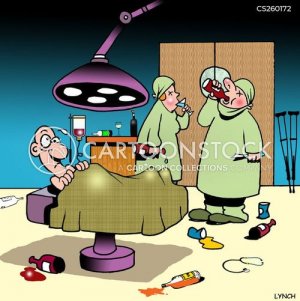
Alcohol drinking and hangovers. Also, alcohol poisoning.

Probably not necessary. From what I have read, success rates across all recovery methods are pretty much the same, usually in the 5%-10% range. Not a great outcome, but for those that do stop, it's a wonderful experience.

Your description sounds like it may utilize civilian centers outside the military? I guess I was just wondering mostly if it was a military program or civilian, and if it was radically different than most others. AA was the only game in town, back when I quit, but there are several more options available to a wider audience today.
You got it right. Some are civilian centers, but we do have short term training, for lack of a better definition, to help our men and women to get rid of bad habits. Smoking, drinking, doing MJ, etc. These types of personal traits can sometimes be corrected with short term teachings.
 

I don’t have an exact number because I never kept track, but I can imagine that in my 37 years as a state trooper, I had arrested between 150-200 DUI’s. That number includes any arrests made at checkpoints. My highest number was 3.1. I kept wondering how the man was even able to start his vehicle. When I asked him to step out of the vehicle, I think I had to tell him about 6 times. When he finally opened the door, he fell out of his truck. I remember him as being a white male, about 6 ft 2 inches in height and probably weighed between
270-290 pounds.

I called the EMT’s and had him taken to the hospital to be checked because he was vomiting at the site. When they went to draw his blood, he said he was scared of needles, or something like that, (it was hard to understand his slurring), so they sprayed the area where the needle would be inserted with a chemical that numbs the skin. The rapid test came back at 2.88, but the forensic test was 3.1, which took 2 days to get back.
 
Last edited:
I used to have a glass or two of wine with every dinner. Now I have a glass or two once a week. I find I don’t miss the alcohol at all. And when I do have a glass with a good meal, it seems more pleasurable. Also, it’s my way of striking back at the profligate spending of our political leaders. We have high alcohol taxers in my area, and they no longer get as much of my money from me as they used to get.
 

At age 18, I spent a year in a military electronics school in Biloxi Mississippi where the drinking age for beer was 18 and a weekend bus ride away was New Orleans for hard liquor and much nasty. So had much time there early to slowly figure out I really didn't like much of that experience or its culture. And then had tours at 3 California bases. For some time, I thought myself as a person hanging out at coffee shops of that era. Remember, this was the same time The Doors, Hendrix, Cream, Led Zeppelin, etc were showing at least the world I was part of that there was a whole lot more to having fun.

After was HD from the Viet Nam War, being a Counterculture person by that time in its most hard core region, I didn't have a problem staying away from the alcohol world except that it was strongly dominant in usual night club social circles that became much more prominent about 1975 with the rise of Punk, Disco, and the biker-drug dealer cocaine and whiskey scene. By the 1980s, the next generation for the most part due to the dominant social power of the media, except for Rap, Hip Hop, and Rave, embraced the alcohol world big time that drastically changed the ways rock concerts were held, removing previous standing in front of stages with instead paid seating everywhere, little crowd dancing, and much alcohol for sale. Well except for the GD world.

I still enjoy sipping a bit of sweet wine occasionally but then the next day recall how that rebounds even from small amounts.
 
Last edited:
You forgot the main reason for which I quit drinking. When I drank, I did stupid things that embarrassed me, whether or not I was in front of others.
Excessive alcohol consumption often leads to significant lapses in judgment, resulting in mortifying moments. Common themes in these situations include public intoxication, social faux pas and inappropriate intimate behaviour.
One saving grace for me, at least. When I was making a complete alcohol addled ass of myself there wasn't any security cameras around to record my drunken stupidity.
 
Alcohol suppresses vasopressin, a hormone regulating fluid, causing excess urination, resulting in extreme thirst, dry mouth, dizziness, and headache. The liver converts alcohol into acetaldehyde, a toxin many times more potent than alcohol, which causes nausea, vomiting, sweating, and rapid heart rate.
The immune system releases inflammatory agents (cytokines) throughout the body, leading to overall malaise, muscle aches, and fatigue, similar to fighting a virus. Gastritis occurs as alcohol irritates the stomach lining and increases acid production, causing nausea and pain. Metabolism of alcohol causes hypoglycemia, contributing to weakness, shakiness, and fatigue.

The brain struggles to rebalance neurotransmitters. After being suppressed, gamma-aminobutyric acid activity drops, while glutamate, a stimulant, rebounds, causing anxiety, jitters, and a low mood. Inflammation and metabolic changes impair attention, memory, and concentration.
Acetaldehyde dilates blood vessels in the head, causing pain, which is exacerbated by dehydration. Despite passing out, alcohol prevents REM sleep, leading to profound tiredness and lack of rest.
Alcohol makes it harder for the brain areas controlling balance, memory, speech, and judgment to do their jobs, resulting in a higher likelihood of injuries. In my early 20's I quit nicotine, it would be another twenty-five years before I managed to quit the demon drink.

well that will impress a lot of chronic drunks!!
 
I cringe watching TV stars (some whom are idolized by many) casually drinking alcohol, like it's part of life of a normal healthy life. Chronic drinking increases the risk of certain forms of cancer, including esophageal cancer and liver cancer. It also increases the risk of other major health problems including stroke and diabetes. Heavy drinking doesn't have to be long-term to result in devastating consequences.
 
Narrowly avoided tragedy when we realised just in time that the port and gin stocks were running low. Daughter phoned to say that Port was on offer in Tesco, and Amazon were the cheapest for gin (Sipsmith London dry). I never knew that Amazon sold booze, and they just ask your age when they deliver it.
 
I remember that I started drinking beer at age 14. As a young adult at parties with friends, there were sometimes 2 to 3 litres.
Much less some years later. Now at 66 years one or two beer in the evening, but not everyday.

No liquor, wine only on special occasions.

Regarding my younger years:

"No, je ne regrette rien"
(French singer Edith Piaf)
 
I like a drink - and I drink most evenings - but I don't get drunk. 2 drinks max. The last time I did get drunk was on my retirement celebration 5 years ago. It was an eight hour session (hic!)
 
.but drinking in moderation can be part of a normal healthy life.
Whilst the alcohol industry may promote moderate drinking as safe, the scientific community widely considers alcohol a toxic substance with various health risks.
Research indicates there is no safe amount of alcohol consumption, as even moderate levels are associated with increased risks for several cancers, cardiovascular diseases, and injuries. Organisations like the World Health Organization have reinforced this stance, stating that alcohol is toxic, psychoactive, and dependence-producing, and classified as a Group 1 carcinogen, alongside substances like asbestos and tobacco.

The perception of moderate drinking as safe often stems from industry marketing or older, less robust studies; however, recent, comprehensive research challenges this view, highlighting the cumulative and dose-dependent negative health impacts of alcohol consumption.
 
Whilst the alcohol industry may promote moderate drinking as safe, the scientific community widely considers alcohol a toxic substance with various health risks.
Research indicates there is no safe amount of alcohol consumption, as even moderate levels are associated with increased risks for several cancers, cardiovascular diseases, and injuries. Organisations like the World Health Organization have reinforced this stance, stating that alcohol is toxic, psychoactive, and dependence-producing, and classified as a Group 1 carcinogen, alongside substances like asbestos and tobacco.

The perception of moderate drinking as safe often stems from industry marketing or older, less robust studies; however, recent, comprehensive research challenges this view, highlighting the cumulative and dose-dependent negative health impacts of alcohol consumption.
Yes, what this person ^ said.
The only safe amount of alcohol is NONE.
 
Yes, what this person ^ said.
The only safe amount of alcohol is NONE.
Fermentation that creates alcohol dates back to 5,000 BC, probably earlier than that. Alcohol's reputation is reinforced in the bible.
There's the marriage feast at Cana: In John 2:1-11, Jesus' first miracle was turning water into wine. Supporters argue that by providing excellent wine for a celebration, Jesus demonstrated that wine is a good gift from God meant for joy, and that moderate consumption is acceptable.

Then there is The New Covenant Symbolism: At the Last Supper, Jesus used wine to represent his blood "This is my blood of the new testament," Matthew 26:28, which some interpret as elevating wine to a sacred, honoured position rather than one to be despised.
Distinction from drunkenness: Proponents often argue that the Bible condemns the abuse of alcoholic drunkenness rather than the substance itself.

My own alcohol consumption was never more than one or two glasses of wine, but I noticed that I missed it on the days that I went without. When I quit, to my surprise, and delight, I lost twenty-one pounds in weight, mind you in all the years that I did consume alcohol I probably lost a lot more pounds................in Sterling!
 
A doctor (over a pint of beer) told me "If you drink less than your GP, you don't have a problem" - and I've seen quite a few doctors put the drinks away. Now, I think a small drink is in order.


Back
Top