As you travel do you wonder about how Cities get their names?

IrishEyes

Sharon
Location
Midwest
Here is a very short list of regions with well known names and their meanings
Feel free to add any you know of:

Regional Stories in Native Names​

East Coast and Northeast​

The story of how American cities got their names has to begin on the East Coast – primarily Manhattan, whose name derives from the Lenape word “Mannahatta,” meaning “hilly island.” This description perfectly captures the island’s original topography long before skyscrapers took over the landscape.

A bit further north, cities like Narragansett, Rhode Island (which is named for the Narragansett people), as well as Poughkeepsie, New York (from the Wappinger word for “reed-covered lodge”), preserve the original languages of the tribes that first lived in these coastal areas.

Midwest and Great Lakes​

Further west, the Midwest's cities reflect the region's natural features and tribal histories.

We have to start with one of the most underrated: Chicago. The Windy City’s name is actually derived from the Miami-Illinois word “shikaakwa,” which refers to the wild garlic that once grew abundantly along the river.

Milwaukee – a name derived from Algonquian – literally means “a good spot or place.” Ask anyone who is from Milwaukee, and they’ll tell you that the name fits well, as the city enjoys a strategic spot right on Lake Michigan.

And in Michigan, cities like Pontiac are named to honor influential Native American leaders such as the Odawa chief who led the resistance against British colonization.

South and Southeast​

As you learn about southern US city names, you’ll quickly realize that many of them memorialize tribal leaders and nations.

One great example is Tuscaloosa, Alabama – a city that takes it’s name from a Muscogee leader whose names stands for “black warrior.” Over in Florida, the name Pensacola comes from the Choctaw words “pashi” (hair) and “okla” (people) – while the Seminole people's legacy lives on in multiple Florida place names and sports teams.

Western Frontier​

The American West offers some of the best examples of Native American words that eventually became names.

Malibu, California, takes its name from the Chumash village name “Humaliwo” – which literally means “where the surf sounds loudly.” A pretty apt name for the city!

A bit further east in Arizona, Tucson gets its name from the O'odham “Ts-iuk-shan” (black base), which actually describes the dark foundation of nearby Sentinel Peak.

Going up the west coast, Seattle’s name honors Chief Si'ahl of the Duwamish people, a leader who was a crucial mediator between Native peoples and the early western settlers.

Why Know The Origin of Names? The Need for Cultural Preservation​

Many Native American place names share a common thread: they describe the natural world with remarkable precision.

Minnesota's Minnetonka (“big water”) to Mississippi (“Great River”), names refer to the geographical features – many of which are still a major part of the US landscape. Following the descriptive naming tradition reflects the deep connection to the environment that the Native people held dear – and predates the earliest colonial maps of the USA.

Yet, these place names are more than just geographical descriptors – they’re living artifacts of cultural heritage that remind us of our history. When we say “Oklahoma” – which comes from a Choctaw word that means “red people” – we are using words that echo across across the pages of history.
 
According to my research, there are 93 locations in the USA named Springfield, in 34 States. Ohio has eleven Townships named Springfield, while Wisconsin has 5 Townships, named Springfield.

There are 88 places in the USA named Washington. 31 States have a Washington County in them. Washington is THE most common place name in the USA. With Springfield in second place, and Franklin in third place.

Duplication of place names in the USA causes many problems for business operators. Which Springfield should this parcel be delivered to ?

JIMB>
 
A lot of New Jersey towns are based on Native American words or names, including Moonachie. The borough was named after Monaghie, an Iroquois chief who inhabited the local cedar forests in the 1600s. And Totowa..the name of Totowa comes from the Native American name for the Great Falls of the Passaic River in nearby Paterson, and literally means "sinking or falling water", or "between mountains and water" (from Wikipedia)
 
Portland Oregon.

Two New Englanders, Francis Pettygrove from Portland, Maine and Asa Lovejoy from Boston, Massachusetts had settled a site they called The Clearing—a small settlement on the Willamette River, about 14 miles upriver from the confluence of the Willamette and Columbia Rivers. Both wanted to name the town after their hometowns.

In 1845, over dinner in the home of a friend, the two agreed to a two-out-of-three coin toss to settle the dispute. Pettygrove won two tosses, securing the name Portland.
 
While living in Illinois I found many town names from the original natives. It's such a good visual
map of where these people lived the most often.

Overview of Illinois City Names​

Many cities in Illinois have names that originate from Native American languages, reflecting the rich indigenous heritage of the region. Below are some notable examples along with their meanings.

Notable City Names and Their Meanings​

City NameOrigin LanguageMeaning
ChicagoMiami-Illinois"Wild leek"
KankakeePotawatomi"Cornfield"
PeoriaPeoria TribeNamed after the Peoria tribe
CahokiaCahokia PeopleNamed after the Cahokia people
IroquoisIroquois TribeNamed after the Iroquois tribe
MacoupinMiami-IllinoisRefers to the American lotus
ChenoaOjibwe"Big"
ChebansePotawatomi"The little duck"
AptakisicPotawatomiNamed for Chief Optagushick
AnnawanKickapooNamed for Chief Annawan
 
Since 1898, the Canadian Federal Government has had a standing Parliamentary committee, called the Geographical Place Names Board. It has representatives from all ten Provinces, the three Territories, and the Federal Government. They rule on what place names can be used in Canada.

As a result, we have very FEW duplicate place names. As a matter of fact, Canada does not name places after people, in most cases. We do name lakes after Canadian military heroes. In Saskatchewan alone , there are over 1200 Lakes named after Canadian military heroes. JIMB>
 
Here in Australia we have a mixture of name origins - the usual descriptive place names - eg Bridgetown and places named after historical people from explorers, royalty, leaders of the day eg Melbourne, Adelaide , also places named after other places, usually from UK - eg Perth (like America's New York) - - and also some aboriginal place names eg Canberra
 
South and Southeast
As you learn about southern US city names, you’ll quickly realize that many of them memorialize tribal leaders and nations.

One great example is Tuscaloosa, Alabama – a city that takes it’s name from a Muscogee leader whose names stands for “black warrior.”
Not only does Tuscaloosa mean "Black Warrior", but the Black Warrior river flows through Tuscaloosa Alabama. Roll Tide
 
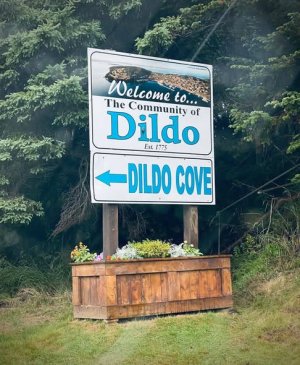
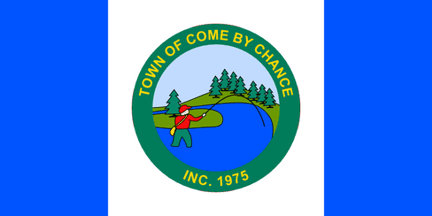
Travelled Newfoundland once and wondered about the origin of a couple of their town names ... I didn't inquire though as it seemed a rather delicate issue? Both towns are in the same general area as well so was it by design or just a coincidence 🤔
Dildo Sign.jpg1778208115802.png
 
Here is a very short list of regions with well known names and their meanings
Feel free to add any you know of:

Regional Stories in Native Names​

East Coast and Northeast​

The story of how American cities got their names has to begin on the East Coast – primarily Manhattan, whose name derives from the Lenape word “Mannahatta,” meaning “hilly island.” This description perfectly captures the island’s original topography long before skyscrapers took over the landscape.

A bit further north, cities like Narragansett, Rhode Island (which is named for the Narragansett people), as well as Poughkeepsie, New York (from the Wappinger word for “reed-covered lodge”), preserve the original languages of the tribes that first lived in these coastal areas.

Midwest and Great Lakes​

Further west, the Midwest's cities reflect the region's natural features and tribal histories.

We have to start with one of the most underrated: Chicago. The Windy City’s name is actually derived from the Miami-Illinois word “shikaakwa,” which refers to the wild garlic that once grew abundantly along the river.

Milwaukee – a name derived from Algonquian – literally means “a good spot or place.” Ask anyone who is from Milwaukee, and they’ll tell you that the name fits well, as the city enjoys a strategic spot right on Lake Michigan.

And in Michigan, cities like Pontiac are named to honor influential Native American leaders such as the Odawa chief who led the resistance against British colonization.

South and Southeast​

As you learn about southern US city names, you’ll quickly realize that many of them memorialize tribal leaders and nations.

One great example is Tuscaloosa, Alabama – a city that takes it’s name from a Muscogee leader whose names stands for “black warrior.” Over in Florida, the name Pensacola comes from the Choctaw words “pashi” (hair) and “okla” (people) – while the Seminole people's legacy lives on in multiple Florida place names and sports teams.

Western Frontier​

The American West offers some of the best examples of Native American words that eventually became names.

Malibu, California, takes its name from the Chumash village name “Humaliwo” – which literally means “where the surf sounds loudly.” A pretty apt name for the city!

A bit further east in Arizona, Tucson gets its name from the O'odham “Ts-iuk-shan” (black base), which actually describes the dark foundation of nearby Sentinel Peak.

Going up the west coast, Seattle’s name honors Chief Si'ahl of the Duwamish people, a leader who was a crucial mediator between Native peoples and the early western settlers.

Why Know The Origin of Names? The Need for Cultural Preservation​

Many Native American place names share a common thread: they describe the natural world with remarkable precision.

Minnesota's Minnetonka (“big water”) to Mississippi (“Great River”), names refer to the geographical features – many of which are still a major part of the US landscape. Following the descriptive naming tradition reflects the deep connection to the environment that the Native people held dear – and predates the earliest colonial maps of the USA.

Yet, these place names are more than just geographical descriptors – they’re living artifacts of cultural heritage that remind us of our history. When we say “Oklahoma” – which comes from a Choctaw word that means “red people” – we are using words that echo across across the pages of history.
Chicago is from wild onion, it is known locally.
 
Chicago is from wild onion, it is known locally.
I had read awhile back in some other tribe it was called Village of Skunks in that language due to the large population
of them way back when. I had to laugh because even though I was 40 miles outside of Chicago in a city area, skunks
could be smelled when you went outside in the morning. Forest Park was the area.
 
Travelled Newfoundland once and wondered about the origin of a couple of their town names ... I didn't inquire though as it seemed a rather delicate issue? Both towns are in the same general area as well so was it by design or just a coincidence 🤔
View attachment 502501View attachment 502505
Newfoundland has some of the most unusual place names, such as Heart's Delight. Joe Batt's Arm, Wreckhouse, Tingle Bar, Love's Approach, Handsome Bay, Witless Bay, and the best one....Hard Luck Cove. Newfoundland has a 400 year settlement history, with many people there having Irish, and or Scots heritage in their past. JIMB>
 
Back
Top