Do you abide by useby dates on food

Rose65

Well-known Member
Location
United Kingdom
I'm terrified of food poisoning and listeria so I won't eat a yoghurt or cream if it is even one day over. I am so vigilant.
In fact once I open things like mayonnaise and other sauces, I make a diary date to replace them as it says, otherwise I wouldn't possibly remember 3 months or 6 weeks ahead.
Yet some people are far more relaxed about it all.
 
I’m more lenient with some expiry dates. Expiry dates are often made well before the food actually expires, making it safer for the producers of it.
Things like yogurt, milk, cheese etc.,

With oils I tend to stick with the expiry dates
 
We write the date we opened the item on the label with a magic marker. A unopened jar of pickles is safe for a number of months, if it was in a dark cool place. JimB.
 
That brings up a point. I too keep mine in the fridge but I have heard a lot of people don't. What is best?
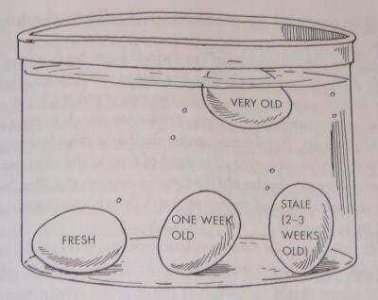
If they're your own fresh from the chicken eggs, and you don't wash off the natural outer coating, (poop and all), they'll last many weeks without refrigeration. If they're store bought, then they re already cleaned and you'll need to check them in a bowl of water.
With store bought eggs, usually a refrigerated eggs lasts around 45 days, and unrefrigerated eggs are good for only about 21 days.
 
That brings up a point. I too keep mine in the fridge but I have heard a lot of people don't. What is best?
In the Uk we can safely keep eggs out of the fridge..altho' in summer I wouldn't recommend it.. but in the USA eggs MUST be kept refrigerated.

The difference lies in the way our eggs are harvested..

Europeans store their eggs at room temperature, while Americans refrigerate them. This is something that inspires some American tourists on their return home to adapt a more Continental attitude to the storage of eggs. Bad idea.

Though keeping eggs at room temperature is a perfectly good idea in Europe, because of differences in production practices, it can be very dangerous in the U.S.

The reason comes down to how we treat one simple, very insidious little bug, salmonella, which can cause extreme digestive distress and even prove fatal. Salmonella can be introduced in two ways -- from outside the egg (as a result of contact with organic matter such as chicken manure) and from within (from the hen to the egg before it has been laid).


According to the U.S. Department of Agriculture, there are more than 140,000 cases of salmonella poisoning from eggs in the United States every year. It is so prevalent that it has been called a ā€œnational epidemic.ā€ And when eggs are left at room temperature, salmonella can multiply quite rapidly, reaching dangerous levels within a matter of weeks.

American egg producers focus on preventing contamination from the outside, so they are required by the USDA to thoroughly wash the eggs before they go to market. They’re rinsed in hot water, dried and sprayed with a chlorine mist almost as soon as they’re laid.

Europeans take a different approach. In the United Kingdom, for example, producers instead vaccinate laying hens to prevent the transmission of salmonella. They then rely on a thin, naturally occurring coating called the cuticle, to prevent any contamination from the outside of the shell penetrating to the egg.

British authorities actually discourage refrigerating eggs on the theory that chilling and then warming could create condensation, which would allow salmonella to penetrate the shell.

In the U.S., this cuticle is removed during washing and even though some producers replace it with a light synthetic coating, regulations still require refrigeration.

We may gradually be moving in the European direction, though. Immunization against salmonella has dramatically reduced the number of cases in the United Kingdom in 20 years, and after a particularly nasty salmonella outbreak in 2010, more American egg producers are starting to do this.


And, of course, there are no regulations regarding eggs produced by backyard flock

https://www.latimes.com/food/dailyd...-need-to-refrigerate-eggs-20140714-story.html
 
Inidentally.. a good way to remember how to store items is that..if you buy it from a fridge or freezer, then that's how you store it... except of course for items like Mayo or open jars and cans.. which can be stored unopened in a cupboard but once opened must be refrigerated
 
I do not trust the dates so much ..... there used to be sell by dates for retailers and consumers had time after that depending on product

A use by date was on some things and i guess too many could not figure out the two dates.... now it is all best by date.... i feel is more like the sell by date.
if a refrigerated item it is a crap shoot honestly...... as i worked in grocery retail and if for example........ someone set something on a shelf it was not found for a bit
the basic practice is still chilled put back in case...... if warm take to the write off bin .... many helper clerks who take go backs etc just shove it back on shelf for sell... so good reason to reach behind items
 
I'll do that! Thanks!
Depending on the breed of the hen, some eggs are just naturally lighter than others and they'll float even when they're newly laid. Eggs have little pockets of air in them and some air pockets are bigger than others, so they're floaty. Some have a denser yolk, so they're not so floaty.

I've eaten eggs that float and didn't even feel a bit sickly.

The only reliable way to know if eggs have gone bad is to crack one open. The stink will remove all doubt.
 
It depends what the product is. I go by sight, smell and logic.

Frozen products usually have a BB date that’s a year or two out. If I see it’s just a month, I leave it in the store. If I’ve accidentally purchased something with a very short day, it proves my theory.

I’d like to see a recommendation on packages for a Use Within X days after opening. Some are starting to do this.
 
Depending on the breed of the hen, some eggs are just naturally lighter than others and they'll float even when they're newly laid. Eggs have little pockets of air in them and some air pockets are bigger than others, so they're floaty. Some have a denser yolk, so they're not so floaty.

I've eaten eggs that float and didn't even feel a bit sickly.

The only reliable way to know if eggs have gone bad is to crack one open. The stink will remove all doubt.
You are correct. The float only tells you the egg is old. Therefore, the possibility of spoiled is increased. Since eggs have once again dropped in price, I prefer to toss the floaters rather than risk Salmonella, or other issues. Of course, salmonella could also be formed inside the chicken and passed on to the egg, so, nothing short of a lab test would be the perfect answer.
 
I figure penicillin was discovered on moldy bread and wine from fermented grapes and rice, so it's all good no matter what it looks or smells like. There's probably a cure for old age somewhere in that rotten food and drink. :giggle:
 
Often I do not. Those dates are guides and there are methods to find out if food is safe to eat beyond those dates. For instance, I read that yogurt is usually good for up to two weeks beyond the dates. @squatting dog posted the egg trick, something I've been using if eggs are left past the dates. I've had Ritz crackers in the fridge a year past their best by dates and they tasted fine. When crackers are stale, one bite and you'd be spitting them out, they're so bitter and nasty. Then of course, using your sense of smell can come in handy too. This article should help with deciding when to toss something.
https://www.tasteofhome.com/article/its-safe-to-eat-food-past-its-expiration-date/
 
I do not trust the dates so much ..... there used to be sell by dates for retailers and consumers had time after that depending on product

A use by date was on some things and i guess too many could not figure out the two dates.... now it is all best by date.... i feel is more like the sell by date.
if a refrigerated item it is a crap shoot honestly...... as i worked in grocery retail and if for example........ someone set something on a shelf it was not found for a bit
the basic practice is still chilled put back in case...... if warm take to the write off bin .... many helper clerks who take go backs etc just shove it back on shelf for sell... so good reason to reach behind items
The opposite way around here.. the Best Before Date was an advisory...the USE BY date is basically a command... use something beyond the USE BY date at your peril..

I don't take any notice of USE by dates on meat or fish..in that I would never allow Meat or fish to reach the sell by date...before it's used...same with chilled package meals. You can't see inside a package meal which contains fish or meat... and sometimes I'll see fresh pork or chicken still in the fridges well within their use by date.. which has clearly gone off,

.. .. so if you can see it's gone off when it's fresh.. then what's it like in a ready meal where you can't see because it's covered in sauce etc?. so if I'm buying a ready meal.. then it's got to be used about a week before it's Use by date..
 
Back
Top