

mellowyellow
Well-known Member
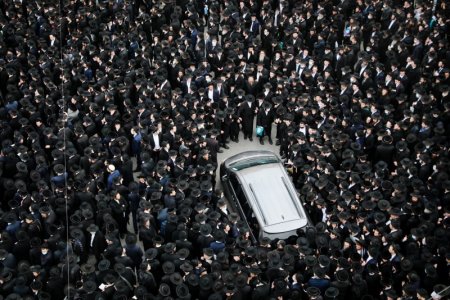
Thousands of ultra-Orthodox Jews participate in the funeral for prominent rabbi Meshulam Soloveitchik in Jerusalem.
Not everyone is wearing a mask



Yep and not taking the virus seriouslyThey are all Hasidic Jews aren't they? All men too by the looks of it
I attended a memorial service for a friend's mother at a temple a couple of years ago. Since I'm not religious, I wasn't aware that men & women had to sit separately, so I didn't understand the strange looks I got from some people. When the Rabbi arrived, he explained that I had to sit on the other side of the wall. He knew my mother & he knew she taught Hebrew School, so he was disappointed that I didn't know customs. LOL.I think anyone dressed in those black outfits is generally considered Hasidic. All orthodox Jews aren't part of this sect; those who consider themselves "modern orthodox" dress conservatively but in regular 21st century clothes, usually keeping their heads covered with a little cap (kipah or yarmulkah) if they are men, and with scarves or hats if they are women. But these all-black outfits signify that they are ultra-orthodox or "Hasidic." I think they mean basically the same thing.
It is no accident that the people in the picture are all men. At their religious services, even the modern orthodox services, the men and women sit separately. I don't even know if the women were permitted to go to this rabbi's funeral, even if they wanted to.
I can't understand why they refuse to wear masks. As far as I know, there is nothing in the Bible about it.


The Israeli publication linked below identified Rabbi Meshulam Soloveitchik's mourners as ultra-Orthodox. Nowhere have I seen that they (or he) was Hasidic.Hasidic Jews do not identify as “Ultra-Orthodox.” Many find the term "ultra-Orthodox" derogatory.
It's very surprising that other mourners or people managing the temple logistics didn't advise you that your seating choice was inappropriate or that they left it to the rabbi.I attended a memorial service for a friend's mother at a temple a couple of years ago. Since I'm not religious, I wasn't aware that men & women had to sit separately, so I didn't understand the strange looks I got from some people. When the Rabbi arrived, he explained that I had to sit on the other side of the wall. He knew my mother & he knew she taught Hebrew School, so he was disappointed that I didn't know customs. LOL.
I moved my chair to the edge of the divider wall so I could still check the ladies out just by moving my head.

Maybe the women wanted to check me out, too.It's very surprising that other mourners or people managing the temple logistics didn't advise you that your seating choice was inappropriate or that they left it to the rabbi.
Temple member are generally quite helpful and swiftly point out protocol breaches. As will followers of most religions when breaches occur in their houses of worship.

