Government Debt to GDP

The total wealth in the US is about $168 Trillion. The richest 10% own about 2/3 of that which comes to about $112 Trillion. Our current national debt is a little over $38 Trillion. So I say let's have a wealth tax and pay off the debt on their backs. They can afford it and still have plenty left. Now I'll just sit back and wait for the inevitable howls of opposition from the usual suspects. :)
Never one to disappoint. 😉🤭😂

I would be content with the notion of us all paying our proportionate share, over time, as
long as the underlying problems that led to the debt were resolved.
 

The last time we had a balanced budget was back in fiscal year 2001. Actually, it was a surplus. So what happened?
What happened? Back then, we had split party rule, Democrats and Republicans both controlled at least one lever of powe. And both parties still had a center core to keep happy. And they knew that. Back then politicians promised to “work hard” for the people. Today they promise to “fight”. And they certainly do fight a lot. Like squabbling 11 year olds. Only a small minority seem to want to do the hard work.
 
Last edited:
The last time we had a balanced budget was back in fiscal year 2001. Actually, it was a surplus. So what happened?
That surplus was a product of the revenue flowing into the Federal Old-Age, Survivors, and Disability Insurance, which was running about $250B more than what was being paid out.
 

We pay taxes to receive benefits, but if we pay higher taxes for less benefits, it easily becomes a redistribution of wealth from the middle class to the wealthy. And those in power like it that way. At one time America built roads and bridges, and did things for the common good. We paid for this, but now we can't afford it? That's what I hear the government saying. It's more like America got cheap.
 
We pay taxes to receive benefits, but if we pay higher taxes for less benefits, it easily becomes a redistribution of wealth from the middle class to the wealthy. And those in power like it that way. At one time America built roads and bridges, and did things for the common good. We paid for this, but now we can't afford it? That's what I hear the government saying. It's more like America got cheap.
IMO we never did pay for those roads and bridges.

At the time they were built we raised the money by issuing thirty year bonds with no clear plan to ever pay them off and now that those bridges and roads need repair and replacement we still owe as much as we did in the beginning.

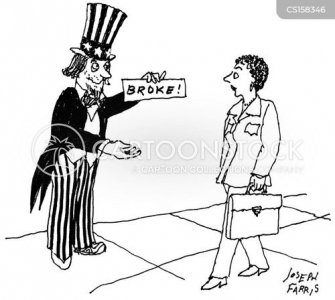
America is not cheap, America is broke, and the bill for the American dream is coming due.

1763458138940.jpeg
 
America is not cheap, America is broke, and the bill for the American dream is coming due.

The rich want the debt to be paid off by the poor and middle class via cuts to Social Security, Medicare, SNAP, etc. To Hell with that! Let them pay it off. They've amassed great wedalth by stealing from us for decades. And they still want to steal more.
 
Last edited:
Why don't government lower taxes? What's the justification for raising taxes? Why aren't they spending money on infrastructure? Why aren't they spending on everything?!?!

Debt. Taking a look at countries debt to GDP, it's a truly horrifying picture.

Japan? 237%
US? 124%
France? 113%
UK? 96%
Germany? 62%
Kuwait? 3%
Afghanistan? 8%

In short - our countries are broke! They're teetering on the edge. Borrowing costs for more money are high. We had austerity, and we're truly no better off. Our governments have no head room for major change. And who owns this debt? Investors, other countries, and trust funds.

We expect radical ideas and implementation from governments, but the truth is, there's no money to do it. And it's not immigrants that are causing this. It's not welfare. It's a systemic issue that has gone on for a few generations. Asylum seekers account for 0.3% of the national spend. Spending on corporate welfare dwarfs that spent on Asylum Seekers by more than 17 times. 1% of GDP is spent on foreign aid, and it's going down.

We're broke!

You say it's not welfare that is causing this problem. I can't speak for other countries, but in the US about 40 percent of all government expenditures go to Social Security, Medicare and Medicaid. About 8 percent go to veterans' benefits. About 7 percent go to other social well-being programs like SNAP. So that's about 55 percent.

I would not call any of these programs "welfare" and I don't think they should be cut, but we should note that we can't afford this rate of spending.

Defense accounts for 13 percent, and interest on the debt is about 13 percent as well.

In 1956, defense accounted for 65 percent of the national budget. There was no Medicare or Medicaid. Total expenditures on "social services" were about 9 percent, including Social Security.
 
The last time we had a balanced budget was back in fiscal year 2001. Actually, it was a surplus. So what happened?
  • Massive tax cuts for the rich. Everyone had their taxes cut to some extent, but the biggest beneficiaries by far have been the rich.
  • Increased spending on the military. The Pentagon budget increased some 60-70% after 9/11. It was about $300 billion annually during the '90s and is currently over a trillion dollars.
So basically, revenue decreased and spending increased.

We also had the Great Recession of the late 2000s where we had decreased revenue due to high unemployment and increased payouts for unemployment benefits. And then we had the pandemic where revenues again decreased and stimulus checks were sent out to everyone, which greatly increased the budget.

The cycle seems to keep repeating itself: tax cuts for the rich and increased military and entitlement spending.

You have a point on tax cuts. Tax revenue as a share of GDP was 20 percent in 2001 and is 18 percent now. That represents a lot of money lost to people who didn't need the tax cuts in the first place.

Military expenditures have certainly gone up. But look at Medicare/Medicaid: $239 billion in 2001 and $1.1 trillion in 2024.

The other big culprit is the interest on the debt, which was about $200 billion in 2001 and is now running at about $900 billion.

Another way to look at it: In 25 years, total expenditures have quadrupled, but inflation only went up by 85 percent in that time.

No wonder we're scrod.
 
But look at Medicare/Medicaid: $239 billion in 2001 and $1.1 trillion in 2024.
Good point. With us babyboomers retiring, that has driven up the number of Medicare/Medicaid recipients. Combine that with increased costs of healthcare including what goes to the medical testing industrial complex, that's a huge expenditure increase. And with us boomers leaving the workforce, that's a huge decrease in tax revenue -- even if there weren't all the tax cuts.
 
To bring America back from the brink of fiscal collapse I'm thinking of running for president. My platform will be simple.
Balance the budget

To achieve that cuts to

1.Social Security: $1.35 trillion (22% of the budget). This provides retirement, disability, and survivor benefits.

2.National Defense and Veterans' Support: $1.13 trillion (18% of the budget). The majority of this goes to the Department of Defense for operations, personnel, and equipment.

3.Medicare: A federal health insurance program mainly for people over 65.

4.Medicaid: A government-sponsored insurance program providing health coverage for low-income individuals, children, pregnant women, the elderly, and people with disabilities, with costs shared between federal and state governments.

How many votes will I get? Best guess is zero. No politician would ever get elected with a platform that addresses those.
 
Meanwhile in Afghanistan...
Afghanistan humbled the British Empire in the 19th century.
Afghanistan humbled the Soviet Union in the 20th century.
Afghanistan humbled the Coalition of the Willing in the 21st century.
How did they do it and keep debt so low?
 
You say it's not welfare that is causing this problem. I can't speak for other countries, but in the US about 40 percent of all government expenditures go to Social Security, Medicare and Medicaid. About 8 percent go to veterans' benefits. About 7 percent go to other social well-being programs like SNAP. So that's about 55 percent.

I would not call any of these programs "welfare" and I don't think they should be cut, but we should note that we can't afford this rate of spending.

Defense accounts for 13 percent, and interest on the debt is about 13 percent as well.

In 1956, defense accounted for 65 percent of the national budget. There was no Medicare or Medicaid. Total expenditures on "social services" were about 9 percent, including Social Security.
"I would not call any of these programs "welfare" and I don't think they should be cut, but we should note that we can't afford this rate of spending" in the current low tax environment engineered by the uber-rich.
 
I keep thinking that any day now, the whole system is going to collapse under the weight of enormous debt and incompetent management, but I've been thinking that for 20 years! How much longer can it hold on?
 
Here's a thought. If Medicare and Medicade cost so much - perhaps the problem isn't those benefits, it's the system of medical care that allows costs to be driven as high as they are. Perhaps the delivery of care is broken?
 
Here's a thought. If Medicare and Medicade cost so much - perhaps the problem isn't those benefits, it's the system of medical care that allows costs to be driven as high as they are. Perhaps the delivery of care is broken?
Like several other social security programs, the problem lies within the system. Single payer for medicare, seems to overlook that medicare part A is funded by taxes collected from every citizen's paycheck and is headed for a collapse of the trust fund in just a few short years. That in addition to the rapidly increasing premiums on part B.

Systems that were theoretically adopted to aid the citizenry, have been legislated by some greedy healthcare and insurance companies.
They not only lobby congress, but actually are involved in writing the laws, as well as assisting in the administration... of these programs, through various board memberships and advisory capacities.
 
Here's a thought. If Medicare and Medicade cost so much - perhaps the problem isn't those benefits, it's the system of medical care that allows costs to be driven as high as they are. Perhaps the delivery of care is broken?
Bingo! You get the weekly prize for hitting the nail on the head.

High insurance rates reflect mostly the rise in the cost of medical care. Bring that down, and insurance rates will follow. Somehow the people who provide this expensive care (hospitals, medical centers, etc. ) have managed to deflect the anger onto the insurance companies. That’s a smart move on their part. But, insurance rates are a symptom, not the cause of high medical costs. This is my opinion. That and $7 will get you a fancy latte.
 
Here's a thought. If Medicare and Medicade cost so much - perhaps the problem isn't those benefits, it's the system of medical care that allows costs to be driven as high as they are. Perhaps the delivery of care is broken?
Medicare operates at a 2-4% overhead while private insurance operates between 12 and 18%. Getting rid of private insurance would get rid of their overhead and would save 100s of thousands of dollars in health care costs.

The alternative is to limit private insurance overhead to something comparable to Medicare, which is what some European countries do. They still have private insurance, but they're able to keep costs down by limiting overhead.
 
Medicare operates at a 2-4% overhead while private insurance operates between 12 and 18%. Getting rid of private insurance would get rid of their overhead and would save 100s of thousands of dollars in health care costs.

The alternative is to limit private insurance overhead to something comparable to Medicare, which is what some European countries do. They still have private insurance, but they're able to keep costs down by limiting overhead.
This is exactly the problem. We have privatized Medicare to companies that operate on a substantial profit. So about 60 billion a year of healthcare dollars goes to profit for businesses. In just 5 years, that's 300 billion dollars.

There is no unsolvable reason that Medicare couldn't be set up in such a way to offer better benefits than profit seeking companies, because it is non-profit. All the money taken in would go to the much lower overhead, and the rest to healthcare. No profit wasted.
 
IMO we never did pay for those roads and bridges.

At the time they were built we raised the money by issuing thirty year bonds with no clear plan to ever pay them off and now that those bridges and roads need repair and replacement we still owe as much as we did in the beginning.

America is not cheap, America is broke, and the bill for the American dream is coming due.

View attachment 466654

Here's a thought. If Medicare and Medicade cost so much - perhaps the problem isn't those benefits, it's the system of medical care that allows costs to be driven as high as they are. Perhaps the delivery of care is broken?
The delivery of care system is so broken in the U.S. that no one knows where to begin to fix it. It's like entering a hoarder's attic -- you don't know where to start cleaning up.
 
Well, maybe it's just me, but putting one's healthcare in the hands of businesses who are in it for profit seems like a galactically stupid idea, but it's what we did.
I agree in part. But no one would ever invent new drugs or new medical devices without the promise of a potential commercial payoff.

I think it's government's role to step in and limit extortionate pricing. A Medicare-for-all model would still allow for medical innovation, at least I would hope so.
 
I agree in part. But no one would ever invent new drugs or new medical devices without the promise of a potential commercial payoff.

I think it's government's role to step in and limit extortionate pricing. A Medicare-for-all model would still allow for medical innovation, at least I would hope so.
Sure, this was only about the healthcare provider system, not drugs or medical devices, and as you mentioned Medicare-for-all would certainly allow for that and limit unreasonable pricing.
 
I looked for best universal health care system in the world. Taiwan was listed as the best.

Pros and Cons of Taiwan Healthcare System
Taiwan's healthcare system has both advantages and disadvantages. Here are some of the key points to consider:

Pros:
Universal Coverage: Every resident has access to essential medical services.
Efficient Delivery: The system is known for its quick service and minimal wait times.
High-Quality Care: Skilled healthcare professionals and state-of-the-art medical facilities.
Low Out-of-Pocket Costs: The NHI program promotes financial accessibility to healthcare services.
Focus on Prevention: The system prioritizes preventive healthcare and early intervention.

Cons:
Long Wait Times: Patients may experience prolonged wait times for treatments.
Physician Shortages: There may be limited availability of certain specialists.
Limited Specialty Services: Some patients may face challenges in accessing specialized care.
Overutilization: There is a concern about the system's long-term financial viability and overutilization of services.
Insufficient Compensation: Healthcare providers may not receive adequate compensation for their services.
These points provide a balanced view of Taiwan's healthcare system, highlighting both the strengths and weaknesses that the system faces.

Taiwan with a population of 23 million has problems like this

Overutilization: There is a concern about the system's long-term financial viability and overutilization of services.

Considering the debt & deficit America has now some serious planning would have to take place since America has 15 times the population of Taiwan.
 
I looked for best universal health care system in the world. Taiwan was listed as the best.

Pros and Cons of Taiwan Healthcare System
Taiwan's healthcare system has both advantages and disadvantages. Here are some of the key points to consider:

Pros:
Universal Coverage: Every resident has access to essential medical services.
Efficient Delivery: The system is known for its quick service and minimal wait times.
High-Quality Care: Skilled healthcare professionals and state-of-the-art medical facilities.
Low Out-of-Pocket Costs: The NHI program promotes financial accessibility to healthcare services.
Focus on Prevention: The system prioritizes preventive healthcare and early intervention.

Cons:
Long Wait Times: Patients may experience prolonged wait times for treatments.
Physician Shortages: There may be limited availability of certain specialists.
Limited Specialty Services: Some patients may face challenges in accessing specialized care.
Overutilization: There is a concern about the system's long-term financial viability and overutilization of services.
Insufficient Compensation: Healthcare providers may not receive adequate compensation for their services.
These points provide a balanced view of Taiwan's healthcare system, highlighting both the strengths and weaknesses that the system faces.

Taiwan with a population of 23 million has problems like this

Overutilization: There is a concern about the system's long-term financial viability and overutilization of services.

Considering the debt & deficit America has now some serious planning would have to take place since America has 15 times the population of Taiwan.
These things seem to be a bit at odds to me. I may be misunderstanding it.


Back
Top