You are using an out of date browser. It may not display this or other websites correctly.
You should upgrade or use an alternative browser.
You should upgrade or use an alternative browser.
Magical Book Shops, Interesting Libraries and Books
- Thread starter SeaBreeze
- Start date

Chained Libraries
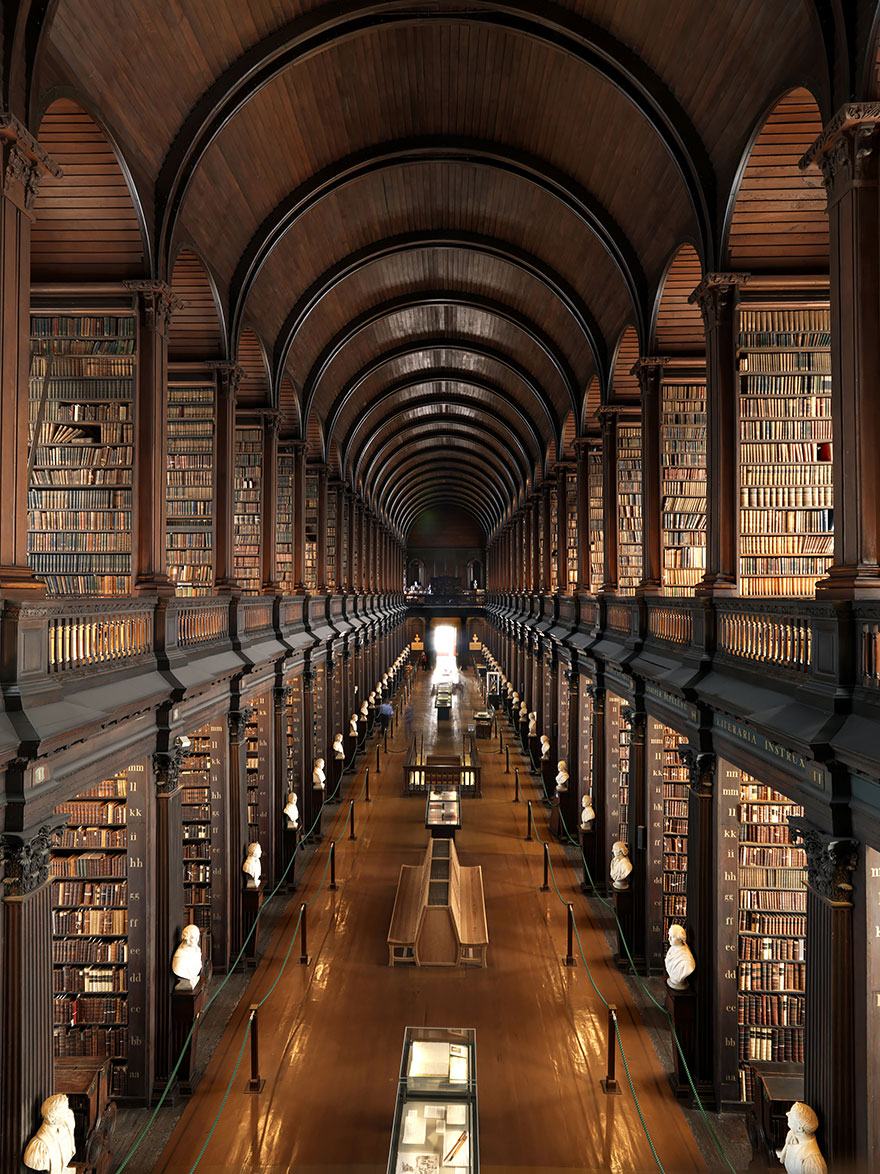
Interesting article and photos of chained libraries. http://www.amusingplanet.com/2015/04/the-last-surviving-chained-libraries.html
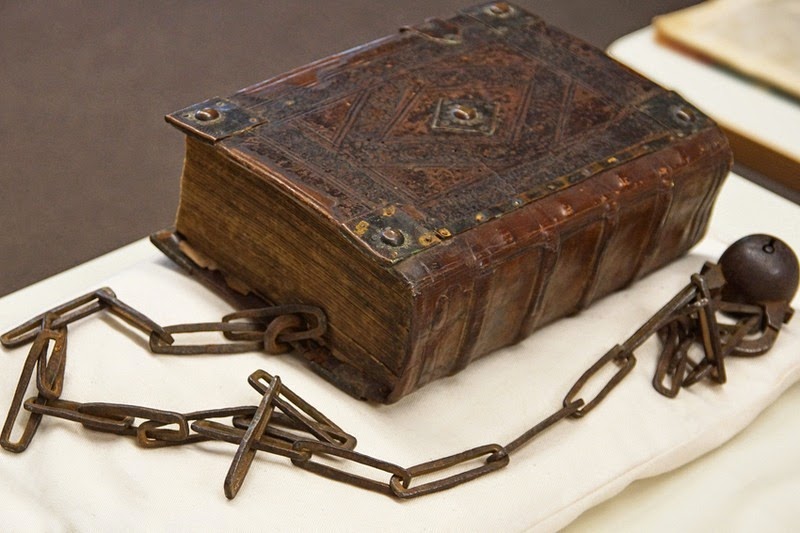
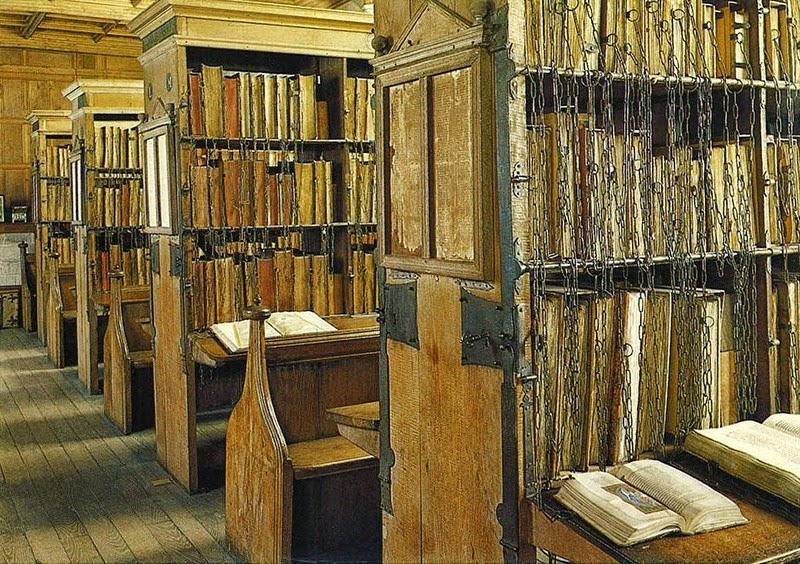
Interesting article and photos of chained libraries. http://www.amusingplanet.com/2015/04/the-last-surviving-chained-libraries.html
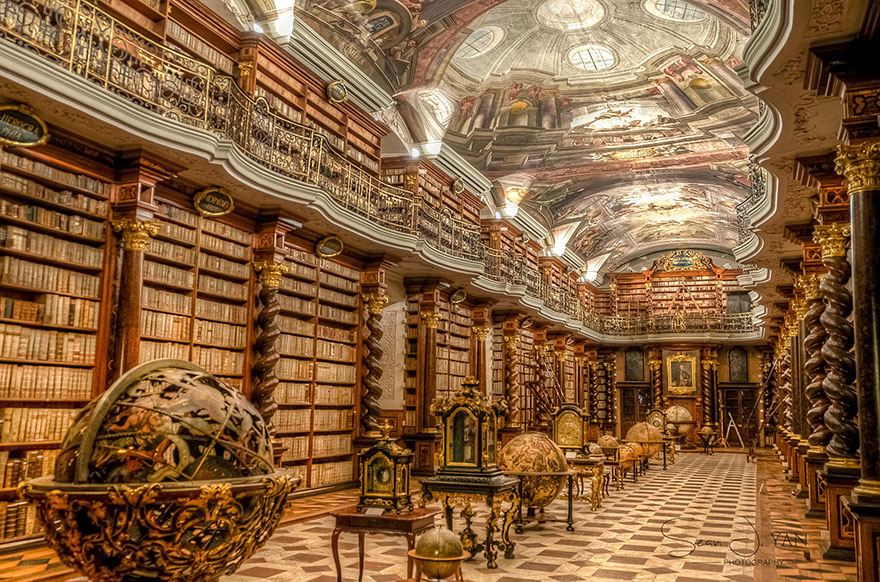
Library in Prague
More info and pics. http://www.boredpanda.com/beautiful-library-prague-czech-clementinum/
The Klementinum library, a beautiful example of Baroque architecture, was first opened in 1722 as part of the Jesuit university, and houses over 20,000 books. It was voted as one of the most beautiful and majestic libraries in the world by our readers!The ceiling frescoes were painted by Jan Hiebl. In 1781, director Karel Rafael Ungar established Biblioteca Nationalis, a collection of Czech language literature. Some of the rare historical books from this collection have been sent to Google for scanning and will eventually be available on Google Books.Just as the library is a rare and little-known treasure, so is it associated with several little-known facts: the Klementinum used to be the third largest Jesuit college in the world; recording of local weather began there in 1775 and has continued ever since; it is featured in a novel by famous Spanish-language writer J
More info and pics. http://www.boredpanda.com/beautiful-library-prague-czech-clementinum/
The Klementinum library, a beautiful example of Baroque architecture, was first opened in 1722 as part of the Jesuit university, and houses over 20,000 books. It was voted as one of the most beautiful and majestic libraries in the world by our readers!The ceiling frescoes were painted by Jan Hiebl. In 1781, director Karel Rafael Ungar established Biblioteca Nationalis, a collection of Czech language literature. Some of the rare historical books from this collection have been sent to Google for scanning and will eventually be available on Google Books.Just as the library is a rare and little-known treasure, so is it associated with several little-known facts: the Klementinum used to be the third largest Jesuit college in the world; recording of local weather began there in 1775 and has continued ever since; it is featured in a novel by famous Spanish-language writer J

AprilT
Well-known Member
- Location
- A galaxy far far away
Stunning, I really prefer the older styled libraries as compared to the modern ones built today, such craftsmanship of those older buildings just gorgeous.
Interesting library in The Netherlands, more info and pics. http://www.amusingplanet.com/2015/12/the-book-mountain-in-spijkenisse.html
Close to the Port of Rotterdam, in Spijkenisse, is a public library that manifests itself as a mountain of books on the town’s market square.
Shaped like a pyramid, the library contains five floors of bookshelves connected by 480 meters of staircases, pathways and indoor terraces, that spiral up to the pyramid's apex. The “mountain of books” is enclosed inside another pyramid whose barn-shaped structure reminds people of the towns agricultural past, which has grown from a farming village to self-sufficient educational and commercial center in the past 40 years.
The Book Mountain is visible from all sides through its glass façade pyramid building which is illuminated from within serving both as an advertisement and an invitation to reading, which holds great significance for a community where only 10 percent of the population is illiterate.


Close to the Port of Rotterdam, in Spijkenisse, is a public library that manifests itself as a mountain of books on the town’s market square.
Shaped like a pyramid, the library contains five floors of bookshelves connected by 480 meters of staircases, pathways and indoor terraces, that spiral up to the pyramid's apex. The “mountain of books” is enclosed inside another pyramid whose barn-shaped structure reminds people of the towns agricultural past, which has grown from a farming village to self-sufficient educational and commercial center in the past 40 years.
The Book Mountain is visible from all sides through its glass façade pyramid building which is illuminated from within serving both as an advertisement and an invitation to reading, which holds great significance for a community where only 10 percent of the population is illiterate.

fureverywhere
beloved friend who will always be with us in spiri
- Location
- Northern NJ, USA
The Strand in Manhattan, not much to look at except floor to ceiling books...ah paradise.


Coolest New Library in China
Very modern and futuristic, more info and photos HERE.
Very modern and futuristic, more info and photos HERE.
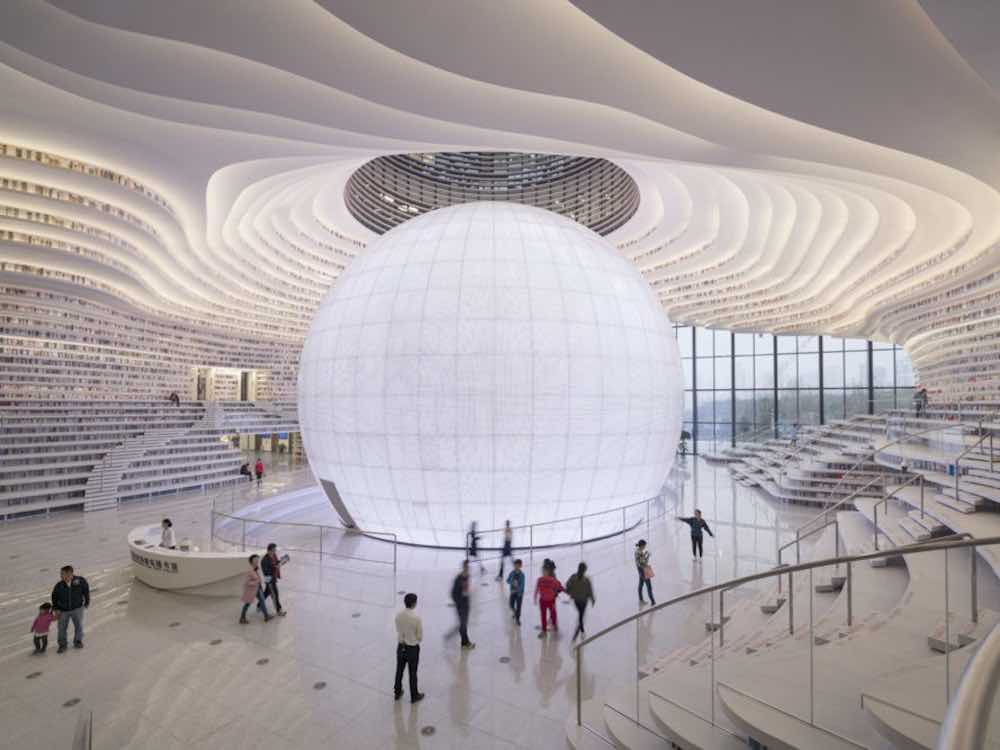
Book lovers, pack your bags – one of the coolest libraries in the world has just opened up in China and it is absolutely gorgeous.
The Tianjin Binhai Library, also called “The Eye of Benhai” because of its mirrored spherical centerpiece depicted above, has opened up in the Binhai Cultural District of Tianjin earlier this month.
The 5-story library features a dazzling futuristic interior with rippling shelves and layered terraces that double as steps and seats.
For the more practically-minded viewers who are eyeing the books that are out of reach on the taller shelves, don’t worry – the designers used aluminum plates instead of actual literature on the higher terraces in order to keep up with the library’s aesthetic.
Interesting Fore-Edge Paintings 'Hidden' in Books
I never knew of any books like this, the full article, more photos and short video HERE.
I never knew of any books like this, the full article, more photos and short video HERE.
Some of the earliest examples of fore-edge paintings date back to the 10th century. These early paintings were simple decorations or heraldic designs made in gold and other colors. Disappearing fore-edge paintings, where the painting is not visible when the book is closed, began to appear around the middle of the 17th century, and the paintings also became more elaborate consisting of fully colored illustration of landscapes, portraits and religious scenes.
The technique peaked in late 19th and early 20th century when artists began to paint on books originally published in the early 19th century. The majority of surviving fore-edge paintings date from this period.

A rather amusing painting made on the edge of “The Heavens: The Seasons” by Robert Mudie, written in 1836 on the subject of astronomy. The painting shows an old astronomer who is so engrossed with his telescope that he is completely unaware that his wife and apprentice are having sex in his own bedroom while he is distracted. Photo credit: Melissa Kunz/University of Tulsa
Modern fore-edge paintings show a lot more variation than those produced earlier. Sometimes two different illustrations were painted on either side of the pages, each one revealing when the page block was fanned in a certain direction. Some fore-edge painters went a step further and painted a third scene directly on the edge of the book that can only be seen when the book is closed completely.
Others painted panoramic fore-edge painting that wrapped around the edges of the book. Some extremely creative pieces needs to be fanned or twisted in a special way in order to see the painting.
The subject matter of the scenes also changed from landscapes and religious to erotic and scenes from popular novels like those by Jules Verne, Charles Dickens and Arthur Conan Doyle. In many cases, the fore-edges were painted with scenes depicting a subject related to the book. But there are many other cases where it is not.
There are several libraries and rare book houses around the world where you can see fore-edge paintings in person. The Ralph H. Wark Collection at the Earl Gregg Swem Library in Virginia, the United States of America, is home over 700 rare books with fore-edge paintings, including several with vertical portraits and double-edge paintings.
Although a dying art, fore-edge paintings are still being created by artists such as Martin Frost and Clare Brooksbank. Martin Frost has over 3,000 artworks to his name.


Big Horn
Member
- Location
- Cody, Wyoming
I never knew of any books like this, the full article, more photos and short video HERE.
I can't believe that I've never heard of these. There's a slew of them on eBay.
The Library That Stands on Two Countries, USA and Canada
More here.
More here.
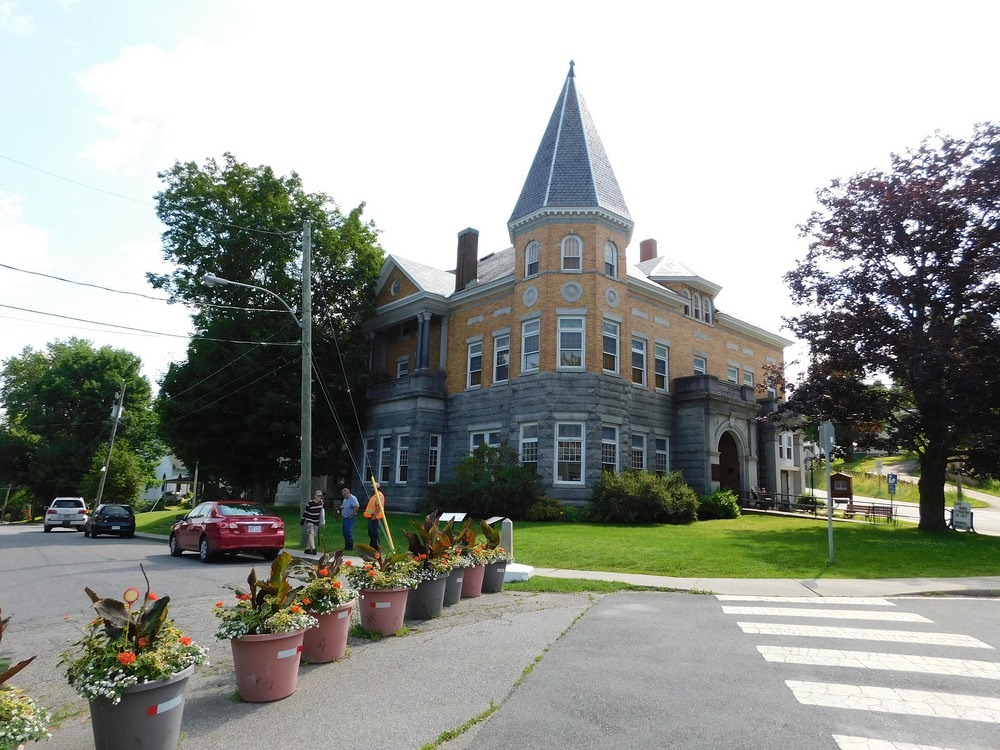
The Haskell Free Library and Opera House is housed in an ornate, century-old, two-story stone building built in the Queen Anne Revival style, typical of public libraries of the time. The library and opera house was built by the American, Carlos Haskell, and his Canadian wife Martha Stewart Haskell, and donated to the residents of both countries.
It was deliberately built over the border so that both Canadians and Americans can have equal access to the library. The library has only one entrance, on the American side, but Canadians are free to enter and use the library, as long as they return to their Canadian side once they’re done. There is, however, an emergency exit on the Canadian side of the building, but it stays closed.
Inside the building a thick black line runs across the floor of the library's reading room demarcating the Canada–United States border.
Upstairs is the opera house, where the line cuts diagonally across the seats so that the stage and half the seats lie on the Canadian side while the rest of the seats on the US side. Similarly, in the library below, children’s books are in the US side, and the rest of the collection and the reading room is in Canada. Because of this, the Haskell Library is sometimes called “the only library in the US with no books” and “the only opera house in the US with no stage”.
Yale University's Beinecke Rare Book and Manuscript Library in Connecticut, USA
More here.
More here.
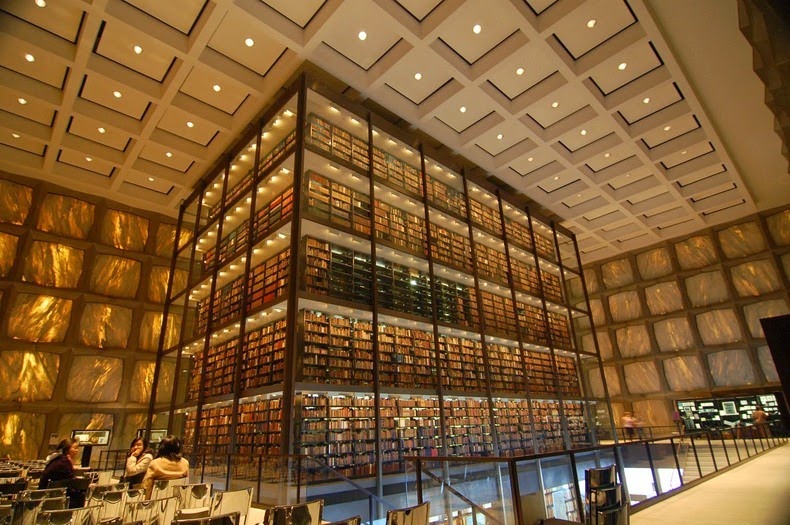
Yale University’s Beinecke Rare Book and Manuscript Library is the largest building in the world dedicated to the containment and preservation of rare books, manuscripts, and documents.
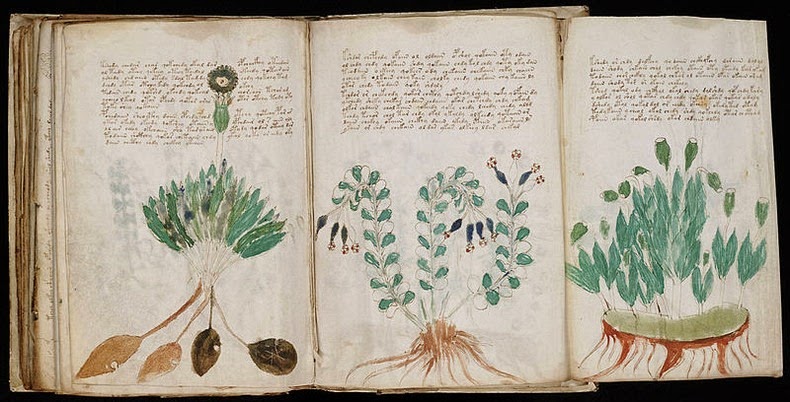
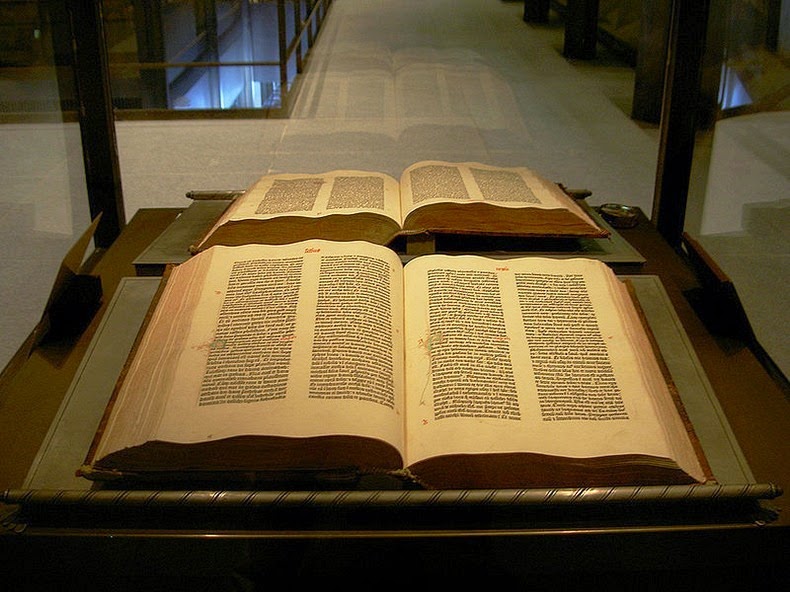
Completed in 1963 and situated on Yale University's campus, in New Haven, Connecticut, the library has room for approximately 780,000 volumes. Currently, it holds about 500,000 volumes and several million manuscripts including the original Gutenberg Bible and the mysterious Voynich manuscript, among several others.
Before the construction of the library, rare and valuable books of the Library of Yale College were placed on special shelving at the College Library, now known as Dwight Hall.
Later in 1930, when the Sterling Memorial Library was being built, the university created a dedicated reading room for its rare books. As the collection grew, Sterling's reading room became too small and unsuitable for preservation of the delicate manuscripts, and the need for a larger library was felt.
Voynich manuscript
Gutenburg bible
The Bookwheel
16th century forerunner to the eBook reader...more here.
16th century forerunner to the eBook reader...more here.
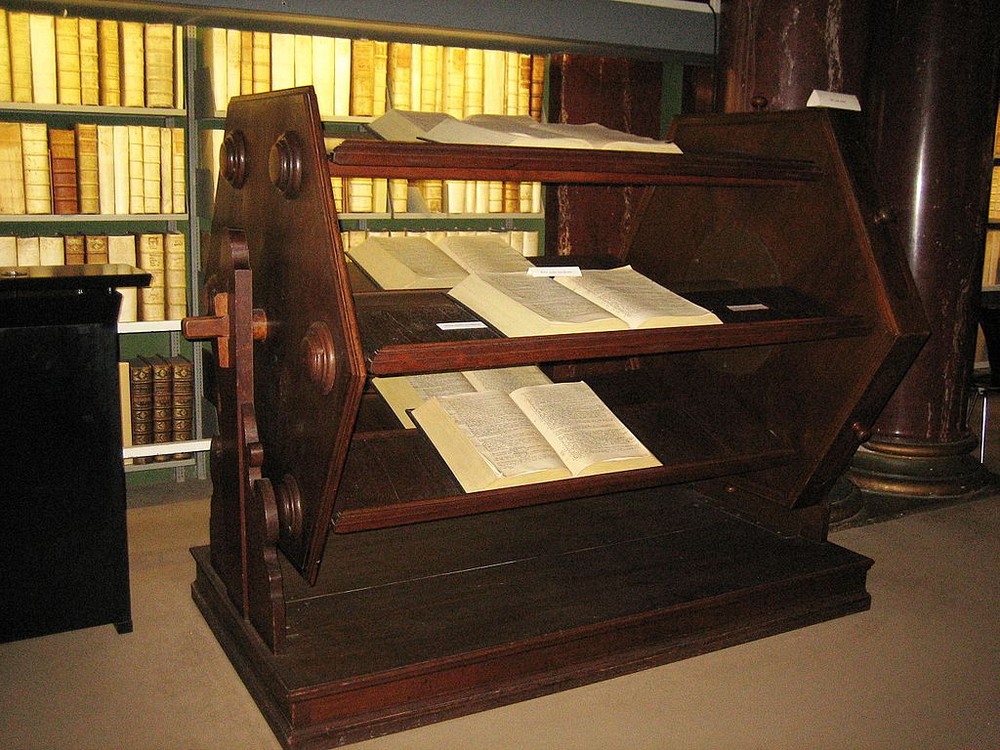
For many of us, the ebook reader was the next best thing to happen since Gutenberg’s printing press. The printing press made books widely available, and the ebook reader conveniently shrunk the same to such compactness that we can carry a thousand of them around wherever we go without discomfort. Such a concept would have been fantastic for someone born in the 16th century, but nevertheless, the idea did cross their minds—especially the mind of Agostino Ramelli.
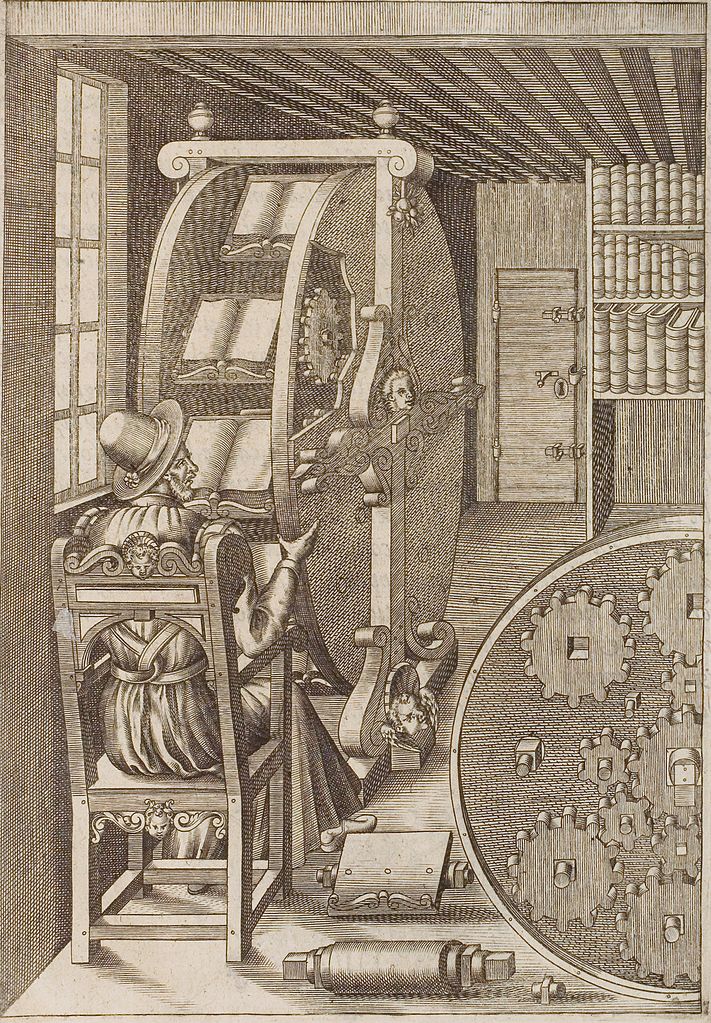
The bookwheel was Ramelli’s attempt to solve the problem of reading or referencing several books at once. In those times printed works were typically large and heavy which made cross-referencing between them nearly impossible unless you laid them out in a large table and used your foot to consult different pages, which Ramelli remarked was very inconvenient for those who are “indisposed and tormented by gout.”
The bookwheel resembled a Ferris wheel typically found in amusement parks, with the riders replaced by slanted reading desks. A complicated arrangement of gears called epicyclic gearing, that had only previously been used in astronomical clocks, ensured the lecturns over which the books were laid open remain at the same angle no matter the wheel's position.
The seated reader used either hand or foot controls to rotate the wheels and bring the desired book into position. According to Witold Rybczynski, gravity would have worked just as fine in keeping the lecturns level, as it does with a Ferris wheel, but Ramelli wanted to show-off his mathematical prowess resulting in an unnecessarily elaborate design.
Ramelli deliberately made his designs complicated in order to show the application and importance of mathematics and geometry in the field of engineering. In the preface of his book, Ramelli made no attempt to hide this fact. He wrote, “On the excellence of mathematics in which is shown how necessary mathematics are for learning all the liberal arts.”