Quote From a Book

2nd time I've posted this but feel the need for it again:

"If you tell enough little boys that they should get everything they desire, eventually one of them will have desires so fierce they collapse in on themselves and become a superdense gravity well, drawing everything to themselves."
Yes, but seems to me a question for our times is whether the oligarchic autocrats like the process of everything being 'drawn to themselves'? (Thinking here of a type of person, no specific autocrat in particular. 🙂)
 

I don't even believe this way, but this dark quote has always haunted me:

"The cradle rocks above an abyss, and common sense tells us that our existence is but a brief crack of light between two eternities of darkness." ~ Vladimir Nabokov
Yes, it was not a healthy, carefree mind that dreamed up that remark
 

The phrase "Tis better to have loved and lost than never to have loved at all," is from Alfred Lord Tennyson's poem: "In Memoriam A.H.H."
It expresses the idea that the experience of love, even with the pain of loss, is more valuable than never having loved at all. This sentiment suggests that the joy and connection found in love, though temporary, outweigh the suffering that can come with its ending.

Tennyson's articulate observation is my antidote in bereavement.
 
"...{D}o-gooders. Nowadays you hear people saying that word like it’s a bad thing, and I’ll never in a million years understand that. Why would you make a person out to be wrong for doing good?...If you’re not doing good yourself you’re going to want to take shots at the people who are. It’s easier to make them wrong than to change yourself."

~~from Rolling Toward Clear Skies by Catherine Ryan Hyde
 
My teachers could easily have ridden with Jesse James for all the time they stole from me.

"Rommel Drives on Deep into Egypt" - Richard Brautigan
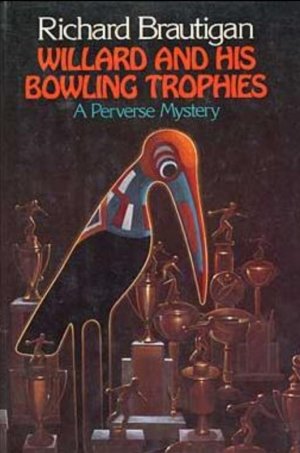
Hey. I forgot I once read a Brautigan novel called Willard and his Bowling Trophies.

Die you bowling trophy thieves!
Or something like that is a quote from the book. I don't really remember much about the book.

The story takes place in San Francisco, California in the early 1970s. The title character is a papier-mâché bird that shares the front room of a San Francisco apartment with a collection of bowling trophies that some time earlier were stolen from the home of the Logan brothers.

1000005858.jpg
 
"When you have everything, the only luxury left is taking things away from others."

~~from Lula Dean's Little Library of Banned Books by Kirsten Miller
 
“I expected to feel only empty and heartbroken after Paul died. It never occurred to me that you could love someone the same way after he was gone, that I would continue to feel such love and gratitude alongside the terrible sorrow, the grief so heavy that at times I shiver and moan under the weight of it.”

― Paul Kalanithi, When Breath Becomes Air

Written by Paul’s wife Lucy after he died, in her epilogue at the end of the book.]
 
Here is a much longer quote from the Kalanithi book When Breath Becomes Air, from pp 182-185. I'll have to see if it is too long to post:

.. Surely enlightened reason offered a more coherent cosmos. Surely Occam’s razor cut the faithful free from blind faith. There is no proof of God; therefore, it is unreasonable to believe in God.

Although I had been raised in a devout Christian family, where prayer and Scripture readings were a nightly ritual, I, like most scientific types, came to believe in the possibility, an ultimately scientific worldview that would grant a complete metaphysics, minus outmoded concepts like souls, God, and bearded white men in robes. I spent a good chunk of my twenties trying to build a frame for such an endeavor. The problem, however, eventually became evident: to make science the arbiter of metaphysics is to banish not only God from the world but also love, hate, meaning - to consider a world that is self-evidently not the world we live in. That’s not to say to believe in meaning, you must believe in God. It is to say, though, that if you believe that science provides no basis for God, then you almost obligated to conclude that science provides no basis for meaning and, therefore, life itself doesn’t have any. In other words, existential claims have no weight; all knowledge is scientific knowledge.

Yet the paradox is that scientific methodology is a product of human hands and thus cannot reach some permanent truth. We build scientific theories to organize and manipulate the world, to reduce phenomena into manageable units. Science is based on reproducibility and manufactured objectivity. As strong as that makes its ability to generate claims about mater and energy, it also makes scientific knowledge inapplicable to the existential, visceral nature of human life, which is unique and subjective and unpredictable. Science may provide may provide the most useful way to organize empirical, reproducible data, but its power to do so is predicated on its inability to grasp the most central the most central aspects of human life: hope, fear, love, hate, beauty, envy, honor, weakness, striving, suffering, virtue.

Between these core passions and scientific theory, there will always be a gap. No system of thought can contain the fullness of human experience. The realm of metaphysics remains the province of revelation (this, not atheism, is what Occam argued, after all). And atheism can be justified can be justified only on these grounds. The prototypical atheist, then is Graham Greene’s commandant from The Power and the Glory, whose atheism comes from a revelation of the absence of GOd. The only real atheism must be grounded in a world a world-making vision. The favorite quote of many an atheist , from the Nobel Prize winning French biologist Jaques Monod, belies this revelatory aspect: “The ancient covenantt is in pieces; man at last knows that he is alone in the unfeeling immensity of the universe, out of which he emerged only by chance”.

Yet I returned to the central values of Christianity - sacrifice, redemption, forgiveness - because I found them so compelling . There is a tension in the Bible between justice and mercy, between the OT and the NT. And the New Testament says you can never be good enough: goodness is the thing, and you can never live up to it. The main message of Jesus, I believed, is that mercy trumps justice every time.

 
The book "Why Men Want Sex and Women need love: Solving the Mystery of Attraction" written by Allen and Barbara Pease states men pretend love for sex and women pretend sex for love. It wasn't until I matured and got older that I realized how true that statement was.


Back
Top