The U.S. is at war with... the U.S.!!!

RambleTamble

Member
Location
U.S.
On February 26, 2026, the U.S. military mistakenly shot down a U.S. Customs and Border Protection (CBP) drone near the Texas-Mexico border. The incident, described as a major breakdown in federal coordination, occurred near Fort Hancock, about 55 miles southeast of El Paso.

Key Details of the Incident
  • Weapon Used: Military personnel used a high-energy laser (part of a counter-unmanned aircraft system) to disable the drone after misidentifying it as a threat.
  • Cause: The Pentagon reportedly was not alerted in advance by the CBP about the drone's flight, leading military operators to mistake the government aircraft for a "hostile" or "cartel" drone.
  • Airspace Closure: Following the "friendly fire" incident, the FAA expanded flight restrictions over Fort Hancock, effective through June 24, 2026. Commercial flights at El Paso International Airport were not impacted this time.
  • Joint Response: The Department of Defense, CBP, and FAA issued a joint statement late Thursday acknowledging the engagement within military airspace and pledging increased cooperation.
This was the second major drone-related mishap in the region in just two weeks:
  • February 11, 2026: CBP personnel used a military-provided laser near Fort Bliss against what they thought was a cartel drone, but it turned out to be a Mylar party balloon.
  • That earlier incident caused a brief, eight-hour shutdown of the El Paso International Airport.
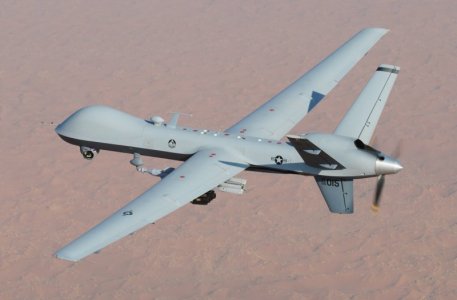
Oops.
 
The specific drone shot down on February 26, 2026, was a General Atomics MQ-9 Reaper (also known as the Predator B), a high-altitude surveillance aircraft.

Estimated Costs
  • Unit Cost: A single MQ-9 Reaper costs approximately $30 million to $34 million in current valuation.
  • Operating Cost: It costs roughly $12,255 to $13,000 per hour to keep one of these drones in the air when factoring in personnel, maintenance, and equipment overhead.
  • Total System Value: A full system—which typically includes four aircraft, a ground control station, and satellite links—can cost upwards of $57 million to $64 million.
Comparison with Other "Targets"
The recent series of incidents at the border highlights a massive cost disparity in the objects being engaged:
  • The Drone: $30M+.
  • The Balloon: On February 11, the same laser system was used to down what turned out to be a Mylar party balloon, which typically costs less than $5.
  • The Weapon: The military used the Locust laser system (manufactured by BlueHalo), which is designed to provide a low "cost-per-shot" compared to traditional missiles, though the initial acquisition of the laser technology itself is a multi-million dollar investment.
 
  • The Weapon: The military used the Locust laser system (manufactured by BlueHalo), which is designed to provide a low "cost-per-shot" compared to traditional missiles, though the initial acquisition of the laser technology itself is a multi-million dollar investment.
The silver lining is

It works.
 
Back
Top