ChiroDoc
Senior Member
- Location
- The Dixie Riviera
I agree with you. I have it at #11 of the 25 finest noir films. But to my taste it's one of the best films made. Period.My vote for best picture of that era is The Third Man @ChiroDoc what say you about this choice?
The Third Man (1949)
Producer Alex Korda had sent British novelist Graham Greene to Vienna after WWII to conceive and write a screenplay which would capture the wantonness and treacherous times in the post war-torn city. After much research Green developed a screenplay, The Third Man, the novelization of which was published following the film’s highly popular reception.
The opening monologue over depicted scenes of the war-changed city, and how it was divided up into policing sectors by the Allies, set the dynamic expectant mood. Holly Martins, an American pulp western writer, has been invited to come to Vienna by his old friend Harry Lime, who has promised Martins a job. Unfortunately upon arrival Martins learns that Lime has been killed in a pedestrian auto accident. Martins soon suspects that there has been some foul play after inquiring about the incident with some of Lime’s associates, physician, girlfriend, and the porter where Lime resided.
Lime suddenly appears in the flesh, and eventually meets with his old friend. The truth comes out about Lime’s nefarious deadly black market schemes which had resulted in many innocent deaths. A British Major Calloway convinces Martins to help snare Lime, who has agreed to meet again with Martins and Lime’s girlfriend Anna Schmidt. On his arrival Anna warns Lime who flees to the city’s mammoth sewer system. The police lead by the Calloway and Martins chase Lime, who is ultimately shot.
This film is as close to perfection as one could imagine. Everyone involved in the production was at their finest: co-producers Alex Korda and David O. Selznik, Director Carol Reed, cinematographer Robert Krasker, musician Anton Karas, every single actor in the cast, and the phenomenal editing by Oswald Hafenrichter.
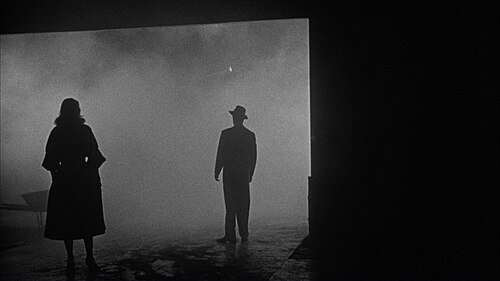
Reed had brought with him both Krasker and Hafenrichter who had worked with him on Odd Man Out, and The Fallen Idol respectively. With these men Reed captured the deepest essence of noir darkness and design, never to be outdone in film to this day. Although Reed had three crews working simultaneously (one each for night, sewer system, and day shooting), it was the impressive night framing, glistening cobblestone streets, back alleys, ubiquitous rubble, and foreboding mood that he captured so palpably.
Each actor was perfect. When David O. Selznik agreed to join as co-producer he brought along Joseph Cotten and Orson Welles to fill the roles of Holly Martins and Harry Lime, originally written as British characters. Also under contract to him was the ravishing Alida Valli, who was being promoted by Selznik as the next Ingrid Bergman. Some of Germany’s finest actors were enlisted: Paul Hoerbiger, Ernst Deutsch, Erich Ponto, and the fiesty Hedwig Bleitreu as a landlady.
It’s hard to imagine the impact of this picture without the phenomenal score by zither artist Anton Karas. In a happy accident, Reed heard Karas play at a party, and was galvanized by the sound and its relevance to the story and mood of Reed’s picture. He practically hired Karas on the spot to fashion the sole music track, and brought him to London to overdub the music during a 6 week session-- the same amount of time used for the entire Viennese shoot.
Never has a score represented the style of a film, and in this case the era of mid 20th Century Vienna, more exquisitely than did Karas’ stylings. It evokes the gamut of emotions from nostalgic, to haunting, to lively, to humorous. And its use was unique in film as being a single instrument without vocals. The only other score that comes close is David Shire’s eerie piano score for Coppola’s The Conversation.
The film includes two of the most famous scenes in movie history: Harry Lime’s electrifying first entrance into the film by suddenly shining a night time spotlight on Welles, framing him in a doorway displaying his sardonic and whimsical smile with hat askew; and possibly the most iconic ending in film history-- after Lime’s funeral, as Anna takes the long walk back to town on the autumn leaf strewn lane, she walks straight past Martins, who had been leaning on a wagon waiting to reconcile with her. Rebuffed, Martins lights a cigarette, then throws down the match in disgust. The screen goes to black.
Books and countless articles and lectures have been written about The Third Man. The British Film Institute selected it as the #1 film in their list of top 100 British films. In my view it’s one of the best films ever made.