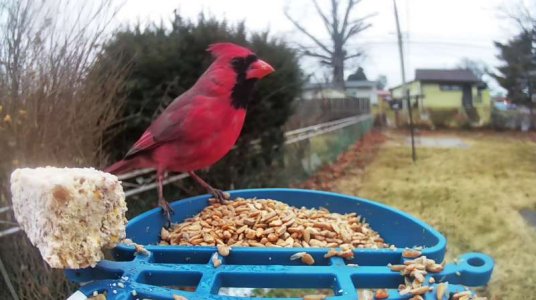
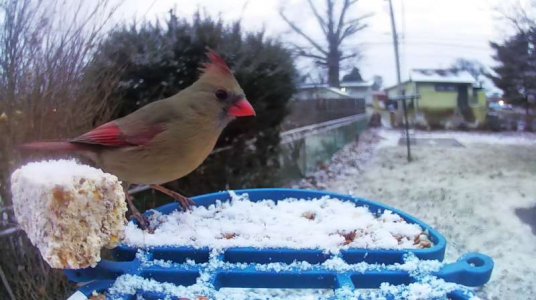
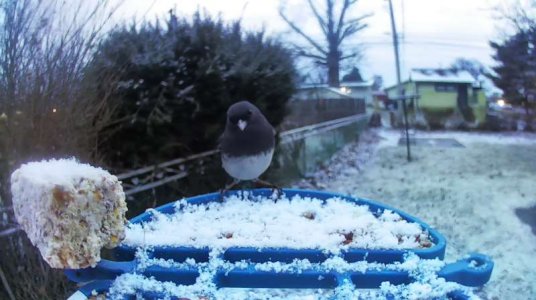
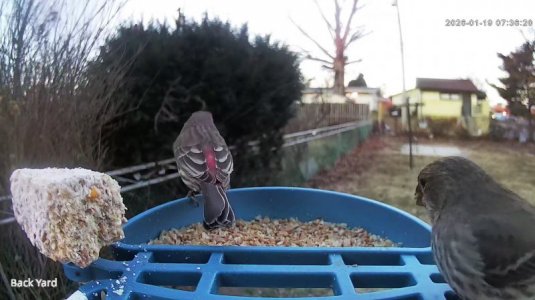
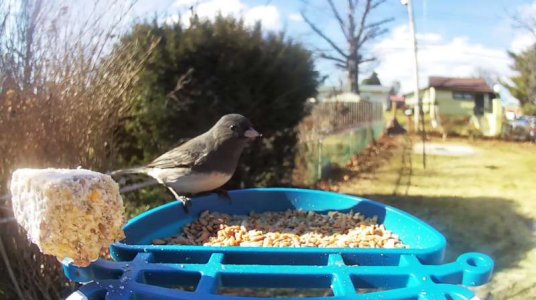
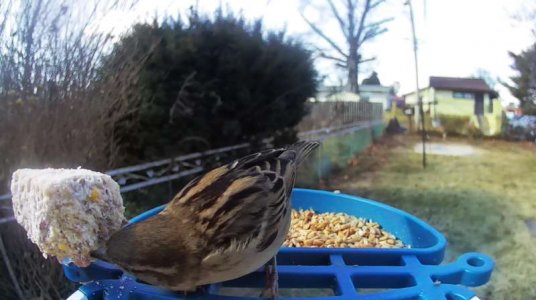
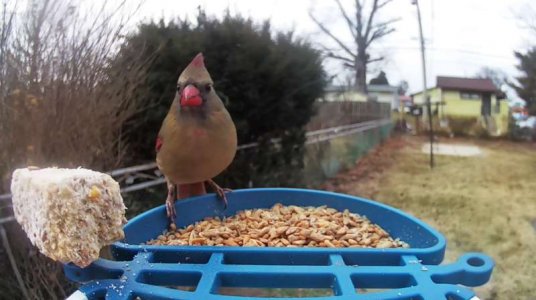
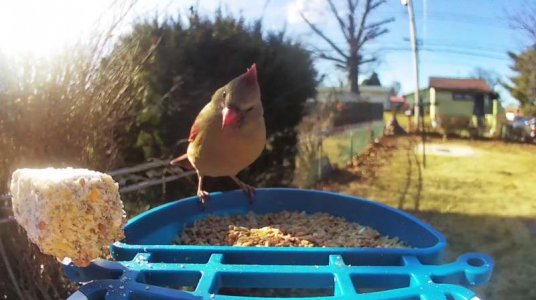
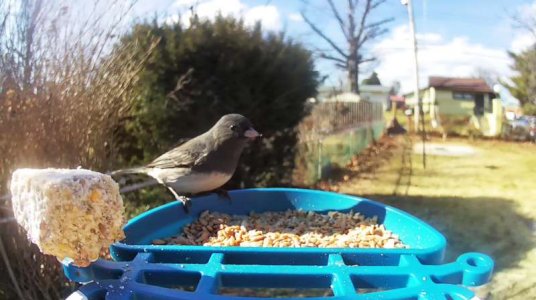
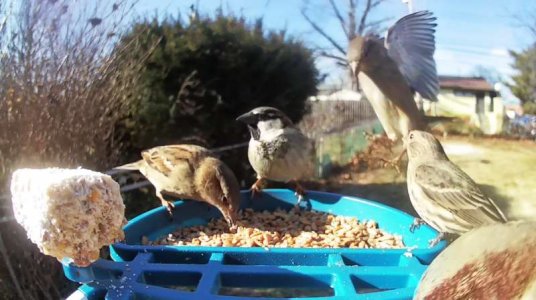
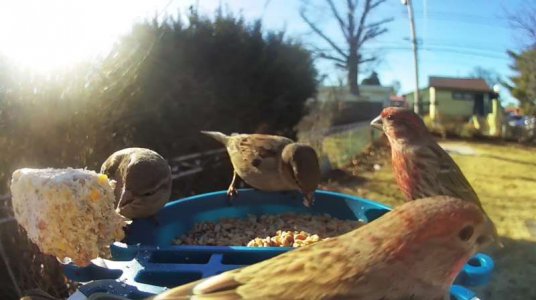
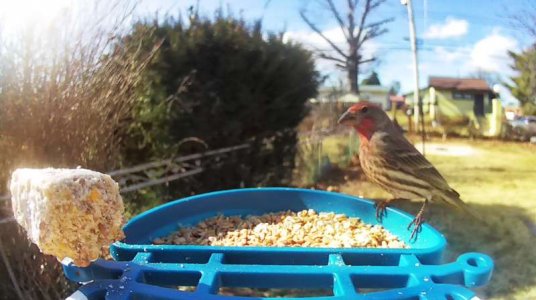
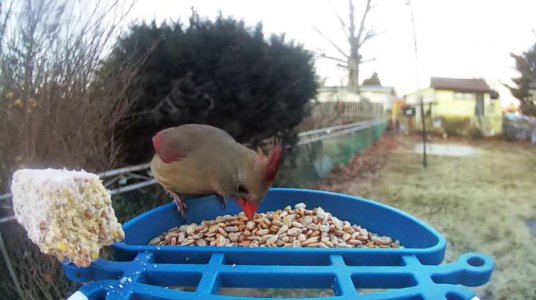
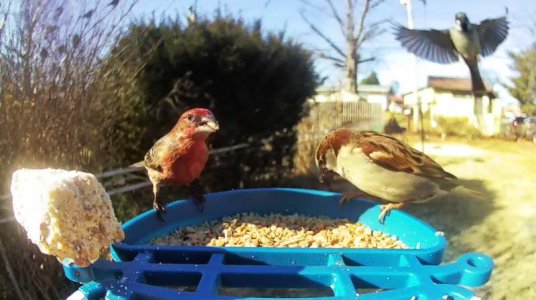
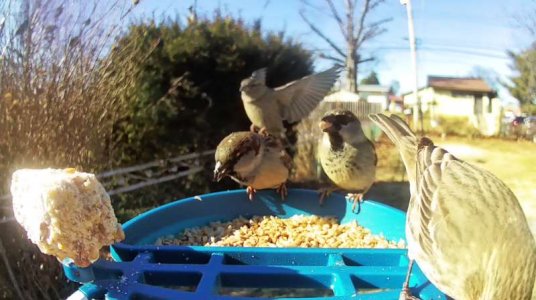
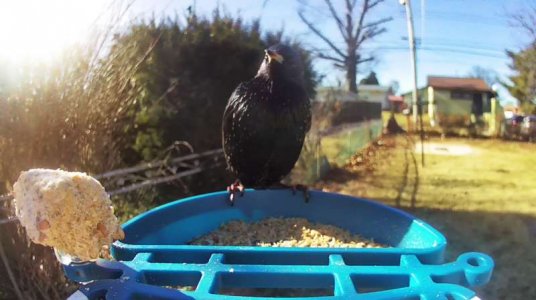
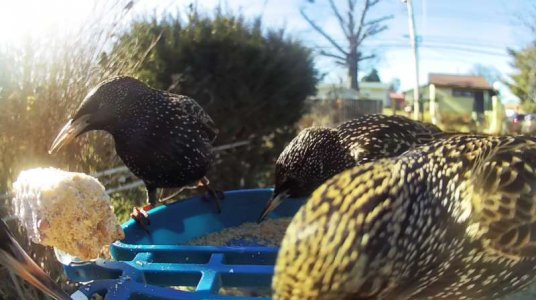
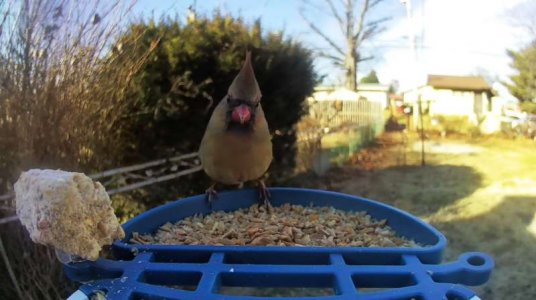
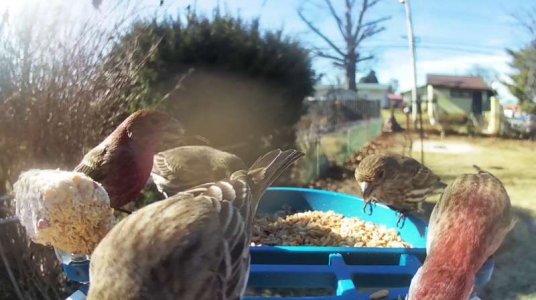
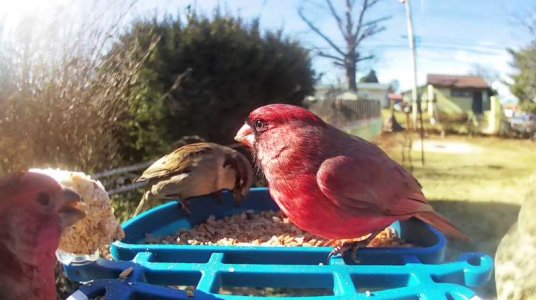
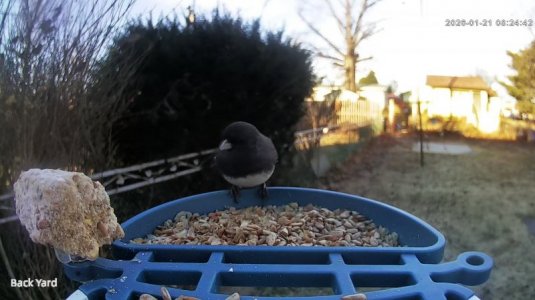
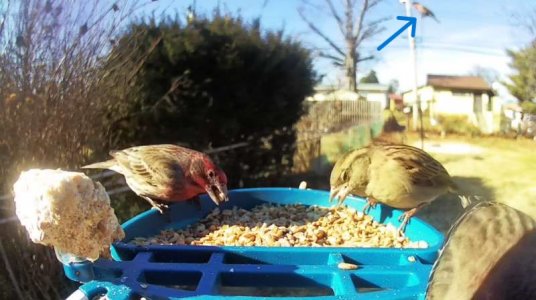
He tried the suet first. Then tried the sunflower seeds. You know, I was thinking about the cayenne pepper. Years ago we were going to try it and decided to buy peanuts instead to feed the squirrels. We’d read that the birds don’t have a sense of smell but apparently that’s not true. According to this article, they do.
*********************************************************
Yes, birds do have a sense of smell
, and it's surprisingly important for many species, used for finding food, navigating, recognizing family, choosing mates, and even finding nesting sites, although its strength varies greatly among different types of birds, with keen smellers like vultures and petrels contrasting with birds where sight is dominant.
How Birds Use Their Sense of Smell:
- Finding Food: Turkey vultures sniff out decaying flesh from miles away, while storm petrels locate krill by smell.
- Navigation: Some birds, like homing pigeons, use scents to find their way home.
- Mating & Communication: Dark-eyed juncos and crested auklets use unique scents (from preen oil) to attract mates or identify each other.
- Nest Building: Starlings add aromatic plants to nests to deter parasites, identifying the right plants by smell.
- Identifying Family: Some finches prefer the smell of their own eggs, suggesting family recognition.
Examples of Strong Smellers:
- Turkey Vultures: Have large olfactory bulbs and can detect ethyl mercaptan(from rotting meat) from great distances.
- Tubenoses (Petrels, Albatrosses): Use their specialized nasal cavities to smell krill and fish in the ocean.
- Kiwis: Use their beaks to sniff out insects in the ground.
Why It Was Overlooked:
For a long time, scientists believed birds had a poor sense of smell because their nasal passages seemed small, and vision was considered their dominant sense. However, genetic studies and observations have revealed a far more complex and widespread olfactory ability.
****************************************************
The obviously have a sense of taste or they wouldn’t care what type of food they ate. This article explains how they are somewhat immune to the taste of peppers.
*******************************************************
Yes birds have a sense of taste, though it is generally less developed than that of mammals. While humans have about 9,000 to 10,000 taste buds, most birds have significantly fewer—often ranging from
50 to 500 depending on the species.
Where Are Bird Taste Buds?
Unlike mammals, whose taste buds are concentrated on the tongue, birds have taste buds distributed throughout the oral cavity:
- Location: They are primarily found on the upper palate (roughly 70%), at the base of the tongue, and in the floor of the mouth.
- Tongue: The tip of a bird's tongue is often keratinized (hardened) and lacks taste buds.
- Specialized Placement: In some species like ducks, taste buds are located inside the bill, allowing them to sample food before even swallowing it.
What Tastes Can They Detect?
Birds can perceive several basic tastes, though their sensitivity varies:
- Sweet: Most birds lack the specific receptor (T1R2) that mammals use for sweet taste. However, hummingbirds and many songbirds have mutated their "savory" (umami) receptors to detect sugar, allowing them to seek out nectar and fruit.
- Bitter: This is a critical survival sense that helps birds identify toxic plants or insects.
- Salt: Salt is a necessary nutrient, and birds can detect it to maintain their electrolyte balance.
- Sour: Recent 2025 research has shown that some birds have evolved a specialized receptor that actually dulls the sour taste of acidic fruits, allowing them to eat foods that might be unpalatable to other animals.
- Umami (Savory): Many birds use this sense to identify protein-rich foods like meat or insects.
The "Spicy" Exception
Birds are famous for being
immune to capsaicin, the chemical that makes chili peppers spicy.
- Mechanism: Their heat-sensing receptors are structurally different from mammals and do not respond to the "burn" of chili peppers.
- Evolutionary Advantage: This is a co-evolutionary strategy; peppers "want" birds to eat them because birds spread the seeds far and wide without crushing them, whereas mammals' teeth would destroy the seeds.
- Note: While they don't feel the "heat," some research suggests that extremely high concentrations of certain compounds in "ghost peppers" may still be detected as aversive.