NO-TILL Gardening - Natural Garden...Mechanical Tools NOT Needed

SeaBreeze

Endlessly Groovin'
Location
USA
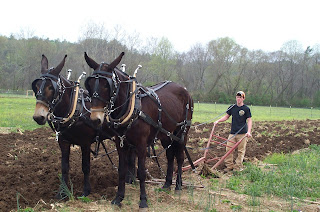
A more natural way to plant a garden without the use of any mechanical tools...

Quote:
If you'd like to create a garden using the no-till method, follow these steps:

1.) After you've selected where you want your garden to be, remove any obtrusive shrubs or weeds from the area. This isn't essential with small weeds, since they'll be suffocated by the first layer you add anyway, but if you have any large flora in that area, it might be best to remove them to ensure a reasonably flat space.

2.) Add a layer of cardboard or newspapers on top of your selected space and water it. Then add a layer of mulch (such as grass cuttings, straw, vegetable scraps, leaves, paper, wood scraps, or a combination of several) on top of the damp cardboard or newspaper layer. These two initial layers will encourage the right conditions for fertile soil, and they will also attract earthworms to the area.

3.) After these two first layers are added, you can continue to add more layers of mulch to the existing layers. According to the lasagna method, it's a good idea to alternate between layers of browns (such as peat and shredded newspaper) and greens (such as grass and vegetable peels).

4.) Once your layers of mulch have reached a height of approximately two feet, you can cease adding new layers and wait until everything composts. You might be surprised at how quickly this happens. Once the layers have 'flattened' through composting, your no-till garden is ready. This process will have created excellent soil quality for growing plants. Since it is common for the first layer (the cardboard or newspaper layer) to still exist after the compost is finished, you may need to cut circular holes in it before you can plant seeds or plants in the soft, fluffy soil below it.

Read more here: http://www.naturalnews.com/040882_no...me_garden.html
 

I've had a go at this for a small veggie garden.

At first every thing grew madly and we got a few things to eat but we've just had another of those record hot summers, and because the depth of soil hadn't built up very much, I suspect the sun cooked the roots and things started to wither.

I've built it up again with extra layers and have left it fallow until the weather cooled.
I'm going to try again soon with a Winter crop.

My son in Albury has a partner who is mostly in a wheel chair and he had established several raised beds using this technique so that she can pick the veggies without reaching down low. He gets very good results.

I also have a compost bin and there are always worms in it. A few shovelsful of compost helps the no dig garden from time to time.
 
Raised beds do have a lot of benefits from what I hear. I've grown some vegetables in the past, just in the garden soil, but after retirement, we started going away for camping trips a couple of times a year, and I haven't been planting anything for years now. We do have a compost pile though, mostly put just leaves in there that we rake in the fall, no food stuffs...and it is very fertile, lots of worms and rich planting soil. I do enjoy gardening, maybe when we're too old to go away fishing and camping, I'll do a little bit again.
 

Warri, I started gardening when I was 6 or 7 in my father gardening.
About 15 years ago, my hubby and son had to cut 27, 25' to 30' tall trees so we could get some day light in the front yard, it wasn't even growing weeds, much less grass.
They spilt and cut the logs and raised then on 4"X 4" stilts.
Veggies grew in the raised beds as well as out on the rest of the farm.
Now I want to try roses for a garden, with maybe few other flowers to complement the roses
Good luck to both of us.
 
20070330+036.jpg
 
Since it is common for the first layer (the cardboard or newspaper layer) to still exist after the compost is finished, you may need to cut circular holes in it before you can plant seeds or plants in the soft, fluffy soil below it.
Leaving cardboard/newspaper on the soil, in time will sour the soil. It's the same has a bark garden, if the sun can't get through, it sours the soil. The 'no till' method has it's drawbacks.
 
I have been doing a mixture of container gardening and regular planting in the dirt. One of the things I have been wanting to try, and have been reading good reports about, is straw bale gardening. It gets the plants off the ground where you can care for them easier, and the straw will decompose and become compost by the next season.
It is getting harder each year for me to get the required rototilling done for planting, so I just do smaller areas at a time, and then use the containers where I can.
Here is a short tutorial from Bonnie Plants about straw bale gardening:

http://bonnieplants.com/library/how-to-condition-and-plant-a-straw-bale/
 
The method I use has a thick layer of wet newspaper at the very bottom to kill off any weeds in the existing soil, however, if building up on concrete, this is not really necessary. Then alternate generous layers of lucerne hay and organic fertiliser. I fertilise with some home grown compost and commercial blood and bone.

The very top layer is sugar cane straw and you part it and add potting mix or garden soil in the hollows. The seedlings are planted into this soil and the straw is drawn back around them to keep the roots cool until they become established. All of it decomposes over time.

At the next planting you simply add another layer or two of the lucerne hay and organic fertiliser, then more straw and potting mix as before.

It is also recommended that you practice crop rotation to control diseases in the soil.
 
Stacked Container Gardening

I found this picture of a great little stacked container for small plants. It looks fairly easy to make, and if it were leaning against the side of a building, it would not even need to be braced.
I can just imagine this in my back yard, with lots of strawberries trailing over the sides ! It would also work with greens like lettuce, spinach, or even cucumbers could be planted here. Since it is tiered, it would be easy to plant and take care of, and great for harvesting the fruit or veggies out of it.
 
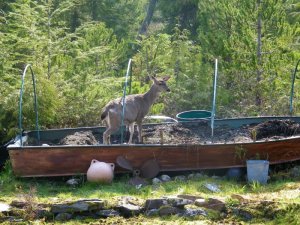
I have no choice but to think up containers for my garden and make my own dirt, everything around here is either muskeg or woods. For dirt, I compost everything, gather truckloads of seaweed from the beach, buckets of rich soil from the edges of nearby creeks and, of course, there's the chicken house providing good fertilizer.

The harbormaster in town alerts me of any derilik skiffs needing hauled away. I beat holes in the bottom, a layer of gravel collected from the beach and start building up the soil.

As you can see, this morning I've got the meat and potatoes planted.

100_2334.jpg
 
Onions in a bottle

Raised beds do have a lot of benefits from what I hear. I've grown some vegetables in the past, just in the garden soil, but after retirement, we started going away for camping trips a couple of times a year, and I haven't been planting anything for years now. We do have a compost pile though, mostly put just leaves in there that we rake in the fall, no food stuffs...and it is very fertile, lots of worms and rich planting soil. I do enjoy gardening, maybe when we're too old to go away fishing and camping, I'll do a little bit again.

SeaBreeze, here is an easy idea that you can do, and even take it along when you go camping.
I saw an article today about growing onion starts in one of those 2-liter plastic bottles and you can use the green tops as the onions grow. You place it in the windowsill, or another sunny place, so you don't need any kind of garden area to do this, and it only takes up a little tiny bit of room.
The article said to cut the top off of the bottle, and make holes along the sides. Then , you fill it with potting soil, adding little onion starts inside of the holes, so that the green part will come out through the holes in the bottle. When you have the bottle filled with onions and dirt, you can either tape/glue the top of the bottle back on, or just leave it open.
Then, put it in a plant hanger, or just set it in the window somewhere, and watch your onions grow; cutting off the green tops for soups or salads as you need them.
 

Last edited:

Back
Top