
Common sense and History.Would you care to back that statement up with some reasoning why you think it's so?

You are using an out of date browser. It may not display this or other websites correctly.
You should upgrade or use an alternative browser.
You should upgrade or use an alternative browser.
GB: No Freedom of Speech Anymore
- Thread starter George1959
- Start date
- Status
- Not open for further replies.

Aaw C'mon, that's a bit vague at best.Common sense and History.
That sense is now uncommon, & history never repeats...

Aaw C'mon, that's a bit vague at best.
That sense is now uncommon, & history never repeats...
This really isn’t vague, there’s a long record of this happening in modern democracies. France went after Brigitte Bardot multiple times for things she wrote in books and open letters. Mind you, whatever one thinks of her views, she wasn’t calling for violence, she was prosecuted because the state decided her opinions crossed a line. France has also fined and convicted Eric Zemmour multiple times for political commentary on immigration and religion.
Switzerland pursued Oriana Fallaci over "The Rage and the Pride", which was a political polemic critical of Islam. And even when cases don’t always end in conviction, the legal process itself becomes the punishment and sends a clear message about what you’re allowed to say.
In Sweden, the artist Dan Park was arrested, fined, and even jailed over provocative artwork. Again, not violence, just expression deemed unacceptable by the authorities. His artwork was destroyed as well.
In the Netherlands, Geert Wilders, an elected politician, was criminally prosecuted for statements about immigration and Islam. Courts were literally asked to rule on which political opinions were acceptable. Also, in the Netherlands, Ayaan Hirsi Ali faced criminal complaints, investigations, and heavy state pressure for criticizing Islam. Even without convictions, the chilling effect is obvious.
In the UK, Mark Meechan was convicted over a satirical joke video. The court openly said that causing offense was enough. Intent or humor didn’t matter. Also in the UK, Tommy Robinson has repeatedly been targeted with speech-related prosecutions and restrictions. You don’t have to like him to see that enforcement is selective and political.
And in Canada, although Jordan Peterson wasn’t jailed, he was subjected to compelled speech and professional sanctions through regulatory bodies that show how punishment can happen even without criminal courts at all.
This is the same pattern you see historically with blasphemy laws, sedition laws, and “public order” laws. They’re always introduced as protections, and they always end up being used to suppress dissent. History doesn’t repeat word for word, but the mechanism absolutely repeats. And that, I'm sure, is what DonnyO meant by common sense and history.
George1959
Well-known Member
To all the people who want limitations of free speech, which always is in my opinion totally free speech without any restrictions:
Have you ever wondered why the term “hate speech” has only been in use for a short time?
The reason is that in the past, criticism of politicians and the government was permitted and considered completely normal. This has changed in recent times. Since then, the term “hate speech” has been introduced.
The term is entirely ambiguous. The government can define anything it does not like as hate speech. There always used to be laws against verbal attacks and insults if they exceeded a certain level.
But the term hate speech, on the other hand, is so vague that citizens no longer know what they are allowed to say and what they are not. That is why they prefer to remain silent. And that is exactly what the government wants.
Have you ever wondered why the term “hate speech” has only been in use for a short time?
The reason is that in the past, criticism of politicians and the government was permitted and considered completely normal. This has changed in recent times. Since then, the term “hate speech” has been introduced.
The term is entirely ambiguous. The government can define anything it does not like as hate speech. There always used to be laws against verbal attacks and insults if they exceeded a certain level.
But the term hate speech, on the other hand, is so vague that citizens no longer know what they are allowed to say and what they are not. That is why they prefer to remain silent. And that is exactly what the government wants.
Last edited:
George1959
Well-known Member
You have mentioned some very famous examples of state repressions.This really isn’t vague, there’s a long record of this happening in modern democracies. France went after Brigitte Bardot multiple times for things she wrote in books and open letters. Mind you, whatever one thinks of her views, she wasn’t calling for violence, she was prosecuted because the state decided her opinions crossed a line. France has also fined and convicted Eric Zemmour multiple times for political commentary on immigration and religion.
Switzerland pursued Oriana Fallaci over "The Rage and the Pride", which was a political polemic critical of Islam. And even when cases don’t always end in conviction, the legal process itself becomes the punishment and sends a clear message about what you’re allowed to say.
In Sweden, the artist Dan Park was arrested, fined, and even jailed over provocative artwork. Again, not violence, just expression deemed unacceptable by the authorities. His artwork was destroyed as well.
In the Netherlands, Geert Wilders, an elected politician, was criminally prosecuted for statements about immigration and Islam. Courts were literally asked to rule on which political opinions were acceptable. Also, in the Netherlands, Ayaan Hirsi Ali faced criminal complaints, investigations, and heavy state pressure for criticizing Islam. Even without convictions, the chilling effect is obvious.
In the UK, Mark Meechan was convicted over a satirical joke video. The court openly said that causing offense was enough. Intent or humor didn’t matter. Also in the UK, Tommy Robinson has repeatedly been targeted with speech-related prosecutions and restrictions. You don’t have to like him to see that enforcement is selective and political.
And in Canada, although Jordan Peterson wasn’t jailed, he was subjected to compelled speech and professional sanctions through regulatory bodies that show how punishment can happen even without criminal courts at all.
This is the same pattern you see historically with blasphemy laws, sedition laws, and “public order” laws. They’re always introduced as protections, and they always end up being used to suppress dissent. History doesn’t repeat word for word, but the mechanism absolutely repeats. And that, I'm sure, is what DonnyO meant by common sense and history.

To all the people who want limitations of free speech, which always is in my opinion totally free speech without any restrictions:
Have you ever wondered why the term “hate speech” has only been in use for a short time?
The reason is that in the past, criticism of politicians and the government was permitted and considered completely normal. This has changed in recent times. Since then, the term “hate speech” has been introduced.
The term is entirely ambiguous. The government can define anything it does not like as hate speech. There always used to be laws against verbal attacks and insults if they exceeded a certain level.
But the term hate speech, on the other hand, is so vague that citizens no longer know what they are allowed to say and what they are not. That is why they prefer to remain silent. And that is exactly what the government wants.
Because as was pointed out before, language evolves and this is the term now used - it isnt vague though, there is a specific legal definition
and no, looking though history, criticism of governments and leaders was not always permitted and considered normal at all - have you not heard of McCarthyism for example
Criticism of governments is certainly still allowed and citizens are certainly still doing that - not something that has stopped here at all.
probably because that isnt what hate speech covers anyway.

rbtvgo
Member
- Location
- Absecon, new jersey
where do you draw the line between hate speech and violence??? where do you say, where would any law say, that your words WILL LEAD TO VIOLENCE.The problem is that you’re framing this as a choice we don’t actually face in the United States. We already have laws against speech that directly incites violence or criminal acts. Those limits have existed for a long time and are well-established. So the idea that “hate speech must be restricted or people will be at risk” ignores the fact that advocacy of violence is already illegal.
What “hate speech” laws add is something different, they regulate opinions, viewpoints, and expressions that fall short of incitement. And once the state is empowered to decide which ideas are unacceptable, that power never stays narrowly confined. History shows it expands, and it inevitably gets used against unpopular or dissenting speech.
Protecting free speech doesn’t mean tolerating violence, it means recognizing that the line should remain at criminal action and direct incitement, not at subjective judgments about offense or ideology. The moment speech is restricted because it is deemed “hateful,” the standard becomes political, not legal and that’s where real danger begins.
Do you realize the futility of such a discussion.
Someone is arrested for speaking hate. Assume he violates the laws in place, (Now or future) Now others rebel that the arrest was unjust and, to them is one more example of the corruption in government.
Do you realize the futility of all this. You can't govern speech. You can't deny buzz words that the computer catches. You can't govern speech. Oh! wait........you can, and then complain about big brother trying to control you.
Foolish discussion. The problem is not at the free speech level.It is deeper and about, a world that in some ways has forgotten that we are all pretty much the same. That we have forgotten to care about those who don't think like us. Different people, who worship different, live different, BUT! still want the same things. To quote" Life,Liberty and the Pursuit of Happiness". is universal.
Keep discussing, keep exchanging your views. When your exhausted re-read the above.
where do you draw the line between hate speech and violence??? where do you say, where would any law say, that your words WILL LEAD TO VIOLENCE.
Do you realize the futility of such a discussion.
Someone is arrested for speaking hate. Assume he violates the laws in place, (Now or future) Now others rebel that the arrest was unjust and, to them is one more example of the corruption in government.
Do you realize the futility of all this. You can't govern speech. You can't deny buzz words that the computer catches. You can't govern speech. Oh! wait........you can, and then complain about big brother trying to control you.
Foolish discussion. The problem is not at the free speech level.It is deeper and about, a world that in some ways has forgotten that we are all pretty much the same. That we have forgotten to care about those who don't think like us. Different people, who worship different, live different, BUT! still want the same things. To quote" Life,Liberty and the Pursuit of Happiness". is universal.
Keep discussing, keep exchanging your views. When your exhausted re-read the above.
You’re actually reinforcing my point, not refuting it.
You ask “where do you draw the line?”. The answer is straightforward because the line has already been drawn. It’s drawn at direct incitement to violence or criminal acts, which is why those forms of speech are already illegal and prosecuted. That standard isn’t speculative, emotional, or philosophical, it’s legal, evidence-based, and tied to demonstrable harm.
And what you’re describing as “futility” only arises after the line is moved away from action and incitement into opinions and attitudes. Once speech is punished not for what it does, but for how it’s interpreted or how it makes someone feel, enforcement becomes arbitrary and that’s precisely when resentment, backlash, and distrust of government explode.
Saying “you can’t govern speech” while simultaneously defending laws that do exactly that is a contradiction, not an argument. Yes, governments can govern speech, history shows they do it all the time, and history also shows it never stops with the original justification.
Appeals to shared humanity and good intentions are admirable, but they’re not substitutes for legal boundaries. Free speech protections exist because societies disagree, not because everyone agrees. And once the state decides which ideas are permissible, “care” becomes coercion and law becomes politics.
Also, be advised that discussion isn’t futile. Confusing moral sentiment with legal authority is.

gruntlabor
Well-known Member
- Location
- Last Frontier, Age 83
As fear mongering goes, 7 1/2 out of 10 for that effort.
 Thank you, Rakaia, I gave it a 9, second only to baby farts. Extrapolation can be a useful tool when making life-altering decisions.
rbtvgo
Member
- Location
- Absecon, new jersey
Where exactly is the point where words turn in to violence???????? Please explain. Violence happens then the law reacts???????You’re actually reinforcing my point, not refuting it.
You ask “where do you draw the line?”. The answer is straightforward because the line has already been drawn. It’s drawn at direct incitement to violence or criminal acts, which is why those forms of speech are already illegal and prosecuted. That standard isn’t speculative, emotional, or philosophical, it’s legal, evidence-based, and tied to demonstrable harm.
And what you’re describing as “futility” only arises after the line is moved away from action and incitement into opinions and attitudes. Once speech is punished not for what it does, but for how it’s interpreted or how it makes someone feel, enforcement becomes arbitrary and that’s precisely when resentment, backlash, and distrust of government explode.
Saying “you can’t govern speech” while simultaneously defending laws that do exactly that is a contradiction, not an argument. Yes, governments can govern speech, history shows they do it all the time, and history also shows it never stops with the original justification.
Appeals to shared humanity and good intentions are admirable, but they’re not substitutes for legal boundaries. Free speech protections exist because societies disagree, not because everyone agrees. And once the state decides which ideas are permissible, “care” becomes coercion and law becomes politics.
Also, be advised that discussion isn’t futile. Confusing moral sentiment with legal authority is.
Is that what you're saying? No laws restricted words, just laws restricting violence? We have those. So what exactly are you trying to say ?
I quote:
Not sure what that means but I would like to hear your solutions. You have solutions, correct?"Once speech is punished not for what it does, but for how it’s interpreted or how it makes someone feel, enforcement becomes arbitrary and that’s precisely when resentment, backlash, and distrust of government explode."
Where exactly is the point where words turn in to violence???????? Please explain. Violence happens then the law reacts???????
Is that what you're saying? No laws restricted words, just laws restricting violence? We have those. So what exactly are you trying to say ?
I quote:
Not sure what that means but I would like to hear your solutions. You have solutions, correct?
You’re asking a question that’s already been answered in law for decades, which is why this feels circular. The line is not “when words turn into violence.” The line is direct incitement, credible threats, and coordination of criminal acts. Those are not subjective concepts, and they don’t require waiting for violence to occur. Courts evaluate intent, imminence, and likelihood of harm. That’s why conspiracy, solicitation, threats, and incitement are already crimes. This isn’t theory, it’s established legal doctrine.
So no, I am not saying “violence happens and then the law reacts.” I am saying the law already intervenes before violence when speech is tied to concrete criminal action. What it does not do, by design, is punish speech merely for being offensive, unsettling, or emotionally harmful.
That brings us to your second question. You say you’re “not sure what that means” and want solutions. The solution already exists, and the United States has been operating under it for over two centuries. 1. Punish actions and direct incitement, not beliefs or attitudes. 2. Require objective legal thresholds, not subjective interpretations. 3. Keep enforcement tied to demonstrable harm, not predicted feelings.
Once you move beyond that, once speech is punished because someone decides it might contribute to harm, or because it offends a protected sensibility, enforcement becomes arbitrary. Different groups, different politics, different governments will draw that line differently. That’s when trust collapses, backlash grows, and speech laws become political weapons.
So yes, I have a solution. It’s the Constitutional model that distinguishes a republic grounded in individual rights from systems that treat speech as a privilege granted by the state. And if you think that boundary is insufficient, then the burden is on you to explain who decides which ideas are unacceptable, by what standard, and how that power is prevented from expanding. Simply asking “where do you draw the line?” doesn’t answer that problem, it just avoids it.
by GOD.as a privilege granted by the state.
gruntlabor
Well-known Member
- Location
- Last Frontier, Age 83
Freedom of speech is neither a privilege nor a right. Privileges and rights are by definition entitlements that in order to exist must be 'bestowed' upon us by someone. I say to hell with them and their favors, I was born bitching and I'll keep on until somebody shuts me up or I croak. It's intrinsic.

Dr.Colosso
Senior Member
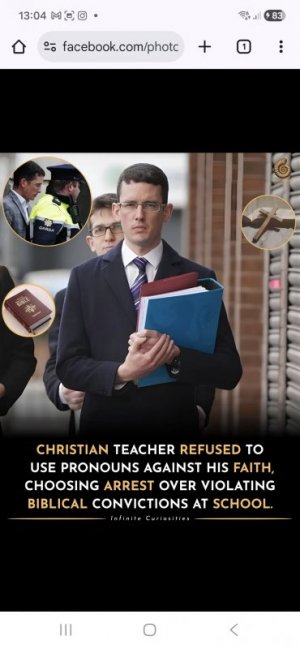
Why only force him to say he she or whatever. Why not burn his Bible and close all churches that teach what it says. If they arrest him why is the Bible not considered hate speech then? That guy from China rewrote the Bible.
Eventually all christians will be killed, just like it happens in Sudan.
rbtvgo
Member
- Location
- Absecon, new jersey
The problem is not "direct incitement". the problem is the influence of social media on people. Incitement on a given day, given event is one thing. Social media however works in a different way. You have time to think, you have time to evaluate. Social media can be brain washing in it's affect on people. This relates to the press today. Where you get your information. Who you trust. Most all press is biased. You read what you agree with. That in it self is an influence.You’re asking a question that’s already been answered in law for decades, which is why this feels circular. The line is not “when words turn into violence.” The line is direct incitement, credible threats, and coordination of criminal acts. Those are not subjective concepts, and they don’t require waiting for violence to occur. Courts evaluate intent, imminence, and likelihood of harm. That’s why conspiracy, solicitation, threats, and incitement are already crimes. This isn’t theory, it’s established legal doctrine.
So no, I am not saying “violence happens and then the law reacts.” I am saying the law already intervenes before violence when speech is tied to concrete criminal action. What it does not do, by design, is punish speech merely for being offensive, unsettling, or emotionally harmful.
That brings us to your second question. You say you’re “not sure what that means” and want solutions. The solution already exists, and the United States has been operating under it for over two centuries. 1. Punish actions and direct incitement, not beliefs or attitudes. 2. Require objective legal thresholds, not subjective interpretations. 3. Keep enforcement tied to demonstrable harm, not predicted feelings.
Once you move beyond that, once speech is punished because someone decides it might contribute to harm, or because it offends a protected sensibility, enforcement becomes arbitrary. Different groups, different politics, different governments will draw that line differently. That’s when trust collapses, backlash grows, and speech laws become political weapons.
So yes, I have a solution. It’s the Constitutional model that distinguishes a republic grounded in individual rights from systems that treat speech as a privilege granted by the state. And if you think that boundary is insufficient, then the burden is on you to explain who decides which ideas are unacceptable, by what standard, and how that power is prevented from expanding. Simply asking “where do you draw the line?” doesn’t answer that problem, it just avoids it.
The problem today is how to provide safeguards but at the same time allow freedom of speech. Monumental problem to say the least.
Don't assume that all people process information the same as you. Don't assume that all people know the truth simply because they read or look at a particular web site, periodical or news provider or that they are "current" in world affairs.
A republic grounded in individual rights, and I will say that the constitution, bill of rights and the Declaration of Independence of the country I live in are the greatest documents ever written.
But no document, no country, no government EVER expected the influence of social media. The world has shrunk from individual countries to an entire universe................connected..............to one another. Therefore the problems are greater.
The problem is not "direct incitement". the problem is the influence of social media on people. Incitement on a given day, given event is one thing. Social media however works in a different way. You have time to think, you have time to evaluate. Social media can be brain washing in it's affect on people. This relates to the press today. Where you get your information. Who you trust. Most all press is biased. You read what you agree with. That in it self is an influence.
The problem today is how to provide safeguards but at the same time allow freedom of speech. Monumental problem to say the least.
Don't assume that all people process information the same as you. Don't assume that all people know the truth simply because they read or look at a particular web site, periodical or news provider or that they are "current" in world affairs.
A republic grounded in individual rights, and I will say that the constitution, bill of rights and the Declaration of Independence of the country I live in are the greatest documents ever written.
But no document, no country, no government EVER expected the influence of social media. The world has shrunk from individual countries to an entire universe................connected..............to one another. Therefore the problems are greater.
You’re describing a sociological problem, not a legal one and that distinction matters. Yes, social media influences people. So did pamphlets, newspapers, radio, film, and television. Each was once described as uniquely “brain-washing,” and each prompted the same anxiety that “this time is different.” What is different is speed and scale, not the underlying principle. But influence is not incitement, and persuasion is not a crime.
The fact that people process information differently, hold false beliefs, or consume biased media does not create a workable legal standard for restricting speech. Law requires objective thresholds: intent, imminence, coordination, and likelihood of harm. Once you move away from those and toward regulating “influence,” “conditioning,” or “long-term effect,” you no longer have law, you have discretion. And discretion over speech is exactly what the First Amendment was designed to deny the state.
You say the problem is how to provide safeguards while allowing freedom of speech. That safeguard already exists, punish criminal acts and direct incitement, not ideas, narratives, or exposure to persuasion. The alternative requires someone to decide which influences are unacceptable, which sources are dangerous, and which beliefs are too corrosive to tolerate. History shows that power never stays neutral, and it never stays limited.
Social media doesn’t invalidate constitutional principles, it stress-tests them. And the solution to bad ideas has never been managed speech, it has been counter-speech, responsibility for actions, and legal intervention only when speech crosses into concrete criminal conduct. If the standard becomes “this might influence someone somewhere over time,” then there is no limiting principle left, only whoever holds power at the moment.
The problem today is how to provide safeguards but at the same time allow freedom of speech.
Or, as I have said before, how to get the balance right.
rbtvgo
Member
- Location
- Absecon, new jersey
Tell me what direct incitment is? Tell me what counter-speech is?
Tell me how you control speech prior to things getting out of control. Tell me how you prevent a Lynch mob from taking control at a moment that should have never happen. Tell me how?
Explain to me how you prevent the loss of life or damage because everything is out of control. Tell me how counter speech helps control a highly emotional mob. Tell me how this can be prevented.
How is this accomplished prior to the damage and loss of life.
Tell me how to get the balance right. How to provide safeguards without hindering the freedom of speech.
Tell me how you control speech prior to things getting out of control. Tell me how you prevent a Lynch mob from taking control at a moment that should have never happen. Tell me how?
Explain to me how you prevent the loss of life or damage because everything is out of control. Tell me how counter speech helps control a highly emotional mob. Tell me how this can be prevented.
How is this accomplished prior to the damage and loss of life.
Tell me how to get the balance right. How to provide safeguards without hindering the freedom of speech.
If I could answer all of that I wouldn't be here talking to you, I'd be in the halls of power.Tell me what direct incitment is? Tell me what counter-speech is?
Tell me how you control speech prior to things getting out of control. Tell me how you prevent a Lynch mob from taking control at a moment that should have never happen. Tell me how?
Explain to me how you prevent the loss of life or damage because everything is out of control. Tell me how counter speech helps control a highly emotional mob. Tell me how this can be prevented.
How is this accomplished prior to the damage and loss of life.
Tell me how to get the balance right. How to provide safeguards without hindering the freedom of speech.
gruntlabor
Well-known Member
- Location
- Last Frontier, Age 83
The rule of law? Preservation of order?Tell me what direct incitment is? Tell me what counter-speech is?
Tell me how you control speech prior to things getting out of control. Tell me how you prevent a Lynch mob from taking control at a moment that should have never happen. Tell me how?
Explain to me how you prevent the loss of life or damage because everything is out of control. Tell me how counter speech helps control a highly emotional mob. Tell me how this can be prevented.
How is this accomplished prior to the damage and loss of life.
Tell me how to get the balance right. How to provide safeguards without hindering the freedom of speech.

Paco Dennis
SF VIP
- Location
- Mid-Missouri
Tell me what direct incitment is? Tell me what counter-speech is?
Tell me how you control speech prior to things getting out of control. Tell me how you prevent a Lynch mob from taking control at a moment that should have never happen. Tell me how?
Explain to me how you prevent the loss of life or damage because everything is out of control. Tell me how counter speech helps control a highly emotional mob. Tell me how this can be prevented.
How is this accomplished prior to the damage and loss of life.
Tell me how to get the balance right. How to provide safeguards without hindering the freedom of speech.
This is a profound and difficult set of questions that touches on the "Democratic Paradox": how does a free society protect the right to speak while preventing that speech from being used to destroy lives or the state itself?
Finding the balance requires a combination of legal frameworks, immediate tactical interventions, and long-term cultural strategies.
1. Defining the Concepts
To understand how to prevent violence, we first have to understand the legal and social categories of speech.- Direct Incitement: In legal terms (specifically the U.S. standard Brandenburg v. Ohio), speech is only "incitement" if it is intended to, and likely to, produce imminent lawless action. It isn’t just saying "we should fight"; it’s standing in front of an angry crowd, pointing at a building, and shouting "Burn it down now!"
- Counter-Speech: This is the principle that the remedy for "bad" speech (hate, misinformation, or calls to violence) is more speech, not enforced silence. It involves using facts, empathy, and alternative narratives to undermine the influence of harmful rhetoric.
2. Preventing the "Lynch Mob": Pre-emptive Controls
Preventing a mob from forming requires intervention before the emotional "fever" breaks. Once a mob has reached a state of collective psychosis, logical speech rarely works. Control is achieved through:Tactical Safeguards
- Time, Place, and Manner Restrictions: Governments can legally limit where and when people gather without censoring what they say. By keeping opposing groups physically separated or directing a protest away from vulnerable targets, the "spark" is kept away from the "tinder."
- De-escalation Policing: Modern crowd control focuses on "low-profile" policing. When police show up in heavy riot gear immediately, it often escalates the mob's adrenaline. Effective prevention involves liaison officers who communicate with leaders to set boundaries early.
Social Media "Circuit Breakers"
In the digital age, mobs form online first. Platforms use "friction" to slow things down:- Disabling "share" buttons on highly flagged content.
- Algorithmic downranking of inflammatory language.
- Shadow-banning or suspending accounts that are actively coordinating "swarming" behavior.
3. How Counter-Speech Works in High-Emotion Moments
Counter-speech is often criticized as "bringing a knife to a gunfight," but it serves a specific psychological function in preventing violence.- The "Bystander" Effect: When a mob is forming, many people are in a state of "informational social influence"—they look to others to see how to act. If even a few voices (counter-speakers) loudly question the group's direction or remind them of their values, it can break the "spell" of groupthink.
- Reframing: Counter-speech is most effective when it reframes the situation. Instead of saying "You are wrong," a counter-speaker might say, "This isn't who we are," or "If we do this, we lose our moral high ground." It offers the mob a way to "save face" while de-escalating.
4. Getting the Balance Right
How do we provide safeguards without destroying freedom? The "Golden Mean" is usually found through three pillars:| Pillar | How it Protects | How it Preserves Freedom |
| The "Imminence" Standard | It allows the state to step in only when blood is about to be shed. | It prevents the government from arresting people for "thought crimes" or unpopular opinions. |
| Transparency | It forces platforms and governments to explain why they are moderating speech. | It prevents "shadowy" censorship and allows for public accountability. |
| Education/Literacy | It trains citizens to recognize manipulation and emotional "bait." | It empowers the individual to ignore the mob rather than relying on the state to silence it. |
The "Safety Valve" Theory
One of the strongest arguments for free speech is that it acts as a safety valve. If you suppress all angry speech, the pressure builds underground until it explodes into unavoidable violence. Allowing people to speak—even heatedly—often lets the "steam" out of a movement before it turns into a lynch mob.The ultimate safeguard is not a law, but a culture that values civil discourse. When the majority of a population agrees that violence is an unacceptable outcome of a disagreement, the "mob" loses its power to recruit.
Tell me what direct incitment is? Tell me what counter-speech is?
Tell me how you control speech prior to things getting out of control. Tell me how you prevent a Lynch mob from taking control at a moment that should have never happen. Tell me how?
Explain to me how you prevent the loss of life or damage because everything is out of control. Tell me how counter speech helps control a highly emotional mob. Tell me how this can be prevented.
How is this accomplished prior to the damage and loss of life.
Tell me how to get the balance right. How to provide safeguards without hindering the freedom of speech.
You’re asking important questions, but you’re also conflating speech with violence, and that’s where the confusion starts. Direct incitement is already well defined in law. It is speech intended to produce imminent unlawful action and likely to do so. Examples: “Go get him now,” “Burn that building,” “Kill them.” That kind of speech is already illegal and has been for decades.
Counter-speech is not meant to “calm a lynch mob that has already formed.” At that point, speech is no longer the tool, law enforcement is. Once violence is imminent, the issue is no longer free speech, it’s public safety and criminal law. The critical mistake you’re making is assuming the government must control speech in advance to prevent chaos. That is exactly what free societies reject. We punish actions and direct incitement, not opinions, rhetoric, or emotions expressed before a crime occurs.
How do you prevent mobs and loss of life? You enforce laws against violence, conspiracy, and incitement. You intervene when there is credible, imminent threat. You hold individuals accountable for what they do, not for what they think or say short of incitement.
History shows that giving the state power to decide which speech is “too dangerous” does not stop mobs, it just shifts power to whoever controls the definition. And that power will always expand and be abused, So the balance is not mysterious if speech stays free and violence and direct incitement stay illegal. Because once you abandon that line, you don’t get safety, you get censorship, selective enforcement, and political punishment disguised as protection. And that is not theory, it's history.
rbtvgo
Member
- Location
- Absecon, new jersey
except you are overlooking the most important aspect. Anticipation. Anticipation of violation of laws. Anticipation due to the MOB mentallity at a given time. To prevent action you need to act first. The problem then is that others can say "you were premature in your actions".You’re asking important questions, but you’re also conflating speech with violence, and that’s where the confusion starts. Direct incitement is already well defined in law. It is speech intended to produce imminent unlawful action and likely to do so. Examples: “Go get him now,” “Burn that building,” “Kill them.” That kind of speech is already illegal and has been for decades.
Counter-speech is not meant to “calm a lynch mob that has already formed.” At that point, speech is no longer the tool, law enforcement is. Once violence is imminent, the issue is no longer free speech, it’s public safety and criminal law. The critical mistake you’re making is assuming the government must control speech in advance to prevent chaos. That is exactly what free societies reject. We punish actions and direct incitement, not opinions, rhetoric, or emotions expressed before a crime occurs.
How do you prevent mobs and loss of life? You enforce laws against violence, conspiracy, and incitement. You intervene when there is credible, imminent threat. You hold individuals accountable for what they do, not for what they think or say short of incitement.
History shows that giving the state power to decide which speech is “too dangerous” does not stop mobs, it just shifts power to whoever controls the definition. And that power will always expand and be abused, So the balance is not mysterious if speech stays free and violence and direct incitement stay illegal. Because once you abandon that line, you don’t get safety, you get censorship, selective enforcement, and political punishment disguised as protection. And that is not theory, it's history.
As far as who is in control. You pose a point. Whoever controls the definition has the power. Let me say this, written long ago..........Power corrupts and absolute power corrupts absolutely. So choose who controls. It's not you and it's not me so who? Make a choice. Neither you or I can change the world. Make dents maybe but not change the world.
except you are overlooking the most important aspect. Anticipation. Anticipation of violation of laws. Anticipation due to the MOB mentallity at a given time. To prevent action you need to act first. The problem then is that others can say "you were premature in your actions".
As far as who is in control. You pose a point. Whoever controls the definition has the power. Let me say this, written long ago..........Power corrupts and absolute power corrupts absolutely. So choose who controls. It's not you and it's not me so who? Make a choice. Neither you or I can change the world. Make dents maybe but not change the world.
You’re not identifying a missing principle, you’re restating the very danger I’m warning about.
“Anticipation” already exists in law, but it has strict limits such as, probable cause, reasonable suspicion, conspiracy statutes, and imminent threat standards. The state may intervene when concrete indicators exist, not when speech merely creates anxiety or when authorities anticipate that ideas might someday produce harm. The moment “anticipation” becomes detached from imminence and evidence, it turns into pre-crime, and that’s not a safeguard, it’s a blank check.
Saying “someone has to choose who controls” doesn’t solve the problem, it confirms it. If power inevitably corrupts, then the rational response is to limit power, not delegate it to whichever authority promises safety today. Free societies don’t eliminate risk by controlling speech in advance, they contain abuse by drawing bright lines around state power.
We may not change the world, but history shows that when societies abandon those lines in the name of anticipation, they don’t prevent mobs, they empower governments to punish dissent first and justify it later.
Paco Dennis
SF VIP
- Location
- Mid-Missouri
make sure I’m standing on the same side of the tightrope as you, here is how I see your principles breaking down:You’re not identifying a missing principle, you’re restating the very danger I’m warning about.
“Anticipation” already exists in law, but it has strict limits such as, probable cause, reasonable suspicion, conspiracy statutes, and imminent threat standards. The state may intervene when concrete indicators exist, not when speech merely creates anxiety or when authorities anticipate that ideas might someday produce harm. The moment “anticipation” becomes detached from imminence and evidence, it turns into pre-crime, and that’s not a safeguard, it’s a blank check.
Saying “someone has to choose who controls” doesn’t solve the problem, it confirms it. If power inevitably corrupts, then the rational response is to limit power, not delegate it to whichever authority promises safety today. Free societies don’t eliminate risk by controlling speech in advance, they contain abuse by drawing bright lines around state power.
We may not change the world, but history shows that when societies abandon those lines in the name of anticipation, they don’t prevent mobs, they empower governments to punish dissent first and justify it later.
- The Threshold of Evidence: Safety should only be a legal trigger when there is a clear, articulable, and imminent threat. Moving that needle toward "anticipation" essentially removes the leash from the state.
- The Corruption Constant: Because power is addictive and self-preserving, the only winning move is to limit its jurisdiction. Giving it a "golden ticket" to act early is an invitation for retrospective justification—where the state finds a reason after the fact to crush dissent.
- The Illusion of the Trade-off: You’re arguing that the "Freedom vs. Security" trade-off is a false binary. In practice, you don't actually get the security; you just get a more powerful bureaucracy and the same amount of (or more) chaos.
Where the "Red Flag" Hits the Ground
When we look at history’s "highlight reel," as you put it, the shift toward pre-emption often uses the language of care or protection to mask the machinery of control. Whether it’s the "Suspicious Activity Reports" that go nowhere or the broader use of emergency powers, the result is often a chilling effect: people stop dancing because they’re afraid the state will misinterpret their rhythm as a riot.It sounds like your position is one of Radical Decentralization of Risk—accepting the inherent messiness of a free society because the alternative (a "pre-emptive" state) is a guaranteed, slow-motion catastrophe.
- Status
- Not open for further replies.