

Just finished my nightly Granny Smith apple and have used Pink Ladys too, still working like a charm and plan to continue, it saves me from taking Tums or those OTC pills that are so unhealthy. I have taken baking soda a couple of nights too, but I'm okay with that, help when I need it and alkalizes the body, another plus. No health issues that I can't take sodium.

You are using an out of date browser. It may not display this or other websites correctly.
You should upgrade or use an alternative browser.
You should upgrade or use an alternative browser.
Heartburn
- Thread starter debodun
- Start date
Denise1952
Well-known Member
Just finished my nightly Granny Smith apple and have used Pink Ladys too, still working like a charm and plan to continue, it saves me from taking Tums or those OTC pills that are so unhealthy. I have taken baking soda a couple of nights too, but I'm okay with that, help when I need it and alkalizes the body, another plus. No health issues that I can't take sodium.
Fabulous Seabreeze!! I am still going strong too. My last bag was Braeburn but I am going to do some Pink Lady's as well next
 What's neat is I am satisfied with the apple for my nightly snack. I don't want anything else or crave anything else so far No prilosec still, not a one after that first day. My sis just asked me about it tonight on the phone and I was telling how well you and your hubby are doing. She knows I got started thanks to you guys She wants her friend to start but he hasn't yet. We are fortunate, not just that it works for us, but that we went ahead and tried it
ttyl, denise
Sounds great Denise, I agree it also satisfies as an evening snack so that's good too. Took me a looooong time to cave and try it, not into eating many fruits especially before bed, but it's becoming a habit. Also I get up to use the bathroom less at night and I think that's because the pills were dehydrating me, so another added benefit. Hubby's a believer, takes them religiously.

Peanut
New Member
Debodun,
Have you tried not eating for three hours prior going to bed? that usually helps me. Sometimes i also use a teaspoon of bicarb soda with a little honey, that tends to ease the acid reflux other than that a glass of milk is said to help with the acid reflux as it lines the stomach and stops the burning. I hope all is well. all the best.
Have you tried not eating for three hours prior going to bed? that usually helps me. Sometimes i also use a teaspoon of bicarb soda with a little honey, that tends to ease the acid reflux other than that a glass of milk is said to help with the acid reflux as it lines the stomach and stops the burning. I hope all is well. all the best.
Denise1952
Well-known Member
Sounds great Denise, I agree it also satisfies as an evening snack so that's good too. Took me a looooong time to cave and try it, not into eating many fruits especially before bed, but it's becoming a habit. Also I get up to use the bathroom less at night and I think that's because the pills were dehydrating me, so another added benefit. Hubby's a believer, takes them religiously.
Yes, best evening snack I could eat. Also, I had run out of apples and actually was going to skip it altogether for a night, but read online about applesauce helping as well. So I had about a cup of my Seneca "no sugar added" I get at our Grocery Outlet. No heartburn, and I had chili with all the fixins for dinner about 6 o'clock. At the applesauce an hour or so before lying down
I have a bag of Pink Lady's I got yesterday and love them. I had a fuji the other evening while down at my neighbors, no heartburn. Maybe it's gone, but I love the apples in the evening now so just in the habit I guess. What a relief though, plus the extra benefits of apples
This is the best thread I could have found, I suffered a lot with GERDS/Acid Reflux/heartburn. There are differences I know, but whatever, it's gone now. Or I'm at least keeping it from happeningmechanical abrasive action of foods causes stomach acid as well as the ph of the food itself. H2 blockers, combined with Benadryl work well, without the side effect profile of PPIs. The benadryl (H1 blocker) blocks the chemical breakdown of the H2 by blocking cytochrome p450 and causes drowsiness by itself. Perhaps you should also check with your doc. about getting a script for an H3 blocker, something like
reglan to increase stomach motility, and possibly a H5 blocker like Zofran.
Once the circadian rhythm is upset and cortisol gets into the picture it becomes more difficult. it effectively blocks the movement of serotonin to the brain (serotonin is one of the H drugs). another suggestion is use of melatonin as a mediator. This is were Zofran gets into the cycle.
reglan to increase stomach motility, and possibly a H5 blocker like Zofran.
Once the circadian rhythm is upset and cortisol gets into the picture it becomes more difficult. it effectively blocks the movement of serotonin to the brain (serotonin is one of the H drugs). another suggestion is use of melatonin as a mediator. This is were Zofran gets into the cycle.
Denise1952
Well-known Member
Here's what seems to be an objective view, I could be wrong, but it was a good read for me, maybe for someone else to add to what RT3 said:
http://www.healthline.com/health/digestive-health/apples-and-acid-reflux#Overview1
http://www.healthline.com/health/digestive-health/apples-and-acid-reflux#Overview1
Denise, rt3's info is over my head, lol. I noticed your article said that the tart apples were bad for heartburn, but I guess there are all different opinions out there and different things work for different people, that's for sure. Here's a page that says the tart Granny Smiths are good for heartburn. http://www.healthyanswers.com/healthy-aging/digestive-health/2010/03/say-goodbye-to-acid-reflux-2/
I have to say that I've been eating either a Pink Lady or Granny Smith and most nights don't need anything else. A half teaspoon of baking soda along with that now and then, but not nearly as much as I used to need it. Haven't touched a Tums or heartburn pill since I started this, so that's a big improvement for me personally. :apple:
I have to say that I've been eating either a Pink Lady or Granny Smith and most nights don't need anything else. A half teaspoon of baking soda along with that now and then, but not nearly as much as I used to need it. Haven't touched a Tums or heartburn pill since I started this, so that's a big improvement for me personally. :apple:
Banish Acid Reflux with Natural RemediesAs I tell my patients, preventing acid reflux needs to be done on both a long and short-term basis. In the long-term, avoid, or limit, the unhealthy offenders listed above. In the short-term, these easy-to-do, simple, natural remedies can help you get through a bout of excess acid!
- Green, “Granny Smith” apple – the strong malic acid in these apples helps counteract sour digestive acids and soothe irritation. Eat the entire apple.
- Apple Cider Vinegar – A natural, “kitchen medicine” cure for acid reflux. 2 tablespoons good quality apple cider vinegar in cool water has given much relief.
- Drink cooled, Chinese oolong tea – helps break down heavy fats, digest food, neutralize acids, and move food out of the stomach faster.
- Take Licorice – deglycyrrhized licorice lozenges found in health food stores stimulates production of mucus that protects the digestive tract. The anti-inflammatory properties heal inflamed tissues and prevent further damage to the digestive tract.
- Take Ginger – long used for digestive upsets, tea or lozenges (found in health food stores), helps neutralize digestive acids.
- Drink Aloe Vera Juice – ½ cup 20 minutes before eating. Be sure the aloe vera you use is for internal consumption. Anti-inflammatory soothes the digestive tract.
- Drink plain, filtered water – at onset of acid. Water dilutes the acid and helps move digested food out of the stomach.
Acid reflux can be a painful, sometimes chronic, condition that can lead to serious health issues. What aggravates it for one person may not for another. Avoiding, or limiting, things that create too much acid for you will help stop acid reflux. In addition, trying some of the natural remedies listed here can help you banish acid reflux without the dangerous side effects of drugs!
- Mila – a high Omega-3 fat natural food/seed from the Chia plant. Absorbs 7-10 times its weight in liquid. Drinking 1/3 cup Mila gel at onset of acid quells the burning pain.
Denise1952
Well-known Member
Hey Seabreeze,
Was glad to read you are still doing great with the apples Metoo!! I try to eat by 6, but many nights I don't eat until like 7:30 or as late as 8! But I just wait an hour (ballpark) then eat my apple, then wait another hour before I lie down. I haven't had not one "attack" see we started!!
In fact, I haven't had any stomach issues, or digestive I guess you would call them.
I didn't see RT3's post but I'll check it out. If you can't figure it, doubt if I can either than, lol. I wish I'd kept the article on the apples that are "supposedly" best but like someone else mentioned, any apples are fine. I buy both what I can afford, and also, it's not always easy to find the smaller ones. If I buy big'uns, I have to save half for next night but no big deal I guess They do turn a little brown sometimes if I'm too lazy to put them in water and a little salt.
I've eaten Fuji's and no issues with them, all good, and I like the sweetness. I do love Pink Lady's, but this last bag of braeburn seems reeeeeeeeeeally sourslayful: but I'll survive, and get a bit sweeter next time. The last bag of braeburns I had weren't that sour?? Maybe time of year.
So glad to her you're still off the OTC or scripts, I haven't touched a Prilosec, way grateful for this thread denise
Was glad to read you are still doing great with the apples
Metoo!! I try to eat by 6, but many nights I don't eat until like 7:30 or as late as 8! But I just wait an hour (ballpark) then eat my apple, then wait another hour before I lie down. I haven't had not one "attack" see we started!!In fact, I haven't had any stomach issues, or digestive I guess you would call them.
I didn't see RT3's post but I'll check it out. If you can't figure it, doubt if I can either than, lol. I wish I'd kept the article on the apples that are "supposedly" best but like someone else mentioned, any apples are fine. I buy both what I can afford, and also, it's not always easy to find the smaller ones. If I buy big'uns, I have to save half for next night but no big deal I guess
They do turn a little brown sometimes if I'm too lazy to put them in water and a little salt.I've eaten Fuji's and no issues with them, all good, and I like the sweetness. I do love Pink Lady's, but this last bag of braeburn seems reeeeeeeeeeally sours
layful: but I'll survive, and get a bit sweeter next time. The last bag of braeburns I had weren't that sour?? Maybe time of year.So glad to her you're still off the OTC or scripts, I haven't touched a Prilosec, way grateful for this thread
deniseDenise1952
Well-known Member
mechanical abrasive action of foods causes stomach acid as well as the ph of the food itself. H2 blockers, combined with Benadryl work well, without the side effect profile of PPIs. The benadryl (H1 blocker) blocks the chemical breakdown of the H2 by blocking cytochrome p450 and causes drowsiness by itself. Perhaps you should also check with your doc. about getting a script for an H3 blocker, something like
reglan to increase stomach motility, and possibly a H5 blocker like Zofran.
Once the circadian rhythm is upset and cortisol gets into the picture it becomes more difficult. it effectively blocks the movement of serotonin to the brain (serotonin is one of the H drugs). another suggestion is use of melatonin as a mediator. This is were Zofran gets into the cycle.
Is this by chance a hard way of saying "as we get older, our bodies become depleted of things like stomach acid to get the food digestible and distributed"? My understanding is that it's been sort of a myth that heartburn/acid reflux/Gerds is "too much" acid in our tummies but now I believe that it is lack of. So the acidity of an apple gets our tummies back in balance??
It seems that's what I read in an article. Also, I eat all the foods I previously ate, tomatoes, things I had read elsewhere I was supposed to give up. Well, whatever works for each of us at least there seems to be something to cure it. Unlike tinnitus which is a whole other topic
PS I don't want to forget what I've hear about acid reflux condition that causes a sort of "door" from closing like it should between the esophegas and the stomach, causing food mixed with stomach acids to find it's way back up into our esophagas, ouch
I've had reflux sometimes over the years and it's terrible and painful in the chest and throat. They say it can cause cancer of the esophagus if allowed to irritate the delicate tissues. That's when i started having the Aloe Vera handy in the fridge, after an episode of reflux when I was chewing Tums and drinking water with no relief, the Aloe did seem to cool and soothe, as much as it could anyway. Still lay on my left side at the beginning of any sign of heartburn, much better than the right side.
I've been eating a small apple in the evening now for around 4 months, been sticking to the organic Pink Lady apples from Walmart because they are small and not quite as tart as the Granny Smiths. I can honestly say that after popping Tums like candy for years and overdoing it on the over the counter acid reducers, I've only taken one Tums since I started this.
I've taken the baking soda at night during this time maybe 5 times at the most, pretty good for me. My husband is also doing the apple thing like he's been for years, really works. Sometimes when I first go to bed I feel like some heartburn might be coming on, but if I just give it a few minutes and try to ignore it....the feeling always passes.
I've taken the baking soda at night during this time maybe 5 times at the most, pretty good for me. My husband is also doing the apple thing like he's been for years, really works. Sometimes when I first go to bed I feel like some heartburn might be coming on, but if I just give it a few minutes and try to ignore it....the feeling always passes.
Camper6
Well-known Member
- Location
- Northwestern Ontario Canada
The secret to getting rid of heartburn is to understand it. What causes it and then stay away from the cause.
It used to be called acid indigestion. It can be really debilitating.
It really can only be treated properly by a doctor. With every drug there is a downside.
The warning that comes with the prescription states that your doctor believes the benefits outweigh the risks.
For me? Small meals during the day instead of regulated ones.
It used to be called acid indigestion. It can be really debilitating.
It really can only be treated properly by a doctor. With every drug there is a downside.
The warning that comes with the prescription states that your doctor believes the benefits outweigh the risks.
For me? Small meals during the day instead of regulated ones.
It really can only be treated properly by a doctor. With every drug there is a downside.
The warning that comes with the prescription states that your doctor believes the benefits outweigh the risks.
I disagree and agree. I disagree that heartburn can only be treated properly by a doctor, because the first thing they do is give you a script for acid blocking drugs and tell you to take 2 or 3 a day. Sure they relieve the symptoms, while destroying your beneficial natural stomach acids, etc.
I agree with every prescription drug there is a downside, in the case of acid blockers, there are many downsides. The warnings that come with these drugs have nothing to do with the doctor believing anything, they are mandated to cover the big pharmaceutical companies by being more transparent about the dangers of their drugs. Of course, some drugs are necessary for people with certain diseases and conditions, but the over-prescribing of drugs is doing much more harm than good. https://www.liverdoctor.com/how-safe-is-your-stomach-acid-blocking-medication/
Proton pump inhibitors are some of the most widely prescribed drugs in the world. Some common brands include Losec, Zoton, Nexium, Pariet and Prevacid. These drugs are given for conditions such as reflux, heartburn, stomach and intestinal ulcers, as well as the treatment of Helicobacter pylori infection of the stomach.
When these drugs are prescribed, most patients end up taking them for the rest of their life. Is this really necessary or safe? Emerging research is showing some frightening consequences of their long term use.
Stomach acid is a good thing. You need adequate levels in order to have a healthy and well functioning digestive system. Very rarely does a person who is prescribed a proton pump inhibitor (PPI) have excessively high stomach acid. They usually don’t have enough acid.
The problem is the acid is moving to a place where it shouldn’t be (up into the esophagus), or the protective mucus barrier of the stomach has been compromised, therefore even low levels of acid in the stomach can cause burning and discomfort.
In 2012 the FDA issued a warning that proton pump inhibitors can cause serious magnesium deficiency. You need stomach acid in order to absorb magnesium, calcium and other nutrients. It’s not surprising then that long term use of these drugs also increases the risk of osteoporosis.
Common symptoms of magnesium deficiency include cramps in the feet or calves, twitching muscles (commonly eye muscles), anxiety, restlessness, insomnia or poor quality sleep. A magnesium supplement can help to ameliorate all of those symptoms.
These drugs are also linked to a higher risk of dementia, mainly because they reduce absorption of B vitamins, especially B12. As you get older, it becomes more difficult to absorb vitamin B12 from food and even from supplements. Proton pump inhibitors just make the situation worse.
Vitamin B12 is extremely important to the health of your brain. As we all get older our brain atrophies (shrinks). If you are B12 deficient it will shrink faster. Another worrying finding is that PPIs are able to cross the blood brain barrier, and may promote the production, or impair the degradation of amyloid plaque, which is a feature of Alzheimer’s disease.
Stomach acid is necessary in order to activate digestive enzymes and enable them to extract the nutrients from your meals. Stomach acid is also a good disinfectant.
People who take stomach acid blocking drugs are more prone to getting stomach flu, food poisoning and gastroenteritis. They are also more prone to a condition called SIBO (Small Intestinal Bacterial Overgrowth). This is where bacteria that normally belongs in the mouth or in the large intestine migrate into the small intestine. The problem is, these bugs inflame the lining of the intestines and impair nutrient absorption, plus they can actually steal your nutrients and use them for their own metabolism.
Research out of Canada has found that older people taking proton pump inhibitors are at higher risk of kidney failure. Researchers used medication and hospitalization records from almost 600,000 older individuals in Ontario between 2002 and 2011. Around half of them were taking proton pump inhibitors. The figures showed that kidney failure was more than twice as likely among people taking heartburn medication.
Camper6
Well-known Member
- Location
- Northwestern Ontario Canada
I disagree and agree. I disagree that heartburn can only be treated properly by a doctor, because the first thing they do is give you a script for acid blocking drugs and tell you to take 2 or 3 a day. Sure they relieve the symptoms, while destroying your beneficial natural stomach acids, etc.
The beneficial natural stomach acids are what is causing the problem in the first place. They must be blocked off before they cause more damage to your esophagus which is extremely difficult to cure because you must eat to survive.
If you don't believe in a treatment, why go to a doctor in the first place?
The beneficial natural stomach acids are what is causing the problem in the first place. They must be blocked off before they cause more damage to your esophagus which is extremely difficult to cure because you must eat to survive.
If you don't believe in a treatment, why go to a doctor in the first place?
Low stomach acid causes all the problems, and I don't believe in the treatment or go to any doctors for it. Why should I when it's healthier to eat and apple daily or take some baking soda in water occasionally to solve the problem? Even rare use of the over the counter antacids is okay if needed, but the over-prescribing of the harmful acid blocking drugs the medical industry push is the worst you can do for your body, in my opinion. It's okay if people want to take drugs for heartburn from the doctor, their choice, I know a couple.
https://www.sott.net/article/265343-The-truth-about-stomach-acid-Why-low-stomach-acid-is-jeopardizing-your-healthIf you have ever watched television during the weeknight evening hours or had your regular radio programming interrupted by some messages from the sponsors, it is likely that you have been inundated with a slew of advertisements for antacids and acid-suppressing drugs, including the "purple pill" (Nexium), Prilosec, Prevacid, Pepcid AC, Zantac, and numerous other medications that lower stomach acid. Understandably, you may be under the impression that the symptoms of heartburn, indigestion, and gastrointestinal acid reflux disease (GERD) are caused by too much stomach acid. As acid-suppressing drugs are among the most commonly used
prescription and over-the-counter medications, the pharmaceutical companies are banking on acceptance of the idea that stomach acid is something that needs to be kept in check. However, in the reality that is not controlled by the powerful pharmaceutical industry and the conventional medical system (both of which have an interest in keeping you ill and dependent on medications), stomach acid is not something to be feared! It is much more likely that your symptoms are being caused by low stomach acid, instead of an overproduction of stomach acid.
Why stomach acid is important
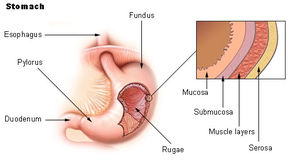
In the infinite wisdom of the human body, the stomach was designed to produce the acid that is necessary for proper digestion of food. When functioning properly, the parietal cells of the stomach secrete hydrochloric acid that bring the stomach pH to a range of approximately 1.5 to 3.0. This is strong enough of an acid that if it were to be dropped on a piece of wood, it would burn a hole through the wood. The inner lining of the stomach is protected from its own acid by a thick layer of mucous and epithelial cells that produce a bicarbonate solution (an alkaloid) to neutralize the acid.
Stomach acid has several important roles including:
When the digestive system is functioning normally, food travels down the esophagus to the stomach. The stomach works to ensure adequate mechanical digestion (by churning of the stomach) and production of stomach acid until the chyme is brought to the proper pH level. At that point, the valve at the lower end of the stomach, the pyloric sphincter, is triggered to open and release the chyme into the small intestine. The pH level of the chyme entering the small intestine triggers the release of pancreatic enzymes (to continue with the digestive process) and sodium bicarbonate (to neutralize the chyme to prevent burning of the small intestine).
- Breakdown of proteins into a form that they can be digested (called proteolysis).
- Activation of the enzyme pepsin, which is responsible for protein digestion.
- Inhibiting the growth of microorganisms that enter the body through food to prevent infection.
- Signaling when the food (referred to as chyme) is ready to leave the stomach and move into the small intestine for continued digestion.
What happens when stomach acid is too low
When stomach acid production is low, dysfunction throughout the digestive system can occur, leading to numerous symptoms and disease processes. The body's preference is to keep the chyme in the stomach until it reaches the proper pH level. Therefore, when stomach acid production is low, the chyme sits in the stomach for a longer period of time without the nutrients being broken down properly. At the same time, the low stomach acid promotes an environment that is more friendly to the growth of microorganisms, which are fed by the carbohydrates that become fermented from sitting in the stomach for too long. Eventually, excessive pressure from the bacterial overgrowth and maldigested food results.
The stomach has two valves, the lower esophageal sphincter (LES) (at the top of the stomach) and the pyloric sphincter (at the bottom of the stomach). While the pyloric sphincter is a one way valve, the LES is designed to open both ways. When excessive pressure builds up in the stomach, but the pH is still not at an optimal range to allow opening of the pyloric sphincter, the body identifies only one option to release the pressure: Open up the LES. Opening of the LES allows release of the pressure into the esophagus and that is what commonly leads to the symptoms of heartburn and acid reflux. Even if your stomach isn't producing enough acid, any amount of acid going into the esophagus will result in uncomfortable symptoms because the esophagus is not designed to handle stomach acid. Frequent opening of the LES toward the esophagus will contribute to a weakened valve that compounds the problem.
**Note: There are also other causes that contribute to a malfunctioning LES. Certain foods (e.g. hot peppers, citrus, tomatoes), drinks (caffeine, alcohol), overeating, overweight and obesity, pregnancy, hiatal hernia, and many medications (including NSAIDs, antibiotics, bronchodilators, beta-blockers, calcium channel blockers, nitrates, antidepressants, anti-anxiety, and anticholinergics) are associated with a weakened LES.
Low stomach acid also contributes to digestive problems downstream from the stomach in the small intestine. If the stomach is not able to produce enough acid to bring the pH level of the chyme to an optimal range, after a while, the stomach will be forced to move it through the pyloric sphincter into the small intestine. Because it is not at the proper pH, the chyme does not trigger the release of sodium bicarbonate, which can result in duodenal ulcers. The higher pH of the chyme also does not trigger the release of pancreatic enzymes. The small intestine is not able to break down the chyme properly and the large, undigested particles of food can begin to have a negative impact on the lining of the small intestine. The lining becomes more permeable and allows the undigested food particles to enter the bloodstream where your body's immune system recognizes them as foreign invaders. This triggers a systemic immune response that can lead to food sensitivities, inflammation, and autoimmune disease. This phenomenon is known as leaky gut syndrome.
Some undigested food particles may continue into the large intestine. This malabsorbed food can lead to a disruption of the normal gut flora (see this post for the importance of gut flora to health and the immune system). The large intestine may become inflamed and subject to a variety of conditions, such as constipation, diarrhea, or irritable bowel syndrome. The disruption of the normal gut flora also impacts your overall immune system and can lead to autoimmune conditions.
Hopefully, by now, it should be clear that covering up symptoms of heartburn, indigestion, and acid reflux by lowering stomach acid production even more through the use of acid-suppressing drugs, is not an effective, safe, or smart way to address the root cause of low stomach acid.

Lara
Friend of the Arts
- Location
- Mid-Atlantic Coast
Amen and amen....I don't believe in the treatment or go to any doctors for it. Why should I when it's healthier to eat an apple daily or take some baking soda in water occasionally to solve the problem? Even rare use of the over the counter antacids is okay if needed, but the over-prescribing of the harmful acid blocking drugs the medical industry push is the worst you can do for your body, in my opinion...
Camper6
Well-known Member
- Location
- Northwestern Ontario Canada
I agree with daily living and the home cures.
What I am talking about is when it becomes chronic and serious.
All the baking soda in the world will not solve the problem and in fact might make it worse. Mixing baking soda with acid causes a gaseous reaction which then causes burbing and moves the food up the tract.
Is acid reflux the same as GERD?
Answers from Michael F. Picco, M.D.
Acid reflux and gastroesophageal reflux disease (GERD) are closely related, but the terms don't necessarily mean the same thing.
Acid reflux is the backward flow of stomach acid into the esophagus — the tube that connects the throat and stomach. Acid reflux is more specifically known as gastroesophageal reflux. During an episode of acid reflux, you may taste regurgitated food or sour liquid at the back of your mouth or feel a burning sensation in your chest (heartburn).
Sometimes acid reflux progresses to GERD, a more severe form of reflux. The most common symptom of GERD is frequent heartburn. Other signs and symptoms may include regurgitation of food or sour liquid, difficulty swallowing, coughing, wheezing, and chest pain — especially while lying down at night.
If you have occasional acid reflux, lifestyle changes can help. Lose excess weight, eat smaller meals, and avoid foods that seem to trigger heartburn — such as fried or fatty foods, chocolate, and peppermint. Avoiding alcohol and nicotine may help, too.
If necessary, occasional acid reflux can be treated with over-the-counter medication, including:
Antacids, such as Tums
H-2-receptor blockers, such as cimetidine (Tagamet HB) or famotidine (Pepcid AC)
Proton pump inhibitors, such as omeprazole (Prilosec OTC)
If you suspect that you have GERD, your signs and symptoms worsen, or you experience nausea, vomiting or difficulty swallowing, talk to your doctor. Prescription medications may help. In a few cases, GERD may be treated with surgery or other procedures.
With
Michael F. Picco, M.D.
http://www.mayoclinic.org/diseases-conditions/heartburn/expert-answers/heartburn-gerd/faq-20057894
What I am talking about is when it becomes chronic and serious.
All the baking soda in the world will not solve the problem and in fact might make it worse. Mixing baking soda with acid causes a gaseous reaction which then causes burbing and moves the food up the tract.
Is acid reflux the same as GERD?
Answers from Michael F. Picco, M.D.
Acid reflux and gastroesophageal reflux disease (GERD) are closely related, but the terms don't necessarily mean the same thing.
Acid reflux is the backward flow of stomach acid into the esophagus — the tube that connects the throat and stomach. Acid reflux is more specifically known as gastroesophageal reflux. During an episode of acid reflux, you may taste regurgitated food or sour liquid at the back of your mouth or feel a burning sensation in your chest (heartburn).
Sometimes acid reflux progresses to GERD, a more severe form of reflux. The most common symptom of GERD is frequent heartburn. Other signs and symptoms may include regurgitation of food or sour liquid, difficulty swallowing, coughing, wheezing, and chest pain — especially while lying down at night.
If you have occasional acid reflux, lifestyle changes can help. Lose excess weight, eat smaller meals, and avoid foods that seem to trigger heartburn — such as fried or fatty foods, chocolate, and peppermint. Avoiding alcohol and nicotine may help, too.
If necessary, occasional acid reflux can be treated with over-the-counter medication, including:
Antacids, such as Tums
H-2-receptor blockers, such as cimetidine (Tagamet HB) or famotidine (Pepcid AC)
Proton pump inhibitors, such as omeprazole (Prilosec OTC)
If you suspect that you have GERD, your signs and symptoms worsen, or you experience nausea, vomiting or difficulty swallowing, talk to your doctor. Prescription medications may help. In a few cases, GERD may be treated with surgery or other procedures.
With
Michael F. Picco, M.D.
http://www.mayoclinic.org/diseases-conditions/heartburn/expert-answers/heartburn-gerd/faq-20057894
Last edited:

Wintermint
Member
This is a long shot, but do you smoke? I used to get a lot of heartburn and acid reflux when I did. When I quite smoking many years ago now it went overnight. I don't think I've had it more than once or twice since.
This is a long shot, but do you smoke? I used to get a lot of heartburn and acid reflux when I did. When I quite smoking many years ago now it went overnight. I don't think I've had it more than once or twice since.
No Wintermint, I don't smoke but I do eat some spicy foods at times that may cause heartburn. Luckily it hasn't been an issue for me in months now, following my simple practice.
Camper6
Well-known Member
- Location
- Northwestern Ontario Canada
Interesting topic.
There is a difference between alleviating the symptoms and seeking a complete cure if the problem persists to the point where one is not enjoying life.
There is a difference between alleviating the symptoms and seeking a complete cure if the problem persists to the point where one is not enjoying life.
Camper6
Well-known Member
- Location
- Northwestern Ontario Canada
this is why doctors dont want you looking thinks up on the cp you can get idears from other people that works --they cant write out a prescription for you and get a kick back----i had one docttor tell me i need to stay off the cp -------i dont think so
What is a cp?
Camper6
Well-known Member
- Location
- Northwestern Ontario Canada
Question for our commentators?
If it's called Acid Reflux why are some claiming low stomach acids are the cause?
In my opinion it's the exact opposite. That's why over the counter stuff like baking soda and Tums work. They counteract the high acid content.
If it's called Acid Reflux why are some claiming low stomach acids are the cause?
In my opinion it's the exact opposite. That's why over the counter stuff like baking soda and Tums work. They counteract the high acid content.