Knowing one's station in life

You do not and have never gotten your hands dirty, you have never sweated or toiled for 10 hours a day, only to collapse from exhaustion when arriving home.
I too used to "sweat and toil" for 10 hours a day doing manual labor, but in my case, after work we'd we'd go out and get drunk. The next day, we'd sweat off the hangover and do it all over again! 🤣

That was when I was in my early 20s. By my late 20s, it had started to take its toll on my body and I started thinking that I didn't want to be living that lifestyle when I was in my 40s, if I lasted that long. That's when I decided to go to college.

It took me a while to adjust to office work. Hangovers are much worse when you're working in an office. You don't sweat it out of your system. You just sit there and try to function until quitting time. That's when you "collapse from exhaustion" upon arriving home!
 
As soon as I saw the thread title I knew it must have been written by someone other than an American. "Station in life?" We don't have stations, just people born poor or born middle class or born rich and where they are now has to do with how hard they tried, or misfortune, or inheritance or health.
Here in the U.S., we have a "lot in life" -- not a "station in life."
 

Many people are ambitious and want better things in life so they are willing to put a lot of effort into achieving their goals. I can understand working toward a life that is worry-free of financial issues, but what I don’t understand is people that want bigger better things – bigger house, more expensive cars, exotic vacations just for social acceptance and feeling they are now better than others. In my opinion, no one is above anyone else – some may have better education, better opportunites, but we are all necessary and need to work together. Every job is important.
 
There is nothing wrong with ambition and striving to have a successful career, I pushed myself in that pursuit for many years.

However, the most important thing is following your heart and doing what makes you truly happy. If that means living a self sustaining off grid and simple life, or perhaps a librarian, maybe a circus performer?, then that is what you should strive for.

It is counter productive to your health and mental well being to "succeed" in a high paying or perceived high status job that puts you under too much stress and limits your creativity and choices, just because society says that should be your life goal. Perhaps that's a major part of the reason many people seem to have lost character, morality, and plain decency?
 
Last edited:
My working life was never about status or prestige, it was about money.

I quickly realized that many of my superiors didn’t seem to possess any amazing skill or ability that justified their significantly higher salary.

I did my best to learn how to play the game and gradually work my way up the ladder so I could trade my time for as much money as possible.

For me, working for money was always an unnatural and terribly uncomfortable part of my life. šŸ˜‰šŸ¤­šŸ˜‚
I think you can do both. I made it my motto to always support my staff, and tell them so. My words were, "there is always a way to fix a mistake, tell me what happened and we will work together to fix it." Once I was pressed by a superior to give a name of my staff member who was responsibe. That was an easy one, "it was me" I lived by that in all my years, and I had staff that walk through walls for me.

I never felt any guilt when I cashed a bonus check, I set my sights high and cashed some nice ones.
 
I think you can do both. I made it my motto to always support my staff, and tell them so. My words were, "there is always a way to fix a mistake, tell me what happened and we will work together to fix it." Once I was pressed by a superior to give a name of my staff member who was responsibe. That was an easy one, "it was me" I lived by that in all my years, and I had staff that walk through walls for me.

I never felt any guilt when I cashed a bonus check, I set my sights high and cashed some nice ones.
I wish you'd been MY boss a time or 2...
 
I don't see anything wrong with trying to better your station in life. I worked hard to support my kids, as a single mother, and give them things I never had. I don't feel guilty about that.

I also never look down on anyone else for where they are, nor do I revere the uber rich. We all have our own journey in life.

I always found it better to be happy for my blessings as much as I could. 🌹
 
The sad fact is most people judge others by what they own or what they do for a living. That has nothing to do with the true value of a person. This occurs because society brainwashes people to believe they must achieve a certain standard of living or they are not normal and cannot be happy.

I feel very fortunate to have experienced many "stations in life". I have struggled to make ends meet, been considered middle class, and owned a very successful small business. Strangely I now choose to live a very frugal life even though I don't need to. I think it is because I find little value or pleasure in "acquiring" things without proper need to justify the expense. Being a minimalist is like a challenge that brings satisfaction and peace into my life, things that having lots if money never could.

I judge people by what they do and how they act, their station in life is of little consequence to me. I have very few friends because I find almost all people are consumed by the rat race, something I find unpleasant and almost intolerable.
Re: your first statement.. of everywhere I've been/lived in the U.S., this one region is the only place I've ever encountered it- their belief/approach that the value of a human being is based on how much money or 'stuff' an individual owns. I also duly noted when individuals take this approach, they didn't come by what they have honestly.
 
More to the subject, what in the world is a station in life? I've heard and agree with the thought not to forget where you came from. I respect humility, but I firmly believe that one who looks down on others will get hurt when they lose their balance. A good life must have balance.
I was confused with that phrase, also. Here is an AI generated description...

A person's "station in life" refers to their social standing, rank, or position within society. It is determined by various factors including:
  • Socioeconomic status: Wealth, income, and overall economic resources.
  • Social class: Ranking in a hierarchy, often categorized as upper, middle, or lower class.
  • Occupation and education: One’s professional role and level of academic achievement.
  • Other demographic factors: Age, marital status, and family background.

Common Usage
While the phrase is considered somewhat dated or formal today, it often appears in specific contexts:
  • "Knowing one's station": Accepting one's current rank and not attempting to "usurp" the authority of those in higher positions.
  • "Marrying above/below one's station": Marrying someone of a significantly different social class.
  • "Ideas above one's station": An idiom used to describe someone who thinks they are more important than they actually are or attempts to rise above their social class.
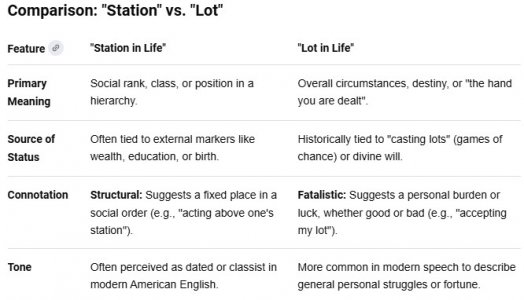
It's similar to "lot in life," but there are differences...

lot-vs-station.jpg
 
Most people experience ups and downs in the financial, emotional, health and relationship throughout a lifetime. It's rare to have all of those aspects of life line up as in the best or worst place at the same time.

Bitterness toward others for being in a peak when you're in a valley neither erodes their position nor elevates your own. Resentment only succeeds in making the complainers look small and mean. Puts me in mind of that old refrigerator magnet, "God if you can't make me skinny please make my friends fat!"

Over the years I've had friends with boatloads of money and others with barely two nickels to rub together. I've loved them all.

Me? I grew up semi-rich and make no apologies for that. Accident of birth. My father, the son of poor immigrants, was a self-made executive in high demand, and he therefore commanded a high salary.

However, money doesn't guarantee a childhood that's an endless parade of sunshine and lollipops, and mine sure wasn't.

Same is true for adulthood.

My wealthiest friend was a trust fund baby worth many millions even when we first met in the early 80s. She's among of the kindest, gentlest, most generous people I've ever met. I'm sad to say she's now in the early stages of Alzheimer's in her mid-70s.

Few people get it all, and nobody gets it all for their entire lives.
 
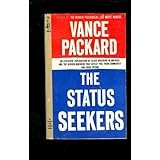
This book is an eye-opening experience.. originally published in Jan. 1959, other than specs about salaries, cost of living, etc., it's as relevant and accurate now as it was back then.

From my wide range of experiences, class differences are more about lifestyle differences than about a person's job or income.. and lifestyle differences are HUGE. vp.jpg

(This book is still available on Amazon, etc.)
 
My father came from poverty. He lived in a boarding house with his parents and two brothers when he was a kid. He was an intelligent man who went to college at 15 and later became a successful businessman in the financial sector. I always admired him, but as an only child it was a hard standard to live up to, and of course, he insisted I go to college. I studied to become an architect but dropped out one course shy of getting my AA in Junior College.

I had no idea what I wanted to do, but I knew I couldn't be him so I had to take my own path. I graduated with a Bachelors' in Business Admin. I still had no idea what I wanted to do. I worked a series of retail jobs and gave each one everything I had. I ended up in the travel industry taking reservations for a tour company. It was entry-level. I was promoted to sales. I was then hired by a cruise line. I was never about "moving up the ladder". I was only about hard work. I was promoted to a sales management position by the cruise line, selling charters to corporations, and found that I loved it and thrived.

All this time, I never strove to move up. It was all about making a decent living. I moved to another cruise line and was offered Director of Sales. I didn't come with any jump in salary but I took it. After 5 years there, I was promoted to VP of Sales and retired at that level 15 years later.

I guess the point of my post is that I NEVER asked for any of these promotions because I didn't see myself there, but when I was promoted I did everything in my power to live up to my employers' expectations. I was never dishonest, nor did I step on anyone else to earn my place.

As for my lot in life, I treated the mail guy the same way I treated any executive from the company... with respect and appreciation. As others have so eloquently said, it is how you feel about yourself as a person that makes the difference, not what you have achieved. I visit the same grocery store frequently. There is a guy there that always assists with self-checkout. I've gotten to know him and always ask how he is doing. I treat him with the respect he deserves.

Side note... before my father passed away, he was proud of what I had accomplished and was thrilled that I ended up in the travel industry rather than the financial sector because it allowed him and my mother to travel to places they could have never imagined. It was my way of giving back to him for giving me a nice life.
 
Beautifully written..... .....


Just as an aside.. what year were you earning £3/6.... I left school in 1970... and earned just £4/10 for a 40 hour week in an Punch tape operating room as an office junior...it was dreadful wages even then, and my father took every penny off me, except my bus fare back to work . I worked a 40 hour week.. and couldn't even buy a pair of tights much less new shoes
Hollydolly, I left school in May 1966, and my first job was working for Ashton Containers in Bristol. They made all the cigarette packets for Will's Tobacco, who had a large cigarette factory in Bedminster, Bristol. The job I had was stripping cardboard. By that I mean that when a box is cut from a large sheet of card, there are inevitably bits of cardboard that don't form part of the box.

These bits have to be cut off the box form, and in fact they are not cut off, but beaten off using something heavy with a sharpish end. The reason being that the sheets the boxes are cut from are stacked 20 or 30 deep, so there are corners and/or cutouts that need to be removed from the shape, and it's normally quite deep. If I remember I used a piece of wood with some kind of point on it, and I had to hit the top of the bit that needed removing, so that it would break away, and take all the ones below it with it.

The work was tedious and repetetive as well as poorly paid, and I quickly tired of it. However, I was on my way home from work one day on the bus when I noticed a hoarding alongside the road, that pointed to an engineering company that reconditioned engines. So the next night on the way home I got off the bus at the nearest stop, and went to see if they had any openings. As luck would have it one of the directors of the company was working late that day, and gave me an impromptu interview. At the end he told me to call back the next Monday evening and he'd let me know whether I could work there.

The following Monday I did exactly that, and he told me I could start whenever I was free. So the very next day I handed in my notice at Ashton Containers, and left that day. I then started at the engineering company on the Wednesday, and worked there for the next five and a half years. That company was called Hartcliffe Engineering, as it was on Hartcliffe Way. I started there on £5 per week, and by the time I left in 1971 I was earning £16 per week. Not exactly well paid, but enough to keep body and soul together.

Sadly the company longer exists, but I started there as a trainee engine machinist/fitter, and during my time there I learned just about all there was to know about dismantling, refurbishing, and reassembling a car/truck engine. However, I spent the vast majority of my time reboring and honing engine cylinders. Sadly I was not apprenticed, but was instead classed as an 'Improver'.

 
I too used to "sweat and toil" for 10 hours a day doing manual labor, but in my case, after work we'd we'd go out and get drunk. The next day, we'd sweat off the hangover and do it all over again! 🤣

That was when I was in my early 20s. By my late 20s, it had started to take its toll on my body and I started thinking that I didn't want to be living that lifestyle when I was in my 40s, if I lasted that long. That's when I decided to go to college.

It took me a while to adjust to office work. Hangovers are much worse when you're working in an office. You don't sweat it out of your system. You just sit there and try to function until quitting time. That's when you "collapse from exhaustion" upon arriving home!
I love how forthcoming many members are in this forum. I also partied when I was in my 20s and in Junior College. I took my finals with a hangover. I also locked my keys in my car that day. The college was probably 20 miles away from our house. I called my mother, who was already angry that I'd been out the night before, to bring an extra key.

She sounded so belligerent that I had someone break into the car through the window with a hanger. (Remember when they could just pop up the lock?) By the time she got there, I was gone. I'm surprised she ever spoke to me again.
 

Back
Top