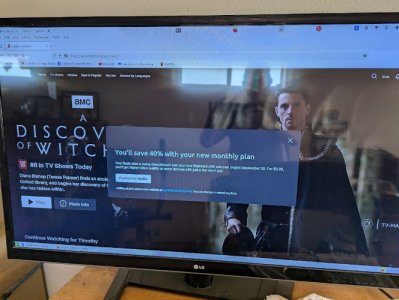
On Sept. 30 Netflix will be raising their rates, but in their
fantasy world that's going to be a "savings"...what kind of
arithmetic challenged fools do they take us for!
View attachment 364441
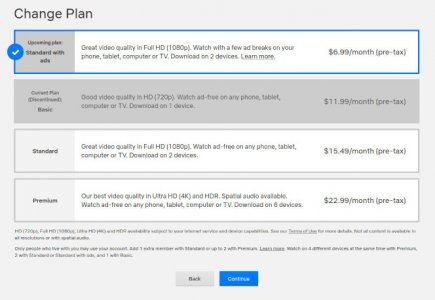
So I visit my account/plan and see:
View attachment 364444
$11.99 is what I'm currently paying, up from $6.99 originally. I'll have to pay $15.49 to have the same level of service. That happens to be a
33.36% increase, rather than some kind of 40% "savings" that Netflix is trying to spin.
Who the F_ do they think they are kidding? I don' need a slide-rule to figure it out,
Google will do it for me!
I was just doing some reading last night on this kind of issue. When streaming first started out it was awesome! This is what AI offered:
The perceived decline in streaming quality isn't just a "vibe"—it’s the result of several massive shifts in how these companies operate. Initially, streamers focused on
growth at any cost to win subscribers, but they have now pivoted to a
profit-first model, leading to what many call the "streaming bubble burst".
Here is why programming often feels worse today:
1. The "Quantity Over Quality" Algorithm
Streaming services often prioritize
consumption convenience and volume over artistic depth to keep viewers from canceling.
Data-Driven Creative: Shows are increasingly built using algorithms to hit specific "niche" benchmarks rather than traditional creative instincts.
"Second Screen" Design: Many modern shows are intentionally "dumbed down" with obvious plots and simple narratives so viewers can scroll on their phones while watching without losing the thread.
The 2-Minute Rule: Metrics like whether you watch just the first two minutes often dictate what gets renewed, leading to flashy openings followed by "filler" content.
2. Fragmented Content & Rights Wars
In the early days, services like
Netflix were "one-stop shops" for licensed hits from other studios.
The Exclusivity Trap: Legacy studios (like
Disney+ and
Paramount+) pulled their best content to start their own services, forcing everyone to rely on cheaper, unproven "Originals" to fill the gaps.
Music & Licensing Cuts: To save money, some older shows on streaming have had their original soundtracks replaced with generic music, or episodes removed entirely due to licensing expirations.
Reddit +2
3. "Safe" Financial Decisions
Streaming is no longer a guaranteed gold mine; services like
Disney+ have lost millions in recent years.
Premature Cancellations: High-viewership shows are often canceled if they don't meet specific long-term subscriber growth metrics, leading to a graveyard of unfinished stories that frustrate audiences.
Shortened Seasons: The shift from 22-episode broadcast seasons to 8–10 episode streaming seasons often leaves little room for the character development or "breather" episodes that made older TV feel more substantial.
Cheap "Slop": Networks have realized they can get high engagement from cheap-to-produce reality TV and panel shows, leading them to prioritize this "slop" over expensive scripted dramas.
4. Technical and UI Frustrations
The experience of
using these apps has also degraded, adding to the feeling of a "crappy" product.
Bad UI/UX: Interfaces are often designed by "marketing majors" to hide the "Continue Watching" tab or trick you into seeing content the platform
wants you to watch rather than what you actually like.
Technical Corner-Cutting: To save on bandwidth costs, some services limit bitrates, leading to muddy video quality even for paying subscribers.
So I recently subscribed to Frndly tv. It was $83 something for a year. There is barely any programming on there and it's
ALL reruns of way older shows. There's like nothing newer on there at all. So I cancelled/turned off auto renew but still have the acct until April of 2027. Of course they asked why I was cancelling and I told them it wasn't worth $80+ a year for what they were offering. I'd be better off watching Pluto TV for free.