Paco Dennis
SF VIP
- Location
- Mid-Missouri



One of the things I love about going to my local Costco that opened in 1989, is that employees stay for years, and many have remained for decades.
It's obvious that they're well treated, because they're helpful, professional, and cheerful.


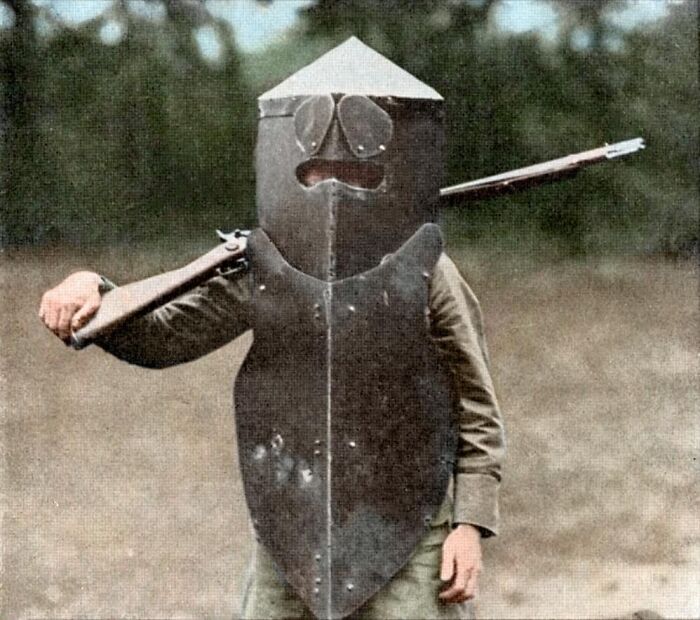
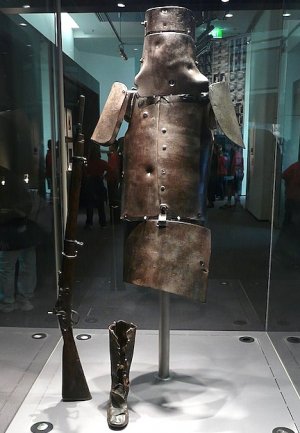
I seem to remember there was an Australian outlaw who had designed & fabricated something like this.
U.S. soldier wearing a Brewster Body Shield, 1917.
The Brewster Body Shield, also and more accurately known as Brewster Body Armor, was the first American body armour to really be useful developed by and for the United States Army in World War I.
Essentially, it consisted of a breastplate with an attached headpiece, both able to stop machine gun bullets at an average speed of 820 m/s. The main problems were its heaviness, which was nearly 28 kg. and its discomfort for soldiers. An adapted armor of 5 kg was later created, which fit close to the body, and was considered more comfortable.
Wouldn't this depend on whether the point of view was from above one pole or the other?


I'm surprised the guy is carrying a 19th Century rifle. Maybe that was all they had on hand to show while demonstrating the armor.U.S. soldier wearing a Brewster Body Shield, 1917.
The Brewster Body Shield, also and more accurately known as Brewster Body Armor, was the first American body armour to really be useful developed by and for the United States Army in World War I.
Essentially, it consisted of a breastplate with an attached headpiece, both able to stop machine gun bullets at an average speed of 820 m/s. The main problems were its heaviness, which was nearly 28 kg. and its discomfort for soldiers. An adapted armor of 5 kg was later created, which fit close to the body, and was considered more comfortable.
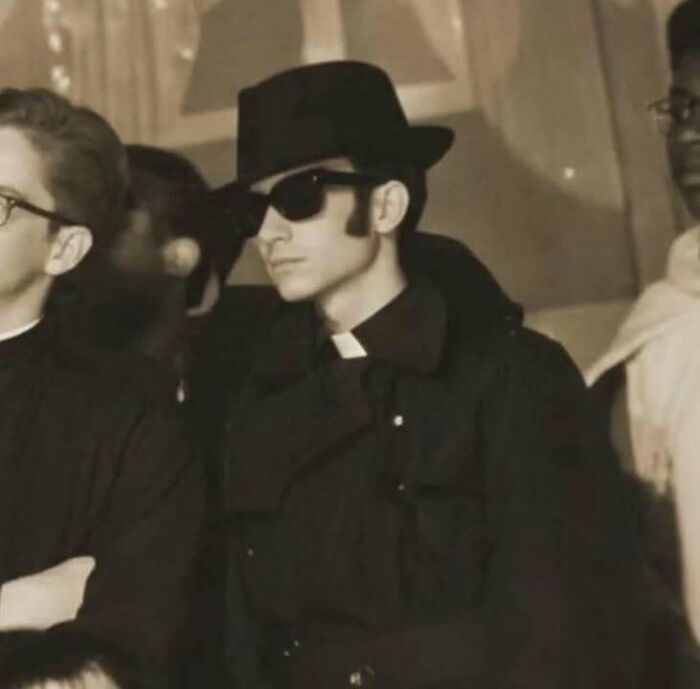

He looks kind of Gangster with that hat, glasses and the burns ... oh those burnsPope Leo XIV In 1982

This was what I was remembering. Armed-robber Ned Kelly designed bulletproof armor like this for himself and his outlaw gang, in the later days of a sort of war they engaged in, during the 1870s, with the Australian police. Apparently, they used plow-moldboard steel as the raw material, which they heated in a forge and beat into the needed shapes.I seem to remember there was an Australian outlaw who had designed & fabricated something like this.