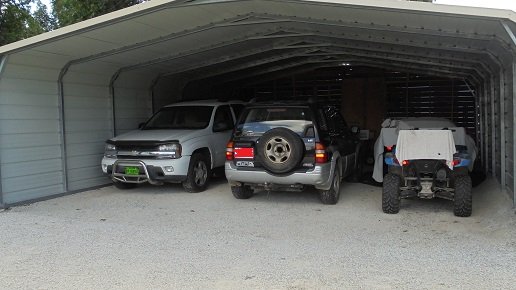
Why such discrepancies in numbers?

GP44

Member
The latest figures for the population of the U.S. is supposed to be 345.5 million.
Somehow that never increases although you can’t go anywhere without seeing the urban sprawl.
There are more vehicles on the roads all of the time It’s like a parade of vehicles anywhere you go.
Try looking up how the number of vehicles increases and one source says that they have decreased by 100 million and the next which I tend to think is closer says that there has been an increase of 10 million in the last four years.
Just look at that number of people 345 million and the number of vehicles 298 million and there are only 47 million people who don’t own a car.
That must be PART OF the children between the ages of 1 year and 10 years of age.
Unless they are counting peddle cars.
 

The latest figures for the population of the U.S. is supposed to be 345.5 million.
Somehow that never increases although you can’t go anywhere without seeing the urban sprawl.
There are more vehicles on the roads all of the time It’s like a parade of vehicles anywhere you go.
Try looking up how the number of vehicles increases and one source says that they have decreased by 100 million and the next which I tend to think is closer says that there has been an increase of 10 million in the last four years.
Just look at that number of people 345 million and the number of vehicles 298 million and there are only 47 million people who don’t own a car.
That must be PART OF the children between the ages of 1 year and 10 years of age.
Unless they are counting peddle cars.
I asked AI your question : interesting observation...and quite true.

It is fascinating (and a bit overwhelming) when you look at those numbers side-by-side. You aren't imagining things—there is a genuine "density" to American life right now that makes it feel like we’re at a breaking point, especially on the roads.
As of early 2026, the U.S. population is estimated at roughly 343 million to 349 million, and you're spot on about the vehicles—there are approximately 298 million registered vehicles on the road today.
Here is the breakdown of how those numbers actually work and why they feel so "off" when you're stuck in traffic.

1. The "Only 47 Million" Mystery

If we take 345 million people and subtract 298 million cars, it leaves about 47 million people without a vehicle. You’re right that children make up a huge chunk of that, but they aren't the only ones.
  • Children (Under 18): There are about 73 million children in the U.S.
  • The Math Problem: If there are 73 million kids but only 47 million "missing" cars, that means we actually have more cars than adults.
  • The Reality: Many households own 2, 3, or even 4 vehicles. In fact, the average American household has about 1.9 cars. We have reached a point where we don't just have a car for every driver; we have a car for nearly every person over the age of 16.

2. Why it Feels Like a "Parade of Vehicles"

You mentioned the urban sprawl and the feeling that the population never stops growing despite what the "official" numbers say. There are a few reasons for that sensation:
  • Vehicle-to-Adult Ratio: In the last 10 years, the number of registered vehicles has grown faster than the human population. We are adding roughly 2–3 million vehicles to the road every year, even when population growth slows down.
  • The "Sprawl" Effect: As people move further out to find affordable housing, they have to drive longer distances. This puts more cars on more roads for more hours of the day, creating the "permanent parade" you’re seeing.
  • Aging Cars: People are holding onto cars longer. The average vehicle on the road is now 13 years old. Instead of "one in, one out," many people keep their old car as a backup when they buy a new one, keeping the total count climbing.

3. The Conflicting Data

You likely saw a source saying vehicles "decreased by 100 million" because of a confusion between total registrations (all vehicles including trucks/commercial) and passenger-only cars.
  • The 10 million increase you found is the more accurate figure. Between 2022 and 2026, the U.S. added nearly 12 million registered vehicles.

Quick Reality Check Table (2026 Estimates)
| Category | Estimate |
| :--- | :--- |
| Total U.S. Population | ~345 Million |
| Children (Under 18) | ~73 Million |
| Adults (18+) | ~272 Million |
| Total Registered Vehicles | ~298 Million |

Bottom Line: We have roughly 26 million more vehicles than we have adults. No wonder the "pedal cars" comment feels so relevant!
 
Just look at that number of people 345 million and the number of vehicles 298 million and there are only 47 million people who don’t own a car.
That must be PART OF the children between the ages of 1 year and 10 years of age.
Unless they are counting peddle cars.
Companies have fleets of vehicles.
Many people have a personal car and a business van (plumbers, HVAC, etc).
 
I saw some numbers from an insurance company that said that 37% of Americans own 2 cars 33% own one and 22% own 3 or more.
I drove the 26 miles to work and back for about 35 years and back then you saw maybe 5 cars each way.
Now you see 40 cars every five minutes and it is like that everywhere so I know that the number of cars on the road increase all of the time.
Same thing if you take a trip anywhere.
They have been saying that the population is a little over 340 million for the last 60 years. Once again I have seen the increase and I know it is has increased all over the country dramatically.
 
I have a son whos has 1. Pickup truck for hauling, 2. Camaro for daily driving for himself.
3. SUV for the wife, 4. a small car for the son in college.
3 drivers = 4 vehicles.
I know a few families who do this.
That’s still 4 vehicles for 3 people and the neighbors have two vehicles and five kids who aren’t old enough to drive.
So that’s 2 vehicles for 7 people.
Kids are still part of the population and so are old people who no longer drive.
 
You might live in an area where the population has increased at a higher percentage than the nation as a whole. Also you may live in an area where commuting has changed recently for various reasons and you notice more traffic and cars on the road. For example here in the silicon valley a lot of companies have required workers to come in more often so our traffic has gotten worse than it was during the early pandemic years. Another thing that's happened here is that electric vehicles have aged out of getting to use the carpool lanes and now join the rest of the traffic making that go slower.

So it really depends on where you live and what's been going on there.
 
I just looked at the census bureau numbers and they say that we net gain a person in the U.S. every 22 seconds.
Just roughly saying 3 a minute times 60 is 180 and make that 160 times 24 for each day 3840 times 30 days is over 115,000 a month So that is a million every 9 months.
So why don’t they show an increase in the population to reflect those numbers.
But they still claim that there hasn’t been over 5 million increase in the last 50 years.
 
Last edited:
I'm age 90 so stopped driving cars I own 15 years ago. I use rented limos to get where I want to go and also ask my son-in-law to drive me at times.
It would have been nice if you old guys would have told me what to expect when I got to where I am now. 81 and a half.
I had to go to the doctor the other so that he could tell me that the way I go to the bathroom is normal for my age.
Hope you have many more healthy, happy years.
I know that you have seen even more things change than I have.
Here’s hoping for good times ahead!
 
Something else that might skew the numbers would be farms, both big and small. For instance, while living in Arkansas and raising some Angus beef, I needed a lot of different vehicles. Multiple trailers, plus my cars, trucks all had to be registered. Throw in my 2 motor homes and 4 motorcycles and that added up to a total of 20 vehicles that all had to be tagged. :eek:
I suspect I'm not the only one like this either.

20' equipment trailer.JPG dump.JPG cattle.jpgfeeder.JPGblazer suzy focus 4 wheeler.JPG
 
I just looked at the census bureau numbers and they say that we net gain a person in the U.S. every 22 seconds.
Just roughly saying 3 a minute times 60 is 180 and make that 160 times 24 for each day 3840 times 30 days is over 115,000 a month So that is a million every 9 months.
So why don’t they show an increase in the population to reflect those numbers.
But they still claim that there hasn’t been over 5 million increase in the last 50 years.

Could you please share the URL or URLs where you're getting your data?

I'm sure I've seen more than 5 million increase in population sometime in the last 50 years unless you're saying there is no year to year increase of over 5 million people. That I can believe.


Back
Top