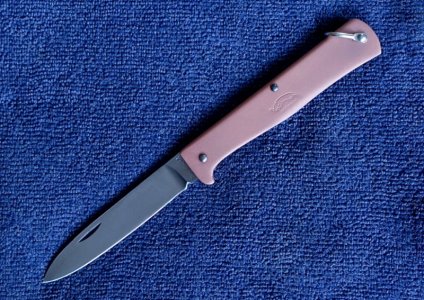
Small Mercator carbon steel non-locking folding knife with a copper handle and bail, made in Solingen, Germany
 T
The package appeared on his porch without announcement. No receipt, no note, though he suspected the brown truck he'd seen earlier as it rumbled down the street, had something to do with it. Contents revealed a small Mercator carbon steel non-locking folding knife with a copper handle and bail, made in Solingen, Germany. It slipped easily into his pocket. Once inside his home, he set it on the table and left the knife there for the remainder of the day.
By morning, it was no longer where he had placed it. Not lost, not hidden. Relocated, sitting parallel to the edge of the table, aligned with a precision he did not remember applying. He picked it up, opened it, and tested the edge against a scrap of paper. It sliced cleanly. Later, he used it to break down a box, then to slice an apple. Each time, he closed it and set it down differently, making a point not to think about it. Each time he returned, it had shifted again, never far, always deliberate.
He tested this more than once, changing the knife's position, then leaving the room. When he returned, it had moved, but the orientation was always the same. The pattern held without exception. He wrote it down once as a reminder, then stopped writing.
The next odd thing happened while making coffee. He set the knife on the counter, turned to retrieve boiling water, and came back to find it slightly closer to the mug than he remembered. Not much closer, just enough to suggest initiative. He ignored it. Later, he found it resting against a stack of unopened mail, as if volunteering for duty. When he left it on the table overnight, it appeared the next morning beside a loose thread on the shirt he had selected to wear. He clipped the thread, set the knife down, paused, and said out loud, “All right.” The knife did not respond, but it stayed where it was, which felt like agreement.
On the third day, he stopped moving it altogether. He left it in the center of the table and went about his routine. When he returned that evening, it remained where it was, unchanged, as if it had settled on its own terms.
He stopped pretending the knife was ordinary. It nudged itself toward boxes that needed opening, hovered near packaging that resisted tearing, and once positioned itself next to a tomato with quiet confidence. He began leaving small tasks undone just to see what it would do. One evening, he placed it in the middle of the table and said, “Anything else?” The knife remained still for a moment, then shifted slowly and pointedly toward him. He glanced down at the left leg of his jeans, already coming apart at the seams. He looked back at the knife and said, “Let’s not get carried away.”