Water is a Magic Substance

Mike

Well-known Member
Location
London
I have often wondered about water, and how it acts!

Without fresh water, we would not be able to survive,
yet over 70% of the World is covered by seawater, which
is salt water and not good for us to survive without some
work to remove the salt.

The seawater evaporates to the clouds and falls as rain,
which is fresh water,

Water flows downhill, after starting as a stream high up
a hill and goes all the way to the sea, how does it get up
the hill, to begin its journey.

I saw a bit of TV yesterday, people were in a cave, exploring
and there was an underground stream/river, flowing freely,
presumably, downhill.

The Niagara Falls, are said to flow at a rate of 1 million gallons
an hour, how does that not empty Lake Ontario?

This is a puzzle, I don't know if it is centrifugal force, caused by
the spinning of the Globe, if it was then the underground stream
in the cave would flow along the roof of the cave.

Do any of you have an explanation, to help my old head understand
this conundrum?

Mike.
 

The Water Cycle Path
The cycle begins on the land with rain, snow, or other forms of precipitation falling from clouds when water droplets become heavy enough.
The water that falls on land flows over the surface, as surface runoff, and collects in small streams. These streams join to form larger rivers that flow downhill, collecting more water along the way.
The rivers eventually carry the water back to the oceans and seas, where it is stored in vast quantities known as accumulation. The sun's heat then warms the surface water, turning some of it into an invisible gas called water vapour, a process called evaporation. Water also enters the atmosphere from plants through a process called transpiration.
The warm, light water vapour rises into the atmosphere. As it reaches higher, cooler altitudes, it cools down and turns back into tiny liquid water droplets. These droplets cluster together with millions of others to form the clouds we see in the sky; this process is known as condensation.
As more and more water droplets condense and join, they become larger and heavier. Eventually, they become too heavy to remain suspended in the air and fall back to Earth as precipitation, that is, rain, snow, sleet, or hail and the cycle starts again.
This continuous movement ensures that water is constantly recycled and available for all life on Earth.
In urban and suburban areas, flushed water, we call sewage, travels through a network of pipes to a wastewater treatment facility. The facility cleans the water to remove contaminants before safely discharging the treated effluent into local bodies of water like rivers and lakes. From there, it evaporates and precipitates as part of the natural cycle. Think about that next time you pour yourself a glass of tap water.
In Victorain times water was so mistrusted that beer was the regular thirst quencher. A pint of beer is about 90% to 96% water but that water had been sterilised. The 19th century saw widespread contamination of water sources with sewage, which led to frequent, deadly outbreaks of waterborne diseases like cholera and typhoid.
 
Last edited:
At any give point in time, 98% of the earth's water is salt water. Of the remaining 2% that is fresh water, 87% is locked up in ice near the poles. Of the remaining 13% of freshwater that is liquid, 12% exists as groundwater and only 1% is found in lakes and rivers. Of that 1%, about 21% of the world's surface fresh water is found in the five great lakes (Superior, Michigan,, Huron, Erie, and Ontario). That includes 84% of North America's surface fresh water.

In answer to Mike's question, the majority of rain hitting the surface soaks into the ground to become groundwater. Most groundwater aquifers flow downhill to eventually join into lakes, rivers, or oceans. The sun is the pump that drives the never ending hydrologic cycle.
 

@Mike I fed your post into Gemini AI to see if it could figure this out. :)

Hello Mike! It is a pleasure to help you work through this puzzle. You have asked some wonderful questions that touch on the very heartbeat of our planet.
It is completely understandable why this seems like a conundrum. We see water rushing down, but rarely do we see the mechanism that lifts it back up.
Here is a breakdown to help settle the "puzzle" in your mind.
1. How does water get "up the hill"?
You are absolutely right that water flows downhill. So, how does it get to the top of the mountain to start that journey?
The answer is The Sun.
Think of the Sun as a giant, invisible pump. It heats the ocean, turning liquid water into vapor (gas). This vapor rises into the atmosphere—leaving the heavy salt behind—and forms clouds.
The wind blows these clouds over the land and up the mountains. When the clouds cool down, the vapor turns back into liquid and falls as rain or snow.
* The Climb: The water climbs the hill as vapor/clouds.
* The Descent: It comes back down the hill as liquid streams.
So, the water doesn't flow up the hill; it flies up there as steam!
2. The Underground Cave Mystery
You mentioned seeing explorers in a cave with a river flowing on the floor.
You hit the nail on the head regarding Gravity vs. Centrifugal Force.
* Gravity is the force pulling everything toward the center of the Earth. It is what keeps your feet on the ground and what makes water flow to the lowest possible point.
* Centrifugal Force (from the spinning Earth) does exist, but it is very weak compared to gravity. If it were strong enough to overcome gravity, we would all float off into space!
Because gravity is the "boss," water in a cave flows along the bottom (the floor), just like it does outside. It is simply seeking the lowest point in the dark, usually heading toward the sea or a deep aquifer.
3. The Niagara Falls Puzzle
This is a very common question! The Niagara Falls are indeed massive. You mentioned 1 million gallons an hour—it is actually even more amazing than that! It can be over 700,000 gallons per second.
Why doesn't it run out?
It is because of the "Bathtub Effect."
Imagine a bathtub where the tap is running, but the drain is also open.
* The Drain: Niagara Falls is the "drain" for Lake Erie (flowing into Lake Ontario).
* The Tap: Lake Erie is constantly being refilled by the Detroit River, which is fed by Lake Huron, Lake Michigan, and Lake Superior.
Those huge lakes are constantly being refilled by rain, snow, and groundwater from that "Invisible Pump" (the Sun) we talked about earlier. As long as it rains and snows upstream, the Falls will never run dry.
Summary for your "Old Head"
To simplify it all:
* The Engine: The Sun lifts the water up into the sky.
* The Driver: Gravity pulls the water down (rivers, waterfalls, underground streams).
* The Result: A giant, never-ending loop called the Water Cycle.
Does that help visualize how the water gets to the top of the mountain to begin with?
 
@Mike To distill the AI answer down to the crucial point: Water can take at least 3 different forms: liquid, gas (when evaporates) and solid (ice). It is in continual flux from one state to another.

Further food thought: Most people think of rocks as being strong but consider that mere trickles of water can carve out paths on and thru rocks over time.
 
Last edited:
Thank you all for your helpful replies, yes I understand the cycle,
of water, sun, clouds and rain etc.

What has always puzzled me is the fact that streams always start
at or near the top of a hill, how that water gets there is the enigma,
I started my working life in a coal mine, water there also ran downhill.

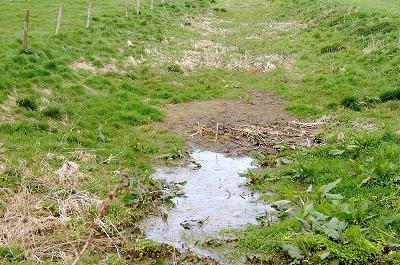
Below is a picture of the source of the River Thames, London's river,
my mind cannot explain how the evaporation from the sun can be
felt underground, in many case the flow that starts a river is very
strong, but I do accept immediately after the beginning, groundwater
helps.

To get water, up a hill, because we want some up there, we use pumps,
but there is a limit to, just how high, you can go with a pump, many
stages are required, either other pumps in-line, or settling ponds with
other pumps, one per pond to get to the next level, hence my question.

Back to the sun, in the winter most rivers still flow, even those that are
covered with ice on the surface, many are still flowing.

This has puzzled me for around 70 years, since my teens, so I doubt if
I will ever see the light.

Mike.

1765209631835.jpeg
 
Let this blow your mind.
Scientists estimate that a typical cumulus cloud can hold on average about 500 metric tons of water, and yet float effortlessly across the sky.
A cumulonimbus cloud (Towering thunder cloud) can hold between 10,000 to a million tons of water, and still float for long distances.
The miracle is in the air turbulence. I guess it makes sense that enough air speed can keep a 400 ton jumbo jet aloft, so why not that much water.
 
In the dry areas of Australia pastoralists have long depended on artesian and subartesian water to water cattle. The Great Artesian Basin holds an enormous volume of water. Underground water flows through porous rock strata that lie between non porous layers. The porous rock, such as sandstone, is called an aquifer.

The water is driven by hydrostatic pressure through the aquifers and may emerge when the aquifer intersects with the surface forming a spring, the water of which has been filtered as it passed through the porous rock. Underground water can also be forced up to the surface through fractures in sedimentary rocks such as limestone and sandstone.

In short, gravity pulls the water downhill and hydrostatic pressure forces it upwards.
 
Many people may wonder why this science person, unlike many other atheist leaning scientists, seriously considers that our universe may be the creation of some lab work by a race of UIE, Ultimate Intelligent Entities? Well this topic reflects one of the most important reasons because the molecule of water is highly unlikely to have just managed to have all its incredible qualities by mere chance. Thus, seems to be highly fined tuned for a universe with organic life.

Others may argue, if the infinite universe has myriad variations in fundamental physical laws and constants, that we are just lucky to live in a rare region of space where such exists and if such were not, we would not be here to think about that. However, this person leans more towards the probability that stuff as in matter and energy, etc is more logically likely to be the same everywhere out to the infinite than different.

Google AI Overview:

Water's role in the
fine-tuned universe argument highlights its unique properties (polarity, high heat capacity, density anomaly) that seem improbably perfect for life, suggesting that fundamental physical laws and constants (like those governing electromagnetism and nuclear forces) must be precisely set for water's existence and life-sustaining behaviors, enabling complex chemistry, stable climates, and heat regulation, making its abundance and properties strong evidence for universe fine-tuning for life.
Key Properties of Water as Evidence

Molecular Polarity: Water's polarity allows it to act as an excellent solvent, crucial for biochemical reactions, and facilitates cohesion/adhesion, vital for circulation in organisms.
High Specific Heat & Latent Heat: Its high heat capacity helps regulate Earth's temperature and organisms' body temperatures, preventing drastic swings.
Density Anomaly: Ice is less dense than liquid water, allowing it to float, insulating water bodies and preventing oceans from freezing solid, supporting aquatic life.
Chemical Versatility: Carbon-based life relies on water's ability to form hydrogen bonds and its unique chemical reactions, making it the ideal medium for biological processes.

The Fine-Tuning Argument

Essential for Life: Chemist Lawrence Joseph Henderson first noted in the early 20th century that life depends entirely on water's specific properties.
Physical Constants: The specific polarity and heat properties of water stem from fundamental constants (like the strength of electromagnetism and gravity) being precisely tuned; slight variations would render water unsuitable for life.
Geological Context: Earth's right amount of water, maintained by steady plate tectonics, is also cited as fine-tuning for life.
Cosmic Scale: Water molecules are found in deep space, but the specific conditions allowing liquid water to persist on a planet for life (like Earth's distance from the Sun) require fine-tuned cosmology and planetary conditions.

Interpretation

Design Argument: Proponents suggest these improbabilities point to an intelligent designer setting the universe's parameters for life.
Alternative Views: Others argue life might simply adapt to whatever conditions exist (the "puddle" analogy), or that a multiverse allows for universes with different physical laws, increasing the odds for one like ours.
 
Water was considered very magical by the Taoist. Magic in the sense of a spiritual teacher. One is encouraged to study, meditate, and use water. Here are some qualities of water expressed in the Tao Te Ching:

In the Tao Te Ching, water is not just a metaphor; it is the closest physical approximation to the Tao itself. Lao Tzu uses water to illustrate how softness, humility, and non-action (Wu Wei) ultimately triumph over rigidity and force.
Here are the primary qualities of water expressed in the text, most notably in Chapter 8 and Chapter 78.
1. The Power of Humility
Water naturally flows to and settles in the "lowest places"—ditches, valleys, and gutters. These are the places most humans disdain and strive to avoid in their pursuit of status and height.
* The Lesson: True power comes from being grounded. By willing to "be lower" than others, one becomes a foundation that supports all things, much like the ocean becomes the "King of a Hundred Valleys" because it sits below them all.
2. Altruistic Benevolence
Water nourishes the "Ten Thousand Things" (all life) without distinction or judgment. It gives life to the sage and the sinner alike, expecting nothing in return.
* The Lesson: Virtue lies in benefiting others without seeking recognition, reward, or control.
3. Strength Through Softness
Perhaps the most famous paradox in the Tao Te Ching (Chapter 78) is that water, the softest and most yielding substance, overcomes the hard and rigid.
* Persistence: Water wears down rock not through force, but through constancy.
* Fluidity: You cannot break water; you cannot cut it. Because it has no rigid form, it cannot be destroyed.
* The Lesson: Rigidity leads to breaking (like a dry branch), while flexibility leads to survival and overcoming obstacles.
4. Non-Contention (Wu Wei)
Water never fights an obstacle. When it meets a rock, it flows around it. If blocked completely, it waits until it rises high enough to flow over. It does not contend, yet it always reaches the ocean.
* The Lesson: By not competing, one creates no enemies. "Because he does not contend, no one in the world can contend with him."
Comparison: The Rigid vs. The Fluid
| Quality | The Rigid (Anti-Tao) | The Fluid (Water/Tao) |
|---|---|---|
| Reaction to Obstacles | Crashes, fights, or breaks | Yields, flows around, or waits |
| Direction | Strives upward (Status/Ego) | Flows downward (Humility/Service) |
| Nature | Brittle, inflexible | Soft, adaptable |
| Outcome | Eventually decays or shatters | Endures and overcomes |
Application to Daily Life
Lao Tzu suggests that if we emulate water, our lives become effortless.
> "In dwelling, live close to the ground. In thinking, keep to the simple. In conflict, be fair and generous. In governing, don't try to control. In work, do what you enjoy. In family life, be completely present." — Chapter 8 (Stephen Mitchell translation)
>
Next Step
Would you like me to find a specific translation of Chapter 8 or 78 for you to compare, or perhaps explore how these principles apply to a specific challenge you are facing?
... How To Be Like Water | Tao Te Ching Explained ...
This video provides a clear breakdown of Chapter 8, explaining how the specific qualities of water can be applied to daily human behavior and mindset.

YouTube video views will be stored in your YouTube History, and your data will be stored and used by YouTube according to its Terms of Service
 
Back to my puzzle, having read the replies again and
the newer offers, I have, sort of decided that evaporation
probably is the solution, but, instead of the heat from the
sun penetrating the earth, I have given that task to the
Earth's Core, which I learned a long time ago, is very hot
and consists of molten rock, this holds the temperature long
enough to force the vapour up an easy exit, to the surface,
then because it is water in vapour form, it cannot force its
way through the water as a gas and can only become water,
this must give the water flow some pressure to confuse some
people, like me!

Thank you all once again for your help, in trying to convince me
about how it works.

Mike.


Back
Top