What will happen as far as our fuel?

Do you think that there will be a fuel shortage and maybe long lines at gas stations again like in the mid seventies because of the Straight of Hormuz problems?
In our area there wasn’t a real shortage in the 70s just panic that caused long lines.
we've already had it this month...long queues for fuel.. garages running out completely , prices through the roof.

it;s stabilised now.. not queues at the moment, everywhere seems to have fuel again, but the prices have not come down.. in some garages they're charging almost £2.00 per LITRE...

When I drove up to my daughter at the weekend...I passed many garages on and off the motorway .. the prices varied from £1.55 which is HUGE... up to £2.00 per LITRE... there's 4.5 Litres in a UK gallon...
 

Europe could run out of jet fuel in 6 weeks, IEA chief tells AP​

Source: CNBC

Published Thu, Apr 16 2026 7:22 AM EDT Updated 5 Min Ago


The International Energy Agency’s head warned Thursday that Europe maybe has six weeks left of jet fuel as the airline industry continues to grapple with headwinds due to the Middle East crisis.

IEA Executive Director Fatih Birol said the Strait of Hormuz blockade will result in ā€œthe largest energy crisis we have ever faced,ā€ in an interview with the Associated Press on Thursday.

ā€œIn the past there was a group called ā€˜Dire Straits.’ It’s a dire strait now, and it is going to have major implications for the global economy. And the longer it goes, the worse it will be for the economic growth and inflation around the world,ā€ he said.

He added that the broader economic impact includes ā€œhigher petrol (gasoline) prices, higher gas prices, high electricity prices,ā€ with some parts of the world ā€œhit worse than the others.ā€

Read more: Europe could run out of jet fuel in 6 weeks, IEA chief tells AP
Yes I saw in the News that KLM says they have fuel for 6 weeks and they skip a lot of flights to European cities. Just take the train.
 
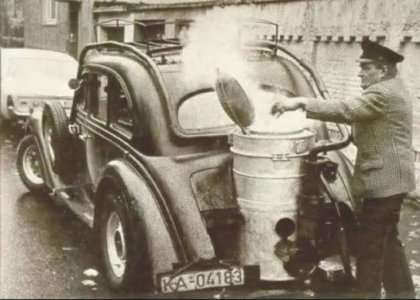
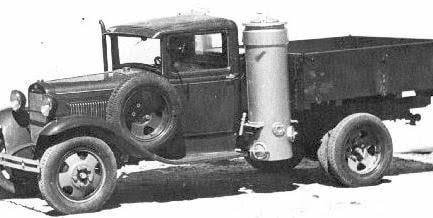
During WW II petrol driven cars in Australia were converted to run on "water gas" that was produced by passing steam over red-hot coke (carbon) at high temperatures, typically around 1000°C (1832°F). The main chemical reaction is:

C + Hā‚‚O → CO + Hā‚‚

Somehow this reaction, probably as the result of increased pressure, drove the pistons that caused the motion of the car. It is possible that in the future we might have to reexamine some of these earlier substitutes for fossil fuels.
https://www.sciencedirect.com/topics/engineering/water-gas-reaction
I’ve read about those gasogene powered vehicles. It would probably be possible to make something smaller and much more efficient today.

1776358389378.jpeg
1776358570558.jpeg
 
AND lets remember WHERE 90 percent of the fertilizer that American farmers use, comes from ? Canada, that is where it comes from. Canada has the largest number of potash mines in the world. Now imagine what would happen to US farmers if Canada stopped selling to you, and instead sold it to the rest of the world at higher prices ?

The second largest supplier is Russia, who only produce enough potash to meet their own domestic requirements. Be careful what you do, it all ways has international repercussions. JIMB>
 
We have built a global economy. We live in times where people seem to want to reverse this, and go back to nations living independently. The trouble is, that's not really possible without much pain for us normal folk.

Oil and petroleum companies exist in a capitalist environment, and as such, they will look to profit to the greatest degree possible. You either believe in unfettered capitalism, or you don't. Personally, I think it only works for the people when there are adequate controls, but that's just me.

The current war will destroy supply chains. This will empower others to benefit. Worse, there will be supply shortages. It's not just the US, it's globally. From a purely US perspective, taxpayers must pay for the weapons, and pay at the pump for the actions of those in charge. There is no way to support the war, and to complain about fuel and food prices. These things are hand in hand, inevitable if you're aware of the how the global market works. Accept a war, accept prices rises, which in the extreme means the possibility of price rises.

Are people profiteering? Sure. But in a purely capitalist mindset, why wouldn't they?
 
AND lets remember WHERE 90 percent of the fertilizer that American farmers use, comes from ? Canada, that is where it comes from. Canada has the largest number of potash mines in the world. Now imagine what would happen to US farmers if Canada stopped selling to you, and instead sold it to the rest of the world at higher prices ?

The second largest supplier is Russia, who only produce enough potash to meet their own domestic requirements. Be careful what you do, it all ways has international repercussions. JIMB>
I have seen where farmers in America are already crying about how the cost of fuel is going to drive them out of business.
Nothing has affected them yet.
But like when the guy asked the doctor if his baby was a boy or girl the doctor answered ā€œit’s a boy and he’s going to be a farmer because he is crying already!ā€
 
we've already had it this month...long queues for fuel.. garages running out completely , prices through the roof.

it;s stabilised now.. not queues at the moment, everywhere seems to have fuel again, but the prices have not come down.. in some garages they're charging almost £2.00 per LITRE...

When I drove up to my daughter at the weekend...I passed many garages on and off the motorway .. the prices varied from £1.55 which is HUGE... up to £2.00 per LITRE... there's 4.5 Litres in a UK gallon...
I remember the first time I bought gas in Canada years ago and paid by the Litre.
I was in total shock seeing how much it cost compared to what we pay per gallon as Yanks.
 
The price per gallon was $4.19 US in our little village and a little cheaper in the bigger town last week.
The cost has gone down 15-20 cents this week in our village and I don’t know why unless it is because of the competition from the other locals.
They had a big fire at the nearest refinery a while back and I expected prices to explode but that didn’t seem to affect things a lot.
World wide speculation seems to affect our prices more than natural or unnatural disasters.
That seems a little weird to me like shutting down a refinery was no problem.
 
Last edited:
AND lets remember WHERE 90 percent of the fertilizer that American farmers use, comes from ? Canada, that is where it comes from. Canada has the largest number of potash mines in the world. Now imagine what would happen to US farmers if Canada stopped selling to you, and instead sold it to the rest of the world at higher prices ?

The second largest supplier is Russia, who only produce enough potash to meet their own domestic requirements. Be careful what you do, it all ways has international repercussions. JIMB>
I don't understand why they are worried about fertilizer. Even in Holland. We have loads and loads of manure from cows. They used to just spray that on the fields.
 
I think I read that the oil from the US isn't the right type somehow and that we export it and import the better type.


That's awesome. Doesn't Canada have vast amounts of some sort of desirable oil shale stuff, I would have thought they'd refine oil for their own use.

I wish we were farther along in the switch to solar and wind power. When I lived in Nebraska renewables were a big thing "The Omaha Public Power District (OPPD) currently receives hundreds of megawatts (MW) of renewable energy, with significant expansion planned to reach net-zero carbon by 2050. ....wind power accounted for 32% of Nebraska's total net generation in 2024".

So I'm hoping the silver lining of the current situation will be a faster push toward supplying our own energy as much as possible. It must have been 10 years ago I listened to a podcast that said in 20 years more than half (I think, memory not perfect!) of homes in the US could supply their needs from solar panels. I've seen some YouTubes of Florida people showing how much they spent and save from partially using solar.

Even without an oil shortage my biggest realistic worry is that there will be a summer heat wave and simultaneous power outage and I won't have any way to cool off. I wish I knew a way to make my own temporary air conditioning, I've read a fan isn't enough at a certain point of heat + humidity.
I don’t know about in your area but data centers are being built all over Illinois and they require an enormous amount of electrical power and cooling water.
Seems kind of ironic that on one hand people are talking about going green and conserving energy and saving the planet and yet all of these data centers are being built that gobble up resources.
Like OKAY you poor people conserve so the powerful rich people can profit.
They had swamp coolers before we had air conditioners.
A swamp cooler is basically a fan blowing air through something like a wet furnace filter.
The more scary things get the more we need to learn about how our ancestors survived.
They invented a clothes dryer that is wind and solar powered all you do is hang wet clothes outside on a rope line.
 
I don't understand why they are worried about fertilizer. Even in Holland. We have loads and loads of manure from cows. They used to just spray that on the fields.
We need to find out what is happening to that cow fertilizer now that they don’t spread it on the fields!
 
We need to find out what is happening to that cow fertilizer now that they don’t spread it on the fields!
In Holland they warm some houses with it. Bio gas. The flat where I live, I felt guilty that I was sponsoring Putin, cause I thought we had Russian gas, but we don't. We get heating via water from the burning of filth.

I think they're gonna use it again. This American farmer says it too.

TikTok - Make Your Day
 
$3.65 per gallon for regular / non ethanol 100% gas on 3-26 topped off the pickup late yesterday afternoon and it had gone up to $3.94 gallon...yet another reason why I'm glad that I'm retired and not making that 50 mile round trip daily to and from work.
 
Europe could run out of jet fuel in 6 weeks, IEA chief tells AP
Fear mongering at its best, with "could" being the key word.

I had a friend who built a tiny house (450 sf) on a concrete slab, not on wheels, that is not tied to the electrical grid at all. This system initially cost $25,000. Unfortunately, it cannot run solely on solar; when the weather is cloudy, the propane-powered generator is turned on to run things. Over five years, two generators had to be replaced. I do not know how much propane the generators have used over the five year period so far. To replace one of the four batteries would cost over $1,000. Battery life is estimated to be about ten years. The solar panels are estimated to last about 20 years.

So, over a twenty year period, the cost of that system at today's prices will be somewhere around $35-45,000. AND...this system does not supply heat. That is provided by a propane heater (which uses no electricity). One winter season runs about $750 in propane, 20 years is $15,000. This does not include the cost of the propane system installation (mine was $5,000). Total 20 year cost to provide power and heat (NO A/C, btw) at today's prices adds up to $50-60,000. This is to replace batteries once and does not include replacing the panels, any of the electronics, etc.

Now, if this place were grid tied, no solar, no propane, I estimate the electrical cost would be about $75/month (if 100% electric). $900/year times 20 years is $18,000. Add to that the $5,000 to drop the line to the house so $23,000.

The solar system requires frequent monitoring and if something goes wrong, good luck finding someone who can work on it. The one advantage of a solar system is if the grid goes down completely, it does provide power (until it doesn't). I have lived here for eight years and the power has failed twice: once for 40 minutes when someone ran into a power pole, and once for about 5 minutes.

I won't even go into what the manufacturing process of solar panels and batteries does to the planet, nor what disposal at the end-of-life of these systems involves.

 
Politics is hard to avoid, but I think we can discuss it respectfully. The problem is the name calling and other rude comments. A fellow at our church can’t mention the name of a certain politician. Instead he refers to the politician a using crude and insulting names. Needless to say, only the people who already agree with him, agree with him at the end of the conversation.

FWIW, the prices of oil is down 10% already this morning as peace threatens to break out in the Middle East. Will it go down and stay down? There is no way for us to know that. I think these things are far more difficult to solve than many think.
 
Back
Top