Uncle Bill Shakespeare...Alive and Well!

Why Is William Shakespeare’s Life Considered a Mystery?

"When Shakespeare died in Stratford, IT WAS NOT AN EVENT. It made no more stir in England than the death of any other forgotten theatre-actor would have made. Nobody came down from London, there were no lamenting poems, no eulogies, no national tears – there was merely silence and nothing more. A striking contrast with what happened when Ben Jonson and Francis Bacon, and Spenser and Raleigh, and the other distinguished literary folk of Shakespeare’s time passed from life"!


And what would the real Shakespeare think of the mystery that now surrounds his life? He’d probably be amused, and glad he is an enigma. After all, “the play’s the thing.”
 
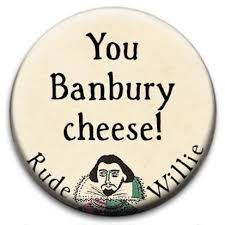
"You Banbury cheese"!


Banbury cheese was an English cheese produced in Banbury, Oxfordshire. Once one of the town's most prestigious exports, and nationally famous, the production of the cheese went into decline by the 18th century, and was eventually forgotten. The cheese is best known today through an insult in Shakespeare's Merry Wives of Windsor (1597).
banbury_cheese-1.jpg
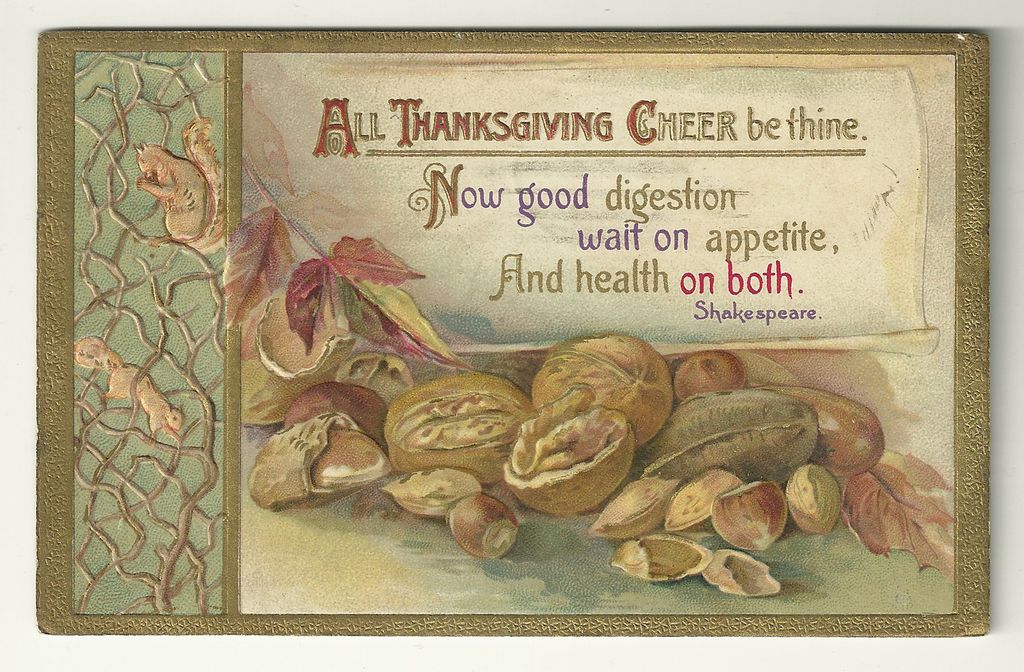
1605091606112.jpeg

This insult alludes to the thin proportions of the cheese, especially after its rind was removed, mocking Slender's name and figure.

"This comparison was apparently a common one. A variant is found as early as 1538, when James Dyer reported that a judge in the Court of Common Pleas pithily "compared the case to a Banbury cheese, which is worth little when the parings are cut off. And here the case is brief in substance, if the superfluous trifling that is pleaded be taken away". A similar insult is made in Jack Dunn's Entertainment (1601): "Put off your clothes and you are like a Banbury cheese—nothing but paring". According to linguist Frederic S. Marquardt, writing in 1928, "you Banbury cheese" was still in the common use among American slang; a simplified American descendant of the insult was "you big cheese."


A recipe for the cheese survives in the 15th/16th-century manuscript, Sloane MS 1201:

"Take a thin cheese vat, and hot milk as it comes from the cow. And run it forth withal in summer time. And knead your curds but once. And knead them not too small, but break them once with your hands. And in summer time salt the curds nothing but let the cheese lie 3 days unsalted. And then salt them. And lay one upon another but not too much salt. And so shall they gather butter. And in winter time in likewise, but then hot your milk. And salt your curds for then it will gather butter of itself. Take the wrung whey of the same milk and let it stand a day or two till it have a cream and it shall make as good butter as any other".
 
"Shakespeare Crackpot" performed at Shakespeare's Globe lecture hall on November 20, 2016. Featuring Keir Cutler, PhD and directed by TJ Dawe. This is a 35-minute excerpt of a 60-minute work.

 
"An 81-year-old man named, would you believe it....William Shakespeare from Warwickshire became the second person in the U.K. to receive the Pfizer/BioNTech vaccine". 12/08/20

"Shakespeare puns should be bard, but this is the Second Gentleman of Corona, The Taming of the Flu, The Merchant of Virus... but where does he live? Tier three or not tier three, that is the question". - Michael Macloud

EosskdNWMAAVjLk
 
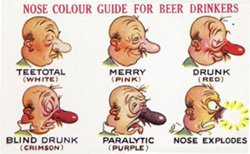
Drink is a great provoker of three things…nose painting, sleep and urine. Lechery Sir, it provokes and unprovokes; it provokes the desire, but it takes away the performance” –Macbeth II,iii
So as The Bard didn't say:
Imbibe the grape,
imbibe the grain,
but heed thou this cautious warning,
If thou should'st quaffeth too much wine,
Thou shalt puketh in the morning.
 
Drink is a great provoker of three things…nose painting, sleep and urine. Lechery Sir, it provokes and unprovokes; it provokes the desire, but it takes away the performance” –Macbeth II,iii
So as The Bard didn't say:
Imbibe the grape,
imbibe the grain,
but heed thou this cautious warning,
If thou should'st quaffeth too much wine,
Thou shalt puketh in the morning.
Would love to know what “nose painting” is lol
 

How to Talk Like Shakespeare​

Accents in all languages have changed over the centuries. So what did English sound like in Shakespeare's day? Was it like the "Queen's English" and BBC accent of today? No, it wasn't, according to linguistics expert David Crystal
 
Shakespeare's Coldest Quotes ......
iu

"Early nightfall can change our moods from sweet to sour, and we've already found ourselves sleepier toward the end of the workday. If you find winter takes a toll on your mood, check out what it did to one of the world's most famous poets: William Shakespeare. The Bard called on winter as a metaphor to convey the disdain, disgust, and hopelessness of a character. The metaphor reappears dozens of times throughout Shakespeare's works. Here are some of the snowiest examples".

1. King Henry VI, Part II; Act 2, Scene 4​

Thus sometimes hath the brightest day a cloud;
And after summer evermore succeeds
Barren winter, with his wrathful nipping cold:
So cares and joys abound, as seasons fleet.


5. As You Like It; Act 2, Scene 3​

The means of weakness and debility;
Therefore my age is as a lusty winter,
Frosty, but kindly.


11. Sonnets; Sonnet 5​

For never-resting time leads summer on
To hideous winter and confounds him there;
Sap cheque'd with frost and lusty leaves quite gone,
Beauty o'ersnow'd and bareness every where.
 

William Shakespeare & The Quill Song!​

Shakespeare sings all about his so many phrases he came up with!
 
"The voice of parents is the voice of gods, for to their children they are heaven's lieutenants".
William Shakespeare

iu
 

Shakespeare Quotes for When Your Relatives Ask What You’re Doing With Your Life


When someone starts to talk about politics:
“What is the matter? Keep the peace here, ho!”
—Henry IV Part 2, Act 2, Scene 1

When your cousins who are the same age as you are actually succeeding at life:
“But how, but how? give me particulars.”
—Antony and Cleopatra, Act 1, Scene 2

When they ask you whatever happened to [insert the name of your ex]:
“She hath betray’d me and shall die the death.”
—Antony and Cleopatra, Act 4, Scene 14

When a ridiculous argument breaks out at the dinner table:
“If this were played upon a stage now, I could condemn it as an improbable fiction.”
—Twelfth Night, Act 3, Scene 4

When someone comments on the fact that you’re going up for third helpings of everything:
“My poor body, madam, requires it.”
—All’s Well That Ends Well, Act 1, Scene 3

When they ask why you’re always playing on your phone:
“I am alone the villain of the earth.”
—Antony and Cleopatra, Act 4, Scene 6

When you’re hanging out in the kitchen taking a break from the chaos and some relatives come in to chat:
“Do you look for ale and cakes here, you rude rascals?”
—Henry VIII, Act 5, Scene 4

When someone asks you why you decided to cut your hair like that:
“Savage!”
—Troilus and Cressida, Act 5, Scene 3
 
Back
Top