


Em in Ohio
Senior Member
- Location
- OH HI OH
In my opinion, all statues are works of art. Many reflect pivotal characters throughout history. I hate seeing any of them destroyed. Even the statues of Confederates have their place. But, I don't think that place should be in the center of towns or a state capitol, but rather where the soldiers are buried.
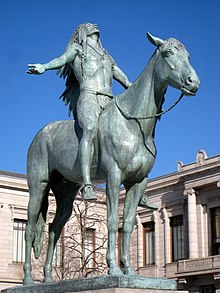
I came across this image while researching a different topic. It made me wonder if this would now be considered racist. It depicts a Native American (formerly known as an 'indian') praying to his version of 'god,' the Great Spirit. Does it 'stereotype' Native Americans? (See thread about Aunt Jemima)
If this was placed at the location of the Battle of the Little Big Horn instead of a museum, would it be considered offensive to caucasians because the natives were victorious and killed Custer?
Appeal to the Great Spirit, 1908 statue by Cyrus Dallin, Museum of Fine Arts, Boston
Custer's Last Stand: "Public response to the Great Sioux War varied in the immediate aftermath of the battle. Libbie Custer, Custer's widow, soon worked to burnish her husband's memory, and during the following decades Custer and his troops came to be considered iconic, even heroic, figures in American history. Little Bighorn Battlefield National Monument honors those who fought on both sides."
https://en.wikipedia.org/wiki/Battle_of_the_Little_Bighorn
I came across this image while researching a different topic. It made me wonder if this would now be considered racist. It depicts a Native American (formerly known as an 'indian') praying to his version of 'god,' the Great Spirit. Does it 'stereotype' Native Americans? (See thread about Aunt Jemima)
If this was placed at the location of the Battle of the Little Big Horn instead of a museum, would it be considered offensive to caucasians because the natives were victorious and killed Custer?
Appeal to the Great Spirit, 1908 statue by Cyrus Dallin, Museum of Fine Arts, Boston

Custer's Last Stand: "Public response to the Great Sioux War varied in the immediate aftermath of the battle. Libbie Custer, Custer's widow, soon worked to burnish her husband's memory, and during the following decades Custer and his troops came to be considered iconic, even heroic, figures in American history. Little Bighorn Battlefield National Monument honors those who fought on both sides."
https://en.wikipedia.org/wiki/Battle_of_the_Little_Bighorn


