How is your day Today? Chat about your plans and achievements 2026....

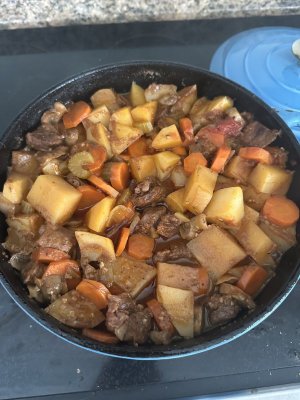
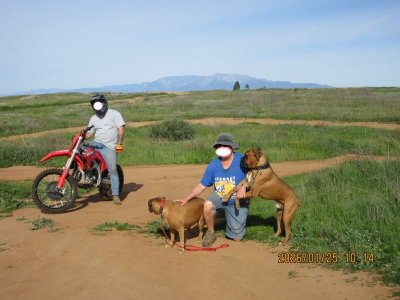
Daughter is coming over today. We're going out for Japanese food. The sun is shining, though it's quite cold. If there's a "warmer" day next week, or the week after, we'll see about taking daughter & doggy for a drive in the country.

Have a nice weekend, everyone!
 

@David777 quote''...

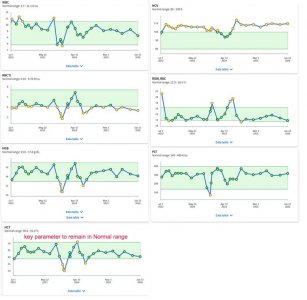
Immediately this morning, will leave to a nearby KP hospital for a 3 month blood test for my polycythemia vera condition.'' Blood cancer, ? my research tells me ......and you're being treated for that ?...wow....... can you explain more? :unsure:
Suspect my beloved mother died from this at age 85 years because she was diagnosed too late so had progressed into Acute Myeloid Leukemia aka AML. I am so lucky to be alive in this advanced medical era as would otherwise likely suffered the same fate. It took some time for my excellent hemotologist to fine tune my hydroxyurea dosage that since then has remained stable. After diagnosis of having thick blood, I had 3 phlebotomies to bring levels back to normal.

In this era, many people that in the past were described as dying of old age, actually had various maladies modern medical science has only recently become aware of.

AI Overview
Polycythemia vera (PV) is a chronic, slow-growing blood cancer that, with proper treatment,
allows many patients to live for decades, often with a normal life expectancy of 15–20+ years. Long-term management focuses on controlling blood thickness (hematocrit < 45%) to prevent clotting, which is the primary risk. While generally manageable, PV can progress over time to myelofibrosis (scarring of bone marrow) or, rarely, acute leukemia.

Life Expectancy: Patients treated with phlebotomy and low-dose aspirin often live 15–20 years or more, with young patients potentially surviving over 35 years.
Disease Progression: Over 20 years, approximately 16% of patients may develop post-PV myelofibrosis, and roughly 4%–15% may develop acute leukemia.
Main Complications: The primary risks are thrombotic events (blood clots, stroke, heart attack), which are significantly reduced through consistent treatment.
Causes of Mortality: While manageable, the disease can become fatal if it progresses to advanced, more aggressive blood cancers.

Monitoring: Regular, life-long check-ups with a hematologist are essential to monitor blood counts (hematocrit) and manage symptoms.
Treatment Adjustments: If phlebotomy and aspirin are not enough, cytoreductive therapies like hydroxyurea or pegylated interferon are used to manage the disease.

bloodtest-012326a.jpg
 
Last edited:
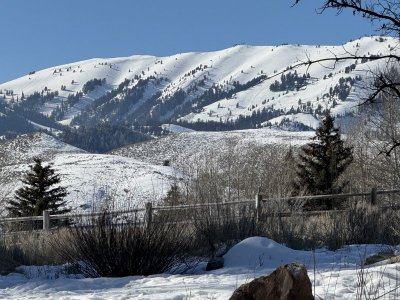
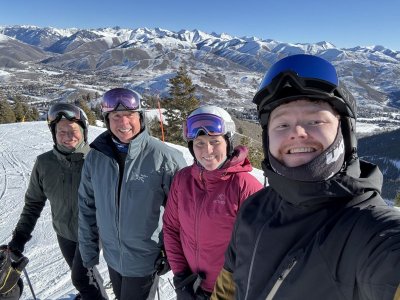
Got a few laps in this morning, it was brisk w temps around 6°F, and wind at 12mph, gusting to 15. Skiing speeds are typically 30-50mph so the neck gaiter was on today along w the heavy coat.

sunny12426.jpg


Snow making on Christmas Ridge made for some soft snow, taken from the Christmas lift. Love to see day time snowmaking! 3 little girls huddled together on the chair in front of me trying to stay warm.

snowmaking12425.jpg


The inversion floats up out of the Snake River Plain.
Inversion12426sm2.jpg

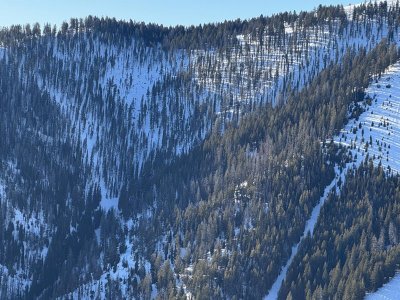
The Cold Spring Chutes black and double black diamond are not open for lack of snow.
coldspringscgutes.jpg
 
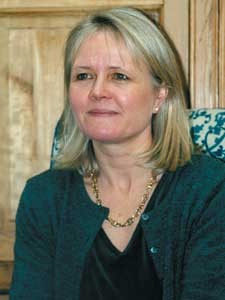
Sue...on the subject of David Attenborough... did you know that his daughter jane was killed in the 2004 Thailand Tsunami ?
Jane-Attenborough.jpg


She was 49, she would have been 70 today had she lived... he has 2 other adult children......David is now 98 years old....
HI, I didn't know that about his daughter, how sad Sue
 
In this era, many people that in the past were described as dying of old age, actually had various maladies modern medical science has only recently become aware of.
In a Ted talk I watched long ago, a doctor stated that "old age" isn't a bona fide cause of death. People die from organ or other body failures or damage.

He explained that cancer patients die not from the tumors themselves, but from the damage the tumors do to critical body functions.
 
In a Ted talk I watched long ago, a doctor stated that "old age" isn't a bona fide cause of death. People die from organ or other body failures or damage.

He explained that cancer patients die not from the tumors themselves, but from the damage the tumors do to critical body functions.
I read that somewhere some time ago as well and it's stuck with me


Back
Top